APT ‘Blind Eagle’ Targets Colombian Government
The South American-based advanced persistent threat group is using an exploit with a “high infection rate,” according to research from Check Point.
darkreading – Read More

The South American-based advanced persistent threat group is using an exploit with a “high infection rate,” according to research from Check Point.
darkreading – Read More
Clandestine kill switch was designed to lock out other users if the developer’s account in the company’s Windows Active Directory was ever disabled.
darkreading – Read More
Binance is being spoofed in an email campaign using free TRUMP Coins as a lure leading to the installation of the ConnectWise RAT.
The post Trump Coins Used as Lure in Malware Campaign appeared first on SecurityWeek.
SecurityWeek – Read More
The Federal Trade Commission (FTC) shuttered its case against MGM Resorts International centered on the company’s handling of personal data stolen during a 2023 ransomware attack.
The Record from Recorded Future News – Read More
CrowdStrike says a hacker had access to PowerSchool’s internal system as far back as August.
© 2024 TechCrunch. All rights reserved. For personal use only.
Security News | TechCrunch – Read More
Palo Alto Networks has shared details on several high-severity Mitsubishi Electric and Iconics SCADA vulnerabilities.
The post Details Disclosed for SCADA Flaws That Could Facilitate Industrial Attacks appeared first on SecurityWeek.
SecurityWeek – Read More
Cybersecurity researchers have demonstrated a novel technique that allows a malicious web browser extension to impersonate any installed add-on.
“The polymorphic extensions create a pixel perfect replica of the target’s icon, HTML popup, workflows and even temporarily disables the legitimate extension, making it extremely convincing for victims to believe that they are providing credentials to
The Hacker News – Read More
Russian crypto exchange Garantex has yet to directly address the international law enforcement operation that resulted in the seizure of its domains, and criminal charges against two of its administrators.
© 2024 TechCrunch. All rights reserved. For personal use only.
Security News | TechCrunch – Read More
In an attempt to bypass security solutions, attackers are increasingly hiding phishing and other malicious links inside QR codes. It’s for this reason that we’ve added a technology to Kaspersky Secure Mail Gateway that reads QR codes (including ones hidden inside PDF files), extracts links and checks them before they land in an employee’s inbox. We explain how it works.
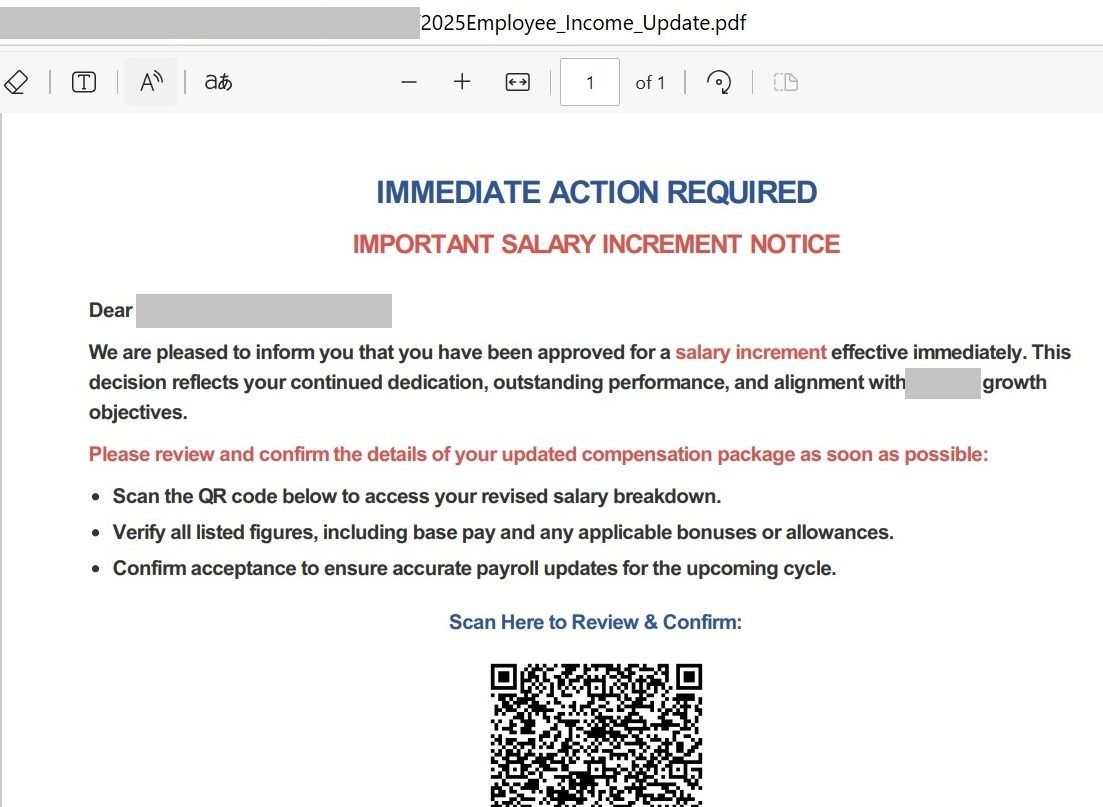
Example of a phishing QR code inside a PDF file
Ever since even basic security tools learned to check phishing links effectively enough, attackers have been inventing ways to hide them from scanners. The most commonly employed trick is to post links on third-party services; that way, victims don’t receive an email directly from the attackers, but a notification from some legitimate site where a document with a malicious link is already placed. While such ploys work well on home users, with company employees the success rate is far lower. That’s because any self-respecting organization these days has equipped all its work computers with security software that catches redirects to phishing sites.
Therefore, attackers have turned their attention to QR codes. First, this technology obligingly transforms regular URLs into something incomprehensible to standard systems that check links for malicious intent. Second, QR codes are common enough for people to scan them without a second thought. And third and most important, people overwhelmingly scan QR codes with a phone or tablet that may not have a security solution with anti-phishing technology – especially if it’s a personal, not work, device.
Plus, in this case, less suspicion is raised by the prompt to enter work credentials, which are what the attackers basically want. On a computer, the user is likely to be signed in already, but accessing work systems from a personal device requires additional authentication, right?
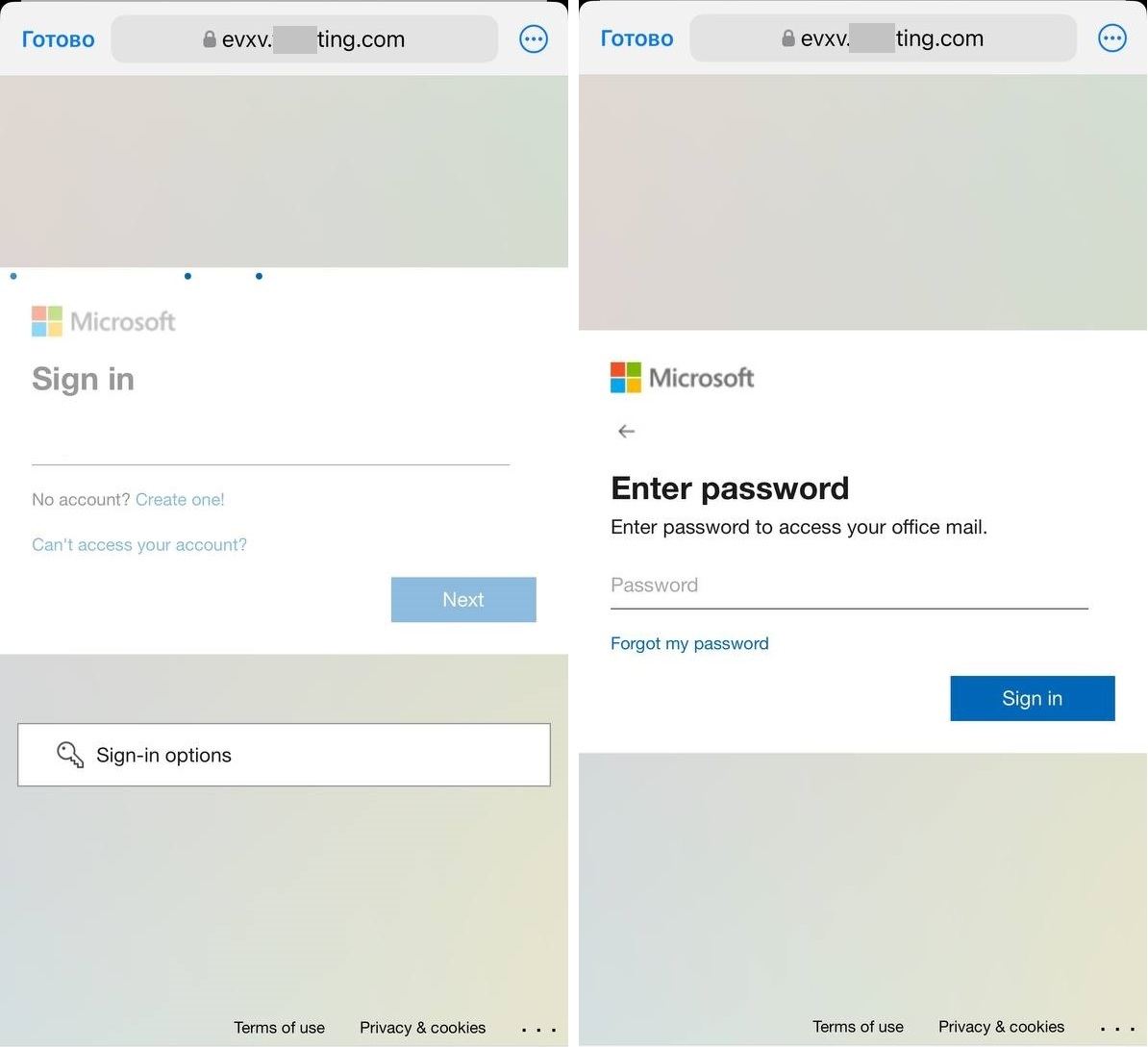
The goal of most phishing schemes is to extract work credentials
Sure, a QR code can also be sent in the body of an email. But hardly anyone will follow a QR code without a few words explaining why they should, and this text can be analyzed and flagged as phishing. Besides, an image has certain characteristics – at least its dimensions – by which it can be identified.
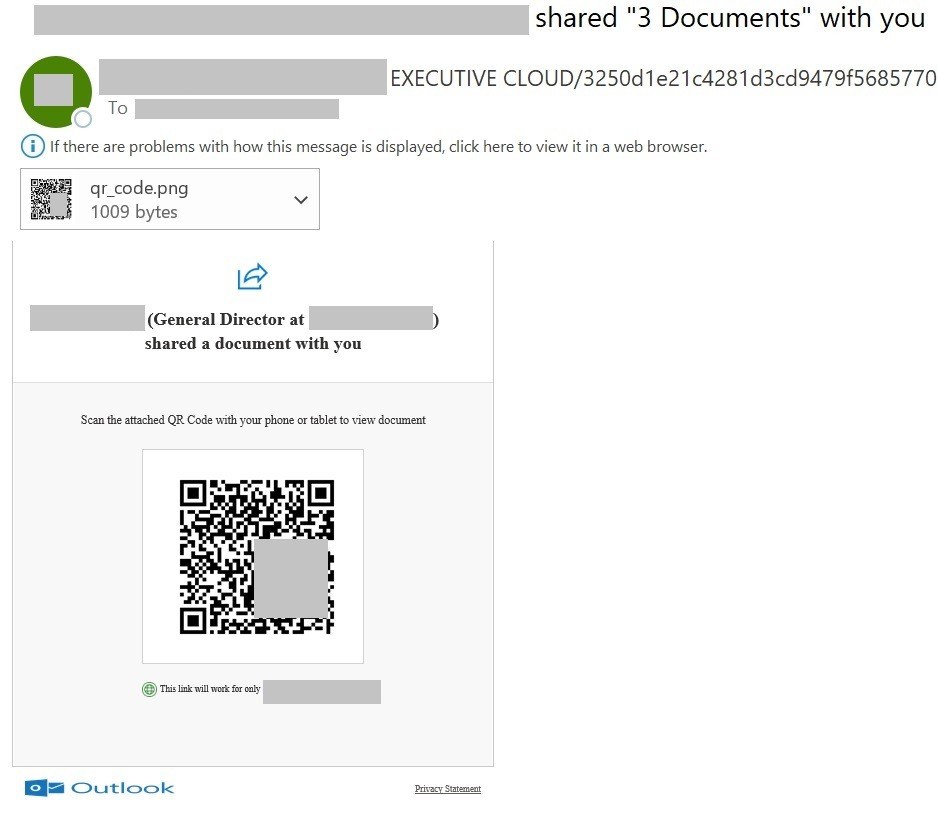
A PDF file, on the other hand, is a kind of black box. The format is proprietary – you can’t peek inside without special tools. In addition, the cover email can contain minimal text, something like: “Important! All information in the PDF”
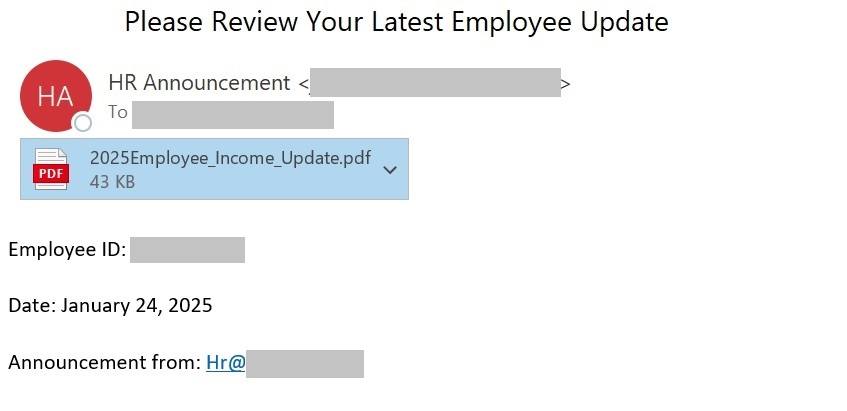
Phishing email with a PDF file and minimal accompanying information
Of course, a QR code in an email isn’t always a sign of phishing. For example, mobile application developers often furnish their PDF documents and mailings with direct links to app stores. In general, it’s a quick and easy way to send a link to a phone. That’s why we can’t mark each email with a QR-code as a suspicious. So our developers created a tool to extract URLs from QR codes for additional checking by anti-phishing modules and anti-spam heuristics.
Not only can the technology extract URLs from QR codes in images, but also check PDF files – extracting all links from all QR codes found inside them. If a link is recognized as phishing, the email is also flagged as phishing and processed in accordance with the Kaspersky Secure Mail Gateway settings. So the end user never even sees the dangerous QR code. The best outcome!
Kaspersky official blog – Read More
Fortra has shared an update on the effects of actions taken to reduce the abuse of Cobalt Strike by threat actors.
The post Cobalt Strike Abuse Dropped 80% in Two Years appeared first on SecurityWeek.
SecurityWeek – Read More