https://www.backbox.org/wp-content/uploads/2018/09/website_backbox_text_black.png00adminhttps://www.backbox.org/wp-content/uploads/2018/09/website_backbox_text_black.pngadmin2026-06-11 12:06:372026-06-11 12:06:37Siemens Says Desigo CC Files Flagged as Malware by Security Engines
The new open-source project could serve as the basis for a future of apps with features as complex as Slack, Discord, or Google Docs—but with added protection against surveillance.
https://www.backbox.org/wp-content/uploads/2018/09/website_backbox_text_black.png00adminhttps://www.backbox.org/wp-content/uploads/2018/09/website_backbox_text_black.pngadmin2026-06-11 12:06:362026-06-11 12:06:36Signal Alums Reveal ‘Encrypted Spaces,’ a System for Making Private Collaboration Apps
https://www.backbox.org/wp-content/uploads/2018/09/website_backbox_text_black.png00adminhttps://www.backbox.org/wp-content/uploads/2018/09/website_backbox_text_black.pngadmin2026-06-11 10:06:392026-06-11 10:06:39University of Nottingham Confirms Breach After Hackers Leak Data
https://www.backbox.org/wp-content/uploads/2018/09/website_backbox_text_black.png00adminhttps://www.backbox.org/wp-content/uploads/2018/09/website_backbox_text_black.pngadmin2026-06-11 10:06:392026-06-11 10:06:39The best time-tracking software of 2026: Expert tested
https://www.backbox.org/wp-content/uploads/2018/09/website_backbox_text_black.png00adminhttps://www.backbox.org/wp-content/uploads/2018/09/website_backbox_text_black.pngadmin2026-06-11 10:06:382026-06-11 10:06:38Buying a school laptop? 4 things I’d consider first (and my top 10 picks)
Three cities, three cybersecurity conferences, and plenty of conversations with security professionals across Europe.
Over the past few weeks, the ANY.RUN team joined Infosecurity Europe in London, CONFidence Conference in Kraków, and C1b3rWall Congress in Ávila. While every event had its own focus, the discussions pointed in the same direction: security teams need faster investigations, clearer evidence, and more confidence in every response decision.
Infosecurity Europe 2026: From Alerts to Business Outcomes
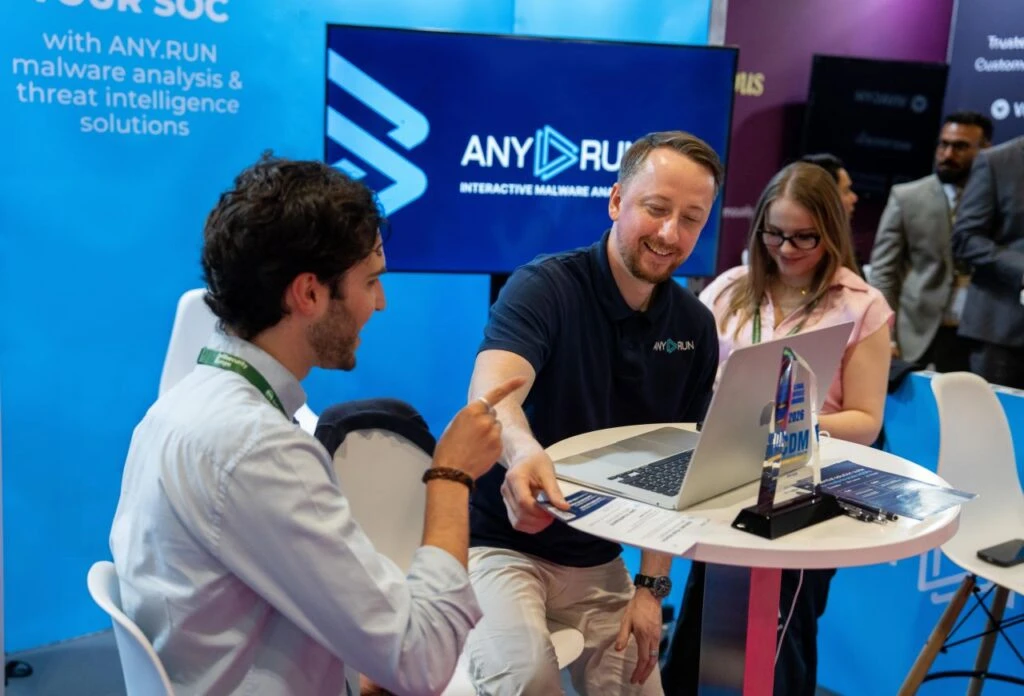
Infosecurity Europe was the biggest stop of our conference season. Over three days in London, the ANY.RUN team met with CISOs, SOC leaders, and MSSP teams to discuss the challenges shaping security operations today.
One thing was hard to miss: the conversation has moved beyond alert volumes and technical metrics.
Our team at Infosecurity Europe 2026
Security leaders are under growing pressure to show how SOC performance supports the wider business. Boards do not simply want to know how many alerts were reviewed or how quickly a case was closed. They want to understand whether threats are identified early, whether risks are clearly assessed, and whether the team can act before an incident affects operations.
Three priorities came up repeatedly during our conversations:
From Alerts to Outcomes
MTTR still matters, but the number alone does not tell the full story. Security teams need enough context to understand the impact of a threat, prioritize the right cases, and explain their decisions clearly.
Behavioral analysis plays an important role here. By investigating suspicious files and URLs inside an interactive environment, teams can see how a threat behaves in real time and gather the evidence needed for a more confident response.
Give your SOC clearer visibility into every threat. Make faster decisions with confidence.
Security teams are not looking for another disconnected platform that adds extra steps to an already complex process.
They want fresh threat intelligence and investigation-backed insights inside the tools they already use, including SIEM, SOAR, and EDR platforms. This helps teams move from detection to investigation and response without losing time switching between separate systems.
Resilience Over Headcount
Growing alert volumes cannot always be solved by growing the team.
SOC leaders are looking for ways to make existing workflows more effective: reducing manual work, giving teams clearer evidence, and helping junior specialists handle routine investigations with greater confidence.
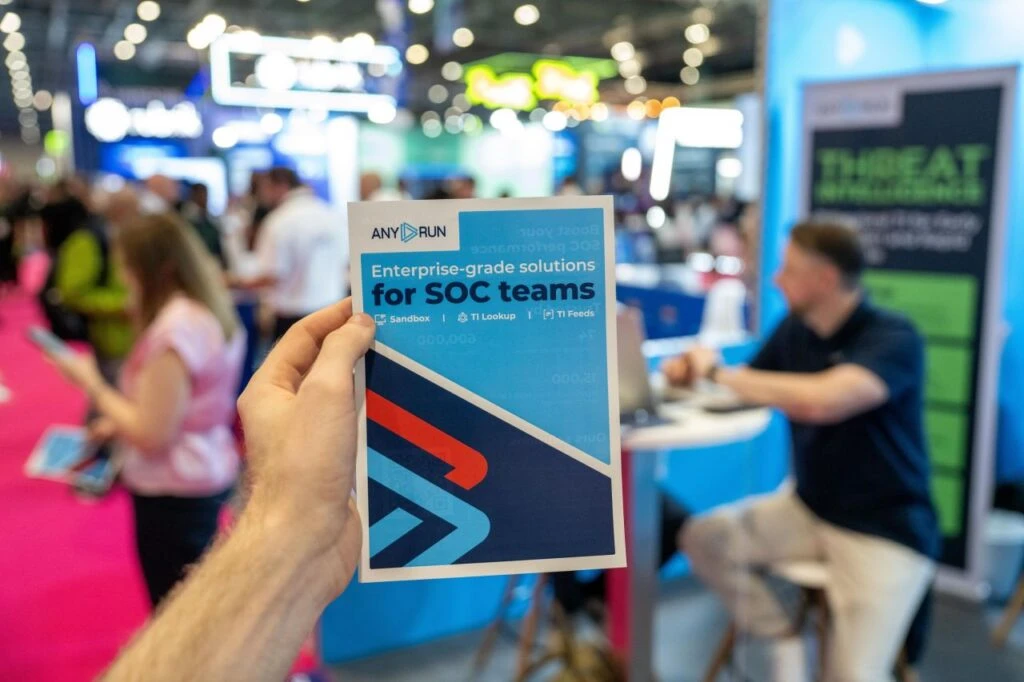
We introduced our enterprise-grade solutions for SOC teams
The goal is not simply to process more alerts. It is to build a more resilient SOC that can make consistent decisions even when the pressure rises.
Infosecurity Europe was a valuable opportunity to discuss these priorities directly with the cybersecurity community and explore how behavioral visibility and live threat intelligence can support faster, clearer, and more reliable investigations.
CONFidence Conference 2026: Practical Conversations with the Security Community
Our next stop was CONFidence Conference in Kraków, where we joined cybersecurity professionals for two days of technical discussions, live demos, and conversations about the realities of modern threat investigation.
Many of the challenges were familiar: rising alert volumes, increasingly sophisticated phishing campaigns, and the need to investigate threats faster without adding more pressure to already busy teams.
At the ANY.RUN stand, visitors explored how behavioral visibility, investigation-backed threat intelligence, and cross-platform detection coverage can help SOCs and MSSPs analyze malware and phishing more consistently.
But choosing the right security solution is not only about detection capabilities. Teams also need to know how they fit into their wider security environment: how sensitive data is handled, whether it supports controlled workflows, and whether the provider has the experience needed to support critical investigations.
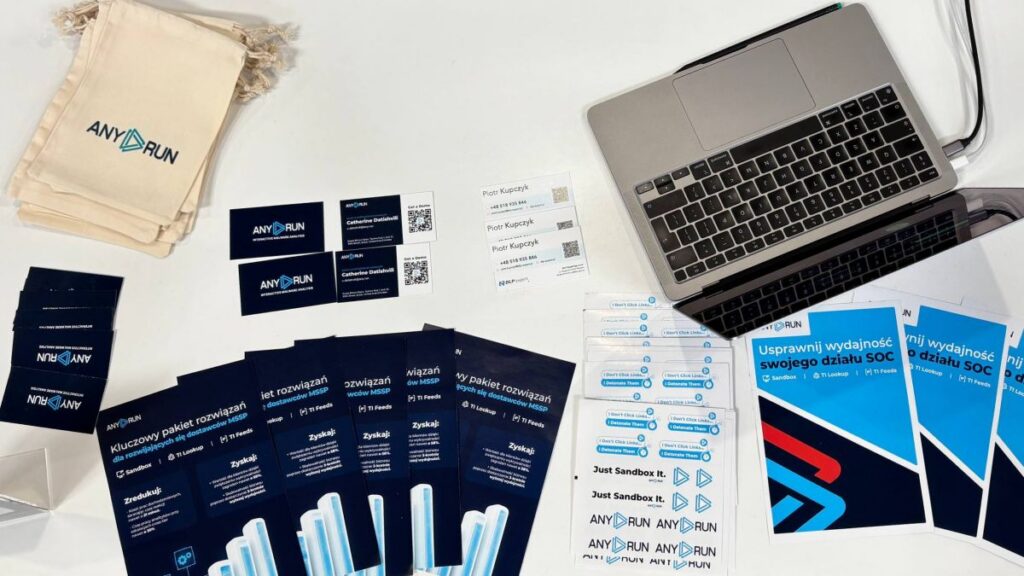
A little behind-the-scenes prep before the conversations began
These questions matter even more for organizations operating in regulated industries, where security tools need to support effective threat response while meeting strict internal compliance requirements.
This is an area ANY.RUN has continued to strengthen throughout its 10 years in cybersecurity. Today, our malware analysis and threat intelligence solutions are used by more than 15,000 organizations worldwide, including 74 of the Fortune 100 companies. ANY.RUN is also SOC 2 Type II attested, reflecting our commitment to strong security controls and careful handling of customer data.
Strengthen your SOC with secure, controlled workflows. Support faster response without compromising compliance.
C1b3rWall Congress 2026: Exploring Ransomware Analysis in Action
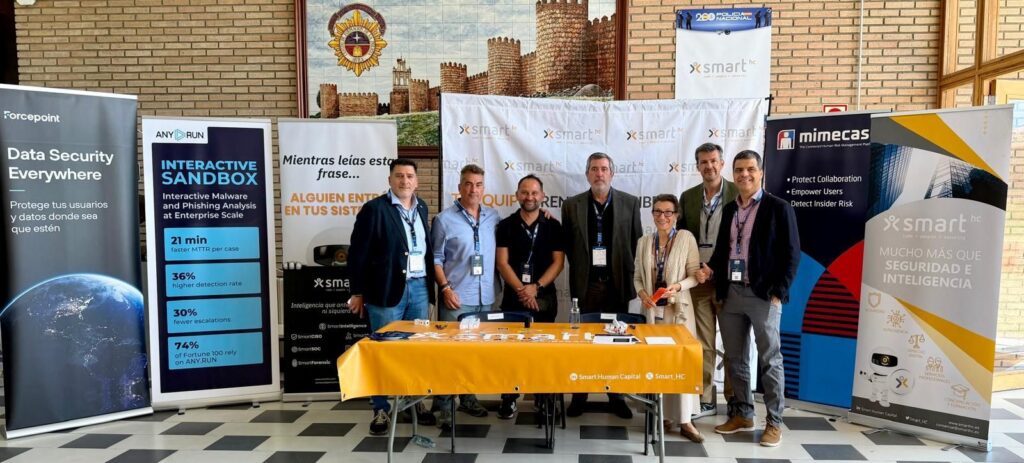
Our final stop was C1b3rWall Congress in Ávila, where cybersecurity professionals from both the public and private sectors gathered at the National Police School to discuss the threats shaping today’s security landscape.
The event gave us a chance to look more closely at one of the most pressing challenges for security teams: ransomware.
During our session, we demonstrated how ransomware can be analyzed inside ANY.RUN’s Interactive Sandbox and showed how interactive analysis helps teams move beyond a basic verdict.
C1b3rWall Congress 2026 in Ávila, Spain
Instead of simply confirming that a file is malicious, teams can observe how the attack unfolds in real time, identify suspicious processes, examine network activity, and understand the sequence of actions behind the threat.
This kind of visibility is especially valuable when every decision matters. It gives security teams the context they need to assess risk faster, document their findings, and respond with greater confidence.
C1b3rWall was also a valuable opportunity to connect with professionals working across different sectors and discuss how clearer behavioral evidence can support stronger, more reliable investigations.
Join 74 of the Fortune 100 companies that trust ANY.RUN.
Build a more resilient SOC with stronger threat visibility.
These events gave us the opportunity to connect with security professionals across Europe, exchange ideas, and discuss the challenges teams are facing today.
The message was clear: faster investigations matter, but so do visibility, trust, and control. Security teams need solutions that help them act with confidence, even when the pressure is high.
These conversations will continue to shape how we develop ANY.RUN and support SOCs and MSSPs worldwide.
Thank you to everyone who stopped by, shared their experience, and joined the discussion. See you at the next events.
About ANY.RUN
ANY.RUN, a leading provider of interactive malware analysis and threat intelligence solutions, helps SOC teams, MSSPs, and enterprises investigate threats faster and make more confident security decisions.
With its cloud-based Interactive Sandbox, security teams can safely analyze suspicious files, URLs, and emails in real time, observe malicious behavior, and collect clear evidence for response without maintaining complex in-house infrastructure.
ANY.RUN’s Threat Intelligence solutions also help organizations uncover deeper threat context, enrich security workflows, and improve visibility into emerging risks. Together, these capabilities support faster triage, stronger threat response, and more efficient security operations at scale.
https://www.backbox.org/wp-content/uploads/2018/09/website_backbox_text_black.png00adminhttps://www.backbox.org/wp-content/uploads/2018/09/website_backbox_text_black.pngadmin2026-06-11 10:06:332026-06-11 10:06:33From Infosecurity Europe to CONFidence and C1b3rWall: What Security Teams Are Prioritizing in 2026
GitHub has announced what it said are “breaking changes” coming to npm version 12, one of which turns off install scripts by default to combat software supply chain threats.
The changes aim to combat attack techniques that abuse the “npm install” command to trigger the execution of malicious code using npm lifecycle hooks. “Npm install” is used to download and install all the necessary
https://www.backbox.org/wp-content/uploads/2018/09/website_backbox_text_black.png00adminhttps://www.backbox.org/wp-content/uploads/2018/09/website_backbox_text_black.pngadmin2026-06-11 08:06:362026-06-11 08:06:36GitHub to Disable npm Install Scripts by Default to Stop Supply Chain Attacks