How I customized my Sonos speaker to make my home theater sound truly immersive
If you’ve left your Sonos system’s audio settings untouched, you’re missing out. Here’s what you need to know about them.
Latest news – Read More

If you’ve left your Sonos system’s audio settings untouched, you’re missing out. Here’s what you need to know about them.
Latest news – Read More
The former Microsoft Office suite (including Word, Excel, and PowerPoint) now requires a subscription – but there are easy ways to get it free.
Latest news – Read More
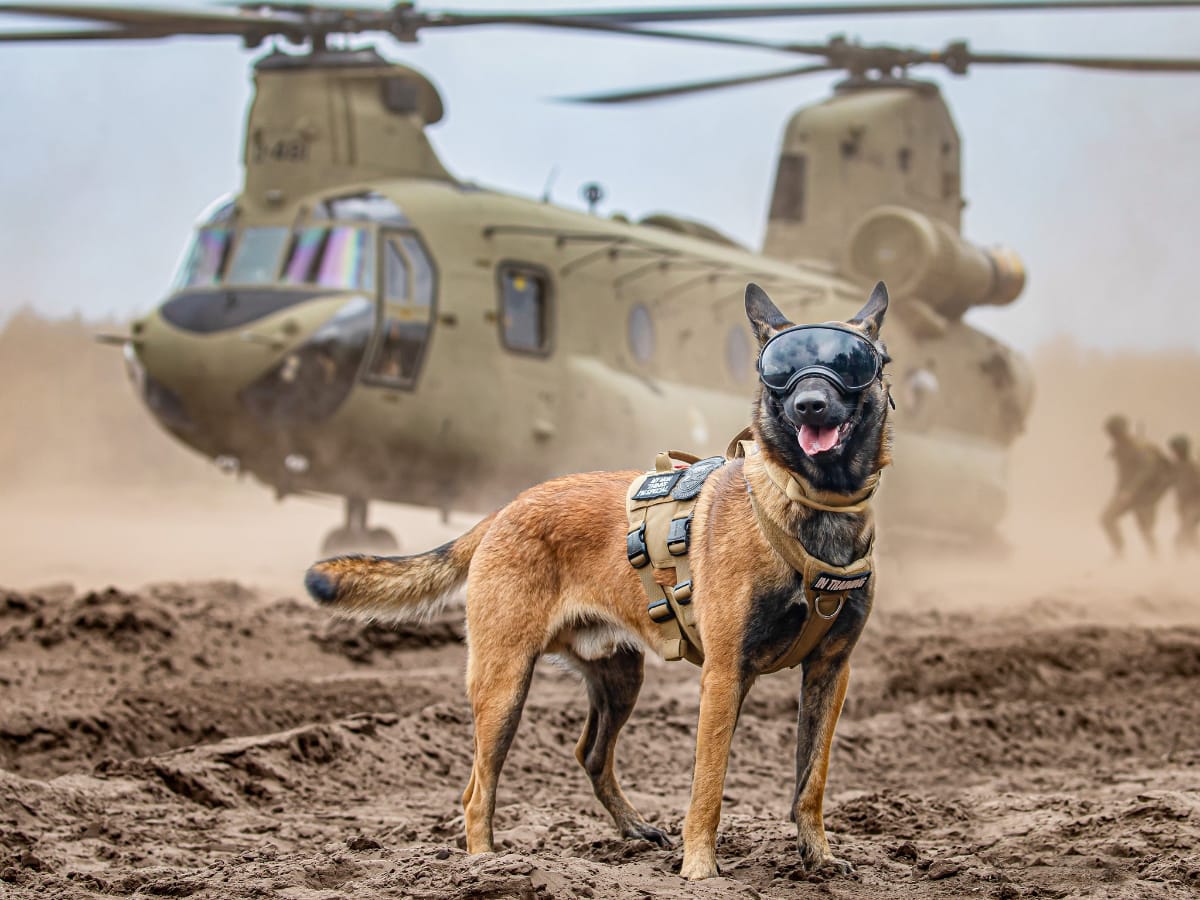
Hello there all of you wonderful people doing sexy exciting work tracking down fake identities, shell companies, scams, stolen assets, extremist activity, cyber threats, hidden connections, nation state actors, terrorists, and who knows what other sort of nefarious activity. Why are none of you talking about dogs?
Across the world, dogs are quietly entangled in criminal economies that are larger, darker, and more organised than many people realise. The public sees isolated incidents, a neglected breeder raided by police, puppies discovered in a van at a border crossing, a fighting ring uncovered in an industrial estate, stolen dogs appearing in classified ads. What often goes unseen is the infrastructure sitting behind these acts. The transport routes. The fake ownership documents. The laundering of money through legitimate businesses. The online propaganda and intimidation. The repeat offenders operating across jurisdictions.
The use of legal loopholes to transform suffering into revenue.
For many the dog is not a companion. It is an asset class.
Illegal breeders can operate at industrial scale while presenting themselves online as respectable family businesses. Smuggling groups move puppies across borders using forged paperwork and welfare theatre designed to evade scrutiny. Dog fighting gangs overlap with wider criminality including narcotics, weapons, violence, and organised intimidation. Poachers use dogs as disposable tools. Fraudsters exploit emotional attachment to animals through fake rescue appeals, fabricated fundraisers, and phantom sales. Stolen dogs can become breeding stock, status symbols, coercive leverage, or instruments of fear.
In every case the pattern is the same; extraction without conscience.
The internet has accelerated this ecosystem dramatically. Social media platforms allow illegal breeders to manufacture legitimacy through curated imagery and emotional storytelling. Messaging apps enable rapid coordination between buyers, transporters, and intermediaries. Cross-border commerce creates opportunities for regulatory arbitrage, where criminals exploit weaker enforcement environments while selling into stronger economies. Even seemingly respectable sectors in the canine world can become entangled with this awfulness through wilful blindness, poor due diligence, or financial incentives.
Meanwhile, enforcement resources are often fragmented and overstretched.
Animal welfare organisations may possess extraordinary passion but they also have a limited investigative capacity. Journalists cannot pursue every lead, law enforcement agencies prioritise immediate threats to human life and national security. Valuable intelligence frequently remains disconnected across separate organisations, jurisdictions, and disciplines through sheer neglect.
That gap matters to the dogs.
Because modern investigations are no longer driven solely by uniforms and warrants. Increasingly, they are driven by researchers, analysts, open-source investigators, financial sleuths, cyber specialists, archivists, writers, and volunteers capable of identifying patterns others overlook. The democratisation of intelligence tools has changed what small groups can achieve.
Public records, corporate registries, satellite imagery, leaked datasets, archived websites, shipping records, geolocation methods, social graph analysis, and open-source intelligence techniques now allow ordinary citizens to map networks that once operated comfortably in darkness. A shipping manifest can reveal movement patterns. A breeder registration can connect to multiple dissolved companies. A deleted advertisement can expose geographic overlap between suspects. A domain registration may link apparently unrelated organisations. A photograph posted casually online can disclose location metadata, associates, vehicles, or timelines, and small fragments become larger pictures when collected methodically.
This is not vigilantism. It is disciplined observation.
Real intelligence work is not cinematic heroics. It is patient collection, careful analysis, structured attribution, and responsible publication. It requires scepticism, restraint, evidence standards, documentation, and ethical judgement. Most importantly, it requires people willing to pay attention over time.
That is the idea behind my intelligence cell at The Roch Society
Not a militia. Not conspiracy culture. Not online mobs pretending to be investigators. A small volunteer intelligence effort built around one simple belief.
Crimes involving dogs deserve serious analytical attention too.
The mission is straightforward. Collect. Analyse. Attribute. Publish.
Collect information responsibly from open sources and public records. Analyse relationships, behaviours, and recurring structures. Attribute activity carefully using evidence rather than speculation. Publish findings that can inform journalists, policymakers, welfare groups, researchers, and law enforcement.
Exposure matters because criminal systems depend heavily on obscurity. They rely on fragmentation, public indifference, and the assumption that nobody will connect the dots. Convictions often begin long before a courtroom.
Convictions begin when criminal networks lose invisibility.
Importantly, not everyone involved needs to be a technical specialist. Intelligence work is multidisciplinary by nature. Strong writers can transform dense research into compelling public reports. Designers can visualise complex networks clearly. Researchers can archive disappearing information before it vanishes. Analysts can identify patterns across datasets. Investigators experienced in corporate structures, cyber security, finance, logistics, or extremist ecosystems may notice signals others miss. Even careful observers with patience and curiosity can contribute meaningfully, if that is you please stand up for the dogs.
There is also something deeply important about directing intelligence capabilities toward a moral purpose that remains neglected. Dogs occupy a strange place in society. People claim to love them collectively while tolerating enormous systems of abuse. Entirely fraudulent legal charity markets function because demand remains socially normalised or hidden behind emotional narratives. Exploitation survives when the public sees good work instead of organised structures.
Changing that requires visibility.
The bigger prize is not the conviction of petty criminals, it is the conviction of middle class charity professionals presiding over obscene legal loophole extraction fraud while they lie to dog owners about it. You have all heard the claim made by the big dog charities that 80c in every dollar goes to the dog.
It does not. Clever accounting tricks allow them to line their own pockets while telling dog owners that 80 cents in the dollar goes to the dogs. In any other world this would be considered fraud, but these people cloak themselves in the small amount of good work they do for the cameras, and avoid real scrutiny.
None of it stands up to honest scrutiny.
The regulatory bodies overseeing charities seem to have missed all of the legal loophole extraction fraud, and dishonest misrepresentation of it to dog owners, either through sheer neglect, or revolving doors between the charity sector and regulatory bodies. It looks a lot like regulatory capture to me.
The problem with legal loophole extraction fraud is that once the charities regulators let one charity get away with it, they all begin to extract profits in the same way through the same legal loophole to the point it is normalized.
What remains is a shocking body of chartity work that nobody can really defend, and its going to cost people their careers and reputations. As it should.
The goal is not sensationalism. Serious investigators avoid exaggeration because exaggeration destroys credibility. The goal is disciplined exposure grounded in evidence, clarity, and persistence. Small groups can matter enormously here. History repeatedly shows that dedicated networks of volunteers, researchers, and independent investigators often identify issues long before institutions fully respond. Persistence creates institutional pressure. Documentation creates accountability. Publication creates visibility. Visibility creates consequences.
Consequences often begin simply because somebody cared enough to look.
The Roch Society intelligence cell is for those who already possess skills and want to direct them somewhere meaningful from time to time. Those interested in attribution, open-source intelligence, cyber investigation, network analysis, research, writing, documentation, or exposure work, and who understand that criminal ecosystems flourish when scrutiny is weak.
Most importantly, it is for those who believe dogs deserve better than being treated as disposable instruments of profit, violence, intimidation, or fraud.
Come and walk with the dogs, they need us to get some kills for them.
Remember that they bleed and die with us in war when we need them to.
We owe them.
Secjuice – Read More
Plus: Meta officially kills encrypted Instagram DMs, the Trump administration targets “violent left wing extremists,” leaked documents reveal Russia’s school for elite hackers, and more.
Security Latest – Read More
Up to 40% of people experience fainting episodes. What if their watches could warn them?
Latest news – Read More
ShinyHunters-linked attackers defaced Canvas portals, disrupting finals week access and exposing SaaS security risks for schools.
The post ShinyHunters Extorts Universities in New Instructure Canvas Hack appeared first on TechRepublic.
Security Archives – TechRepublic – Read More
cPanel has released updates to address three vulnerabilities in cPanel and Web Host Manager (WHM) that could be exploited to achieve privilege escalation, code execution, and denial-of-service.
The list of vulnerabilities is as follows –
CVE-2026-29201 (CVSS score: 4.3) – An insufficient input validation of the feature file name in the “feature::LOADFEATUREFILE” adminbin call that could result
The Hacker News – Read More
From simply asking to using the app to secret buttons, there are several ways to find a lost remote.
Latest news – Read More
While smart plugs are very convenient, here are some things you should never plug into them.
Latest news – Read More
Slovakian national Alan Bill, 33, pleaded guilty in January to a conspiracy to distribute controlled substances charge after admitting to his role in running Kingdom Market — a platform used by drug dealers and cybercriminals between March 2021 and December 2023.
The Record from Recorded Future News – Read More