
NIST CSF 2.0 Practical Guide: Building a Modern Security Program for Risk Management in the US Companies
Cybersecurity programs often grow over time through new policies, controls, and technologies. The challenge for CISOs is making sure these pieces work together and support the risks that matter most to the business.
NIST CSF 2.0 provides a practical structure for doing that. It helps US organizations understand their current security posture, define clear priorities, and improve how they govern, identify, protect, detect, respond to, and recover from cyber incidents.
This guide explains how CISOs can apply the updated framework in practice and where ANY.RUN’s Interactive Sandbox and Threat Intelligence solutions can contribute to stronger threat analysis, fastervalidation, and more informed response decisions.
What Is NIST CSF 2.0?
NIST Cybersecurity Framework 2.0 is a flexible set of guidelines that helps US organizations manage and reduce cybersecurity risk.
Rather than prescribing specific technologies or controls, it provides a common structure for understanding the current security posture, identifying gaps, setting priorities, and improving how cybersecurity decisions are made.
What Changed in NIST CSF 2.0?
The biggest change in NIST CSF 2.0 is the addition of Govern as a sixth core function, alongside Identify, Protect, Detect, Respond, and Recover.
This change reflects a broader view of cybersecurity. It is no longer treated only as a technical issue for security teams. CSF 2.0 places greater emphasis on leadership, business priorities, risk ownership, regulatory requirements, and third-party relationships.
The Govern function covers six key areas:
- Organizational context
- Risk management strategy
- Roles, responsibilities, and authority
- Cybersecurity policies
- Review of security performance
- Cybersecurity supply chain risk management
In practice, this means CISOs are expected to connect security decisions with the organization’s mission, risk appetite, legal obligations, and business dependencies. It also places clearer responsibility on leadership to provide the right resources, review performance, and adjust the security strategy when risks change.
Another important update is the stronger focus on suppliers and third parties. US companies are expected to understand which suppliers are critical, assess the risks they introduce, include them in incident planning, and manage those risks throughout the relationship.
CSF 2.0 is also designed for a wider audience. While the original framework was closely associated with critical infrastructure, the updated version is intended for organizations of any size, sector, or level of security maturity.
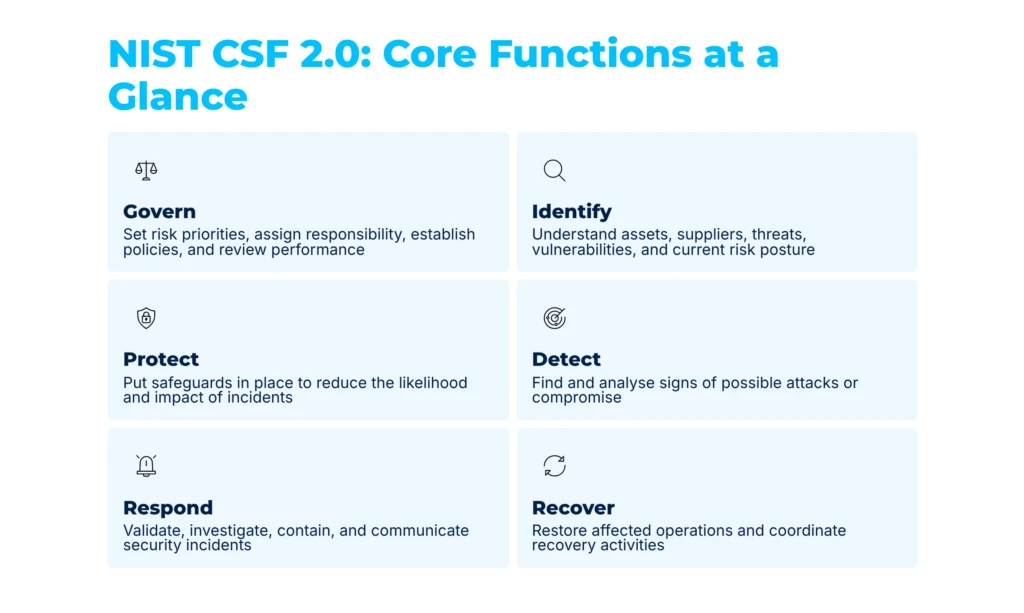
The six functions are now:
| CSF 2.0 function | What it helps the organization do |
|---|---|
| Govern | Set risk priorities, assign responsibility, establish policies, and review performance |
| Identify | Understand assets, suppliers, threats, vulnerabilities, and current risk |
| Protect | Put safeguards in place to reduce the likelihood and impact of incidents |
| Detect | Find and analyze signs of possible attacks or compromise |
| Respond | Validate, investigate, contain, and communicate incidents |
| Recover | Restore affected operations and coordinate recovery activities |
These functions are not six steps that happen one after another. They work together as part of an ongoing cycle. Governance shapes the whole program, while findings from detection, response, and recovery should feed back into risk assessments, policies, and future security priorities.
NIST CSF 2.0 Requirements: What CISOs Need to Know
NIST CSF 2.0 does not prescribe a fixed list of technologies or controls that every organization must implement. Instead, it defines cybersecurity outcomes that organizations can adapt to their size, risk profile, regulatory obligations, and business priorities.
Its requirements may become more specific when the framework is used alongside US federal or state regulations, industry standards, contracts, or internal policies. CISOs should therefore use CSF 2.0 to organize security activities while considering the legal, regulatory, and contractual requirements that apply to their organization.
In practice, implementation means deciding which outcomes are relevant, assessing how well they are currently achieved, assigning responsibility, and creating a plan to address the most important gaps.
How to Start NIST Cybersecurity Framework 2.0 Implementation
Implementing CSF 2.0 does not mean rebuilding the entire security program. Most US organizations already have many of the required controls and processes in place. The first step is to understand where the current program falls short and which gaps create the most risk.
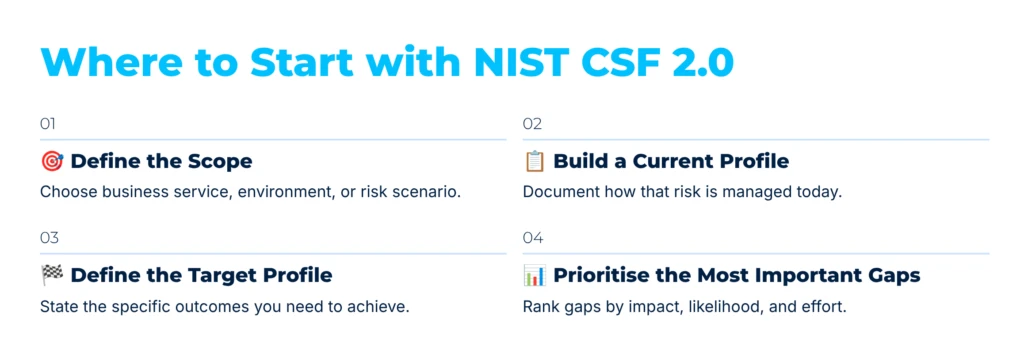
A practical approach is to focus on one critical area, such as phishing response, cloud security, supplier file intake, or incident handling, and move through four steps.
1. Define the Scope
Choose the business service, environment, or risk scenario the assessment will cover. A clear scope keeps the project manageable and connects security outcomes with specific assets, teams, and business operations.
2. Build a Current Profile
Document how the organization manages the selected risk today, including:
- Existing controls and processes
- Responsible teams
- Available evidence and metrics
- Known weaknesses
- Supplier or service-provider dependencies
The goal is to capture what happens in practice, not only what internal policies describe.
3. Define the Target Profile
The Target Profile describes the security outcomes the organization needs to achieve.
Rather than using broad goals such as “improve threat detection,” define specific outcomes. For example:
- Suspicious files, URLs, and emails are analyzed safely.
- Analysts receive enough evidence to validate alerts.
- Threat intelligence is available inside existing SOC workflows.
- Investigations produce consistent IOCs, TTPs, and reports.
This is where CISOs can connect CSF outcomes with the capabilities needed to achieve them. For example, ANY.RUN’s Interactive Sandbox and Threat Intelligence solutions can help close gaps in behavioral analysis, threat validation, and investigation context.
4. Prioritize the Most Important Gaps
Compare the Current and Target Profiles, then rank the gaps based on business impact, likelihood, regulatory requirements, implementation effort, and exposure of critical assets.
This creates a practical improvement roadmap. It shows where the organization stands, which capabilities are missing, and which investments or process changes should come first.
NIST CSF 2.0 Best Practices for CISOs
A successful implementation should reflect the organization’s real risks and operating environment rather than become a checklist exercise.
Several best practices can make the framework more useful:
- Start with a critical business service or risk scenario instead of assessing everything at once.
- Connect each cybersecurity outcome with a clear owner and business reason.
- Use evidence from incidents, investigations, exercises, and threat intelligence to identify gaps.
- Prioritize improvements based on risk and impact, not only technical severity.
- Review Current and Target Profiles as threats, technologies, and business priorities change.
The framework should remain part of an ongoing risk management process. Each investigation, incident, or major change should provide new information that helps the organization adjust its priorities and strengthen the program.
Applying NIST CSF 2.0 in Practice
Once the Current and Target Profiles are clear, CISOs can begin mapping priorities to the six CSF functions. The goal is not to treat them as separate projects, but to build a connected program where governance, prevention, detection, response, and recovery support each other.
Govern: Set the Direction for the Security Program
The NIST CSF 2.0 Govern function defines how cybersecurity risk is managed across the organization. It connects security priorities with business goals, legal obligations, leadership decisions, and supplier relationships.
For CISOs, this means deciding:
- Who owns each risk
- How risks are prioritized
- Which policies guide security decisions
- How performance is reviewed
- Where resources and investment are needed
Evidence from investigations can make these decisions more grounded. Threat trends, recurring visibility gaps, and analysis activity can reveal where processes are slowing down or where teams lack the capabilities needed to manage risk effectively.
In this context, ANY.RUN gives leaders operational information they can use when reviewing policies, investment priorities, and the overall performance of the security program.
Identify: Understand Current Risk and Threat Exposure
The NIST CSF 2.0 Identify function helps US organizations understand the risks affecting critical assets, services, suppliers, and business operations.
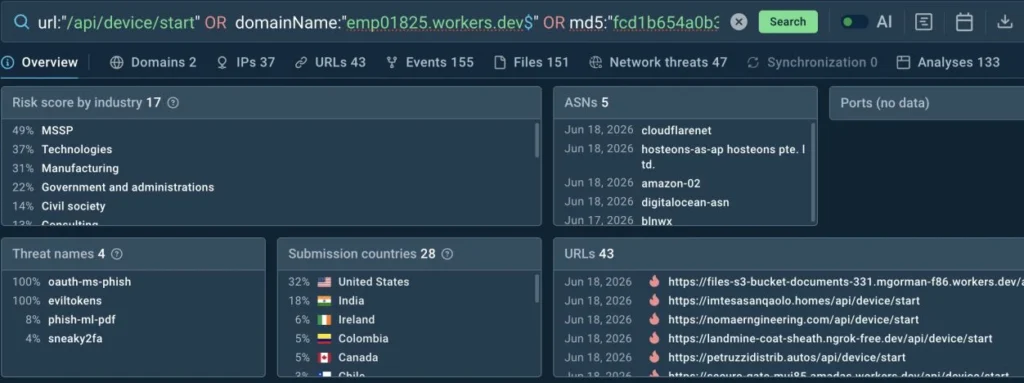
Threat intelligence plays an important role here. ANY.RUN Threat Intelligence is built on real investigation data from more than 15,000 organizations across different industries. It gives teams visibility into active malware, phishing campaigns, malicious infrastructure, and attacker behavior seen in real-world investigations.
This allows organizations to:
- Identify threats relevant to their industry and environment
- Add current threat context to risk assessments
- Understand how active campaigns operate
- Prioritize gaps based on real attacker activity
- Improve security plans using operational evidence
The value is not in collecting more indicators. It is in understanding which threats are most relevant to the business and where existing defenses may fall short.
Protect: Strengthen Safeguards Before an Incident
The NIST CSF 2.0 Protect function covers the controls that reduce the likelihood of an attack succeeding or limit the damage it can cause. This includes access management, employee training, data protection, secure configurations, and infrastructure resilience.
For CISOs, the key question is whether these safeguards reflect the organization’s actual risk and threat exposure.
Findings from malware and phishing investigations can help teams see how attackers bypass filters, abuse legitimate applications, or execute unauthorized software. That evidence can then be used to improve:
- Blocking and detection logic
- Security procedures
- Training for analysts and specialized teams
- Controls around external files and links
- Defenses against unauthorized software execution
This creates a feedback loop where lessons from real threats strengthen preventive controls.
Detect: Turn Suspicious Activity into Clear Evidence
The NIST CSF 2.0 Detect function focuses on finding signs of compromise and determining whether they represent a real incident.
SIEM, EDR, email security, and network monitoring systems may generate the initial alert. The challenge is understanding what the suspicious activity actually does and whether it meets the organization’s incident criteria.
Through the Interactive Sandbox, analysts can safely examine files, URLs, and emails and observe their runtime behavior. Threat Intelligence Lookup adds context around related indicators, infrastructure, and known attacker activity.
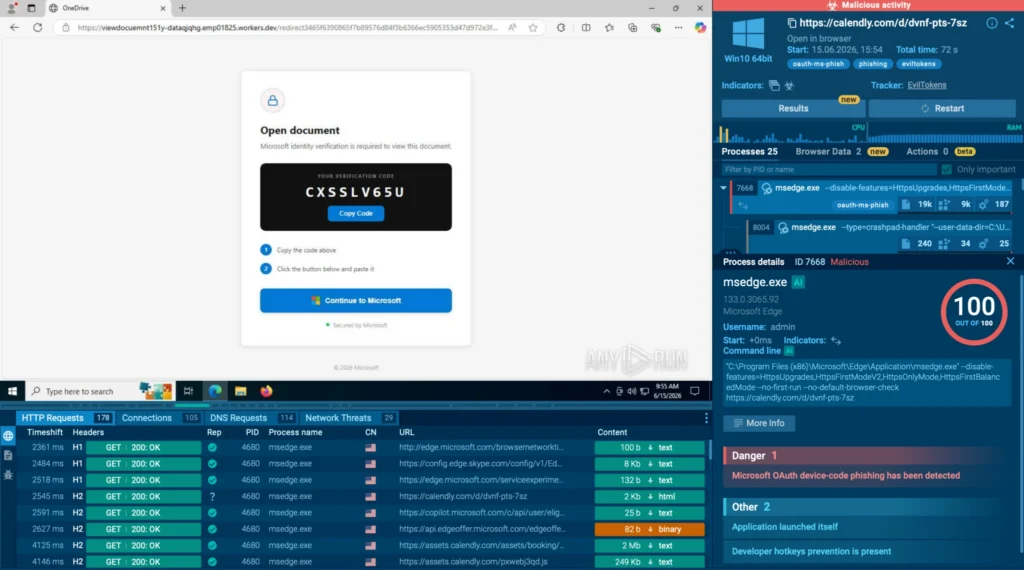
Together, these capabilities help teams:
- Validate suspicious activity faster
- Understand malicious behavior and infrastructure
- Correlate findings from multiple sources
- Estimate potential impact and scope
- Escalate confirmed threats with supporting evidence
This turns an isolated alert into a clearer, evidence-based detection decision.
Respond: Move From Validation to Action
The NIST CSF 2.0 Respond function begins once suspicious activity has been confirmed as an incident. Teams must prioritize the case, understand what happened, estimate its scale, and coordinate the next steps.
Investigation results from ANY.RUN provide the technical evidence needed for these decisions. Analysts can extract IOCs, document behaviors and TTPs, identify related infrastructure, and share findings with the teams responsible for containment.
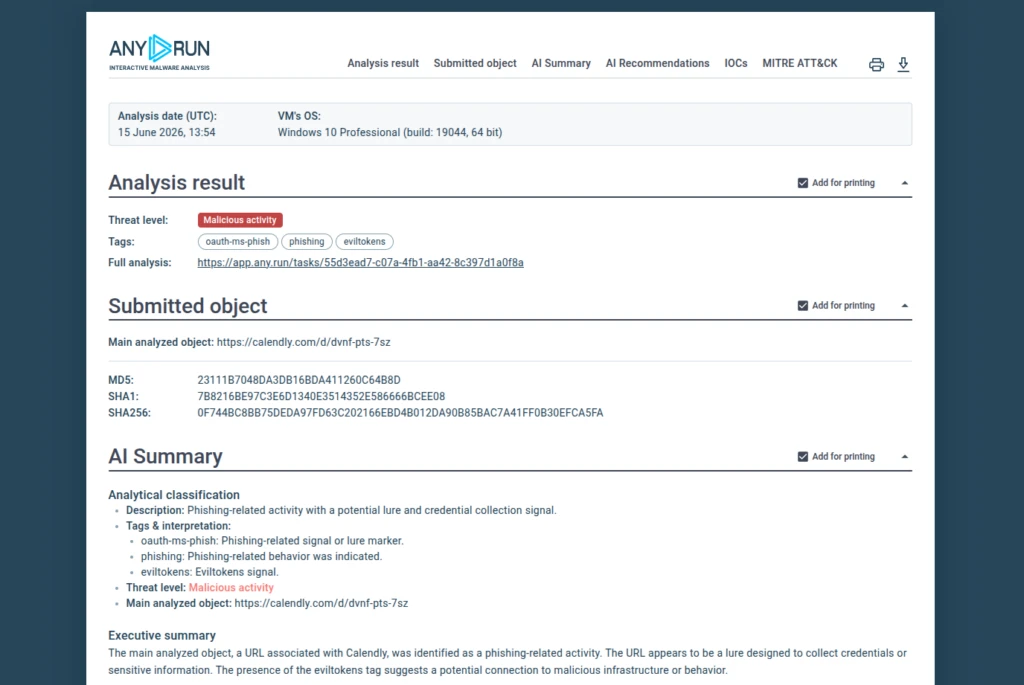
The results can support:
- Incident triage and prioritization
- Root-cause analysis
- Escalation with clear evidence
- Threat hunting across the environment
- Containment and eradication decisions
- Coordination between SOC teams and other stakeholders
Containment still takes place through endpoint, identity, network, and other response systems. The role of ANY.RUN is to give responders the context they need to choose the right action without unnecessary delay.
Recover: Restore Operations and Learn from the Incident
The NIST CSF 2.0 Recover function focuses on restoring affected systems and services, verifying that they are safe to return to use, and keeping stakeholders informed.
For CISOs, this means having clear recovery criteria, prioritizing critical operations, verifying backups and restored assets, and documenting when normal operations can resume.
Investigation records can help recovery teams understand which files, systems, accounts, or persistence mechanisms require further checks. They can also support post-incident reviews by showing where visibility, escalation, or response processes broke down.
These lessons should then feed back into the Identify function, where NIST places continuous improvement. Detection rules, response playbooks, investigation procedures, and future risk priorities can all be updated based on what the organization learned.
Integrating ANY.RUN into NIST CSF 2.0 Implementation
ANY.RUN’s strongest contribution is in the Identify, Detect, and Respond functions, where teams need current threat intelligence, behavioral evidence, and clear investigation findings. It also contributes operational evidence that can inform governance, strengthen safeguards, and support improvements after an incident.
| CSF 2.0 function | Practical priority | Role of ANY.RUN |
|---|---|---|
| Govern | Set risk priorities, responsibilities, policies, and oversight | Provides investigation data and team-level visibility that can inform security decisions and process reviews |
| Identify | Understand threats, exposure, and areas for improvement | Delivers threat intelligence and behavioral context that help teams identify relevant threats and prioritize risk |
| Protect | Strengthen safeguards and reduce exposure | Findings from analysis can inform blocking logic, specialist training, security procedures, and preventive controls |
| Detect | Analyze suspicious activity and determine whether it represents an incident | Reveals runtime behavior, enriches alerts with threat context, and gives analysts evidence beyond the initialdetection |
| Respond | Validate, prioritize, investigate, and coordinate incidents | Provides evidence for triage, escalation, investigation, and containment decisions |
| Recover | Restore affected operations and apply lessons from the incident | Contributes investigation evidence to post-incident reviews and improvements to detection and response processes |
This mapping helps CISOs understand where ANY.RUN fits within the wider security architecture. The result is a stronger flow of evidence across identification, detection, response, and continuous improvement, without treating ANY.RUN as a replacement for the wider controls and responsibilities required by NIST CSF 2.0.
Turning the Framework into a Working Security Program
NIST CSF 2.0 gives CISOs at US companies a practical way to connect cybersecurity activities with business and regulatory risk. Its real value comes from helping organizations identify gaps, set priorities, assign responsibility, and improve how security teams work together.
Implementation should begin with the organization’s current state and the outcomes it needs to achieve. From there, each function contributes to the same cycle: Govern sets the direction, Identify clarifies risk, Protect reduces exposure, Detect finds suspicious activity, Respond turns evidence into action, and Recover helps restore operations and improve future readiness.
ANY.RUN strengthens this cycle where deeper threat context and behavioral evidence are needed. By connecting interactive analysis and threat intelligence with existing security workflows, organizations can validate threats faster, make better-informed decisions, and improve their response processes over time.
The goal is not simply to align with NIST CSF 2.0. It is to build a security program that can adapt as threats, technologies, and business priorities change.
About ANY.RUN
ANY.RUN, a leading provider of interactive malware analysis and threat intelligence solutions, helps organizations investigate threats faster and make response decisions based on clear behavioral evidence.
Its solutions include the Interactive Sandbox for enterprise-scale malware and phishing analysis, along with Threat Intelligence products built on investigation data from more than 15,000 organizations. This intelligence helps security teams enrich alerts, uncover active threats earlier, and add relevant context to detection, investigation, and response workflows.
ANY.RUN is SOC 2 Type II attested, demonstrating its commitment to strong security controls and customer data protection. For SOCs, MSSPs, and enterprise security teams, the platform helps reduce investigation uncertainty, accelerate triage, and turn threat analysis into actionable findings.
The post NIST CSF 2.0 Practical Guide: Building a Modern Security Program for Risk Management in the US Companies appeared first on ANY.RUN’s Cybersecurity Blog.
ANY.RUN’s Cybersecurity Blog – Read More
