430,000 Impacted by Data Breaches at New York, Pennsylvania Healthcare Organizations

University Diagnostic Medical Imaging and Allegheny Health Network have disclosed data breaches impacting approximately 430,000 patients.

The post 430,000 Impacted by Data Breaches at New York, Pennsylvania Healthcare Organizations appeared first on SecurityWeek.

SecurityWeek – ​Read More

UK Engineering Giant IMI Hit by Cyberattack

UK engineering firm IMI says it suffered a cyberattack that resulted in unauthorized access to some of its systems.

The post UK Engineering Giant IMI Hit by Cyberattack appeared first on SecurityWeek.

SecurityWeek – ​Read More

India’s RBI Introduces Exclusive “bank.in” Domain to Combat Digital Banking Fraud

India’s central bank, the Reserve Bank of India (RBI), said it’s introducing an exclusive “bank.in” internet domain for banks in the country to combat digital financial fraud.
“This initiative aims to reduce cyber security threats and malicious activities like phishing; and, streamline secure financial services, thereby enhancing trust in digital banking and payment services,” the RBI said in a

The Hacker News – ​Read More

PowerSchool data breach affected 16,000 students in the UK

The edtech giant has begun notifying individuals outside of the US and Canada affected by the breach

© 2024 TechCrunch. All rights reserved. For personal use only.

Security News | TechCrunch – ​Read More

SparkCat — first OCR trojan stealer to infiltrate the App Store | Kaspersky official blog

Your smartphone gallery most likely contains photos and screenshots of important information you keep there for safety or convenience, such as documents, bank agreements, or seed phrases for recovering cryptocurrency wallets. All of this data can be stolen by a malicious app such as the SparkCat stealer we’ve discovered. This malware is currently configured to steal crypto wallet data, but it could easily be repurposed to steal any other valuable information.

The worst part is that this malware has made its way into the official app stores, with almost 250,000 downloads of infected apps from Google Play alone. Although malicious apps have been found in Google Play before, this marks the first time a stealer Trojan has been detected in the App Store. How does this threat work and what can you do to protect yourself?

Malicious add-ons to legitimate apps

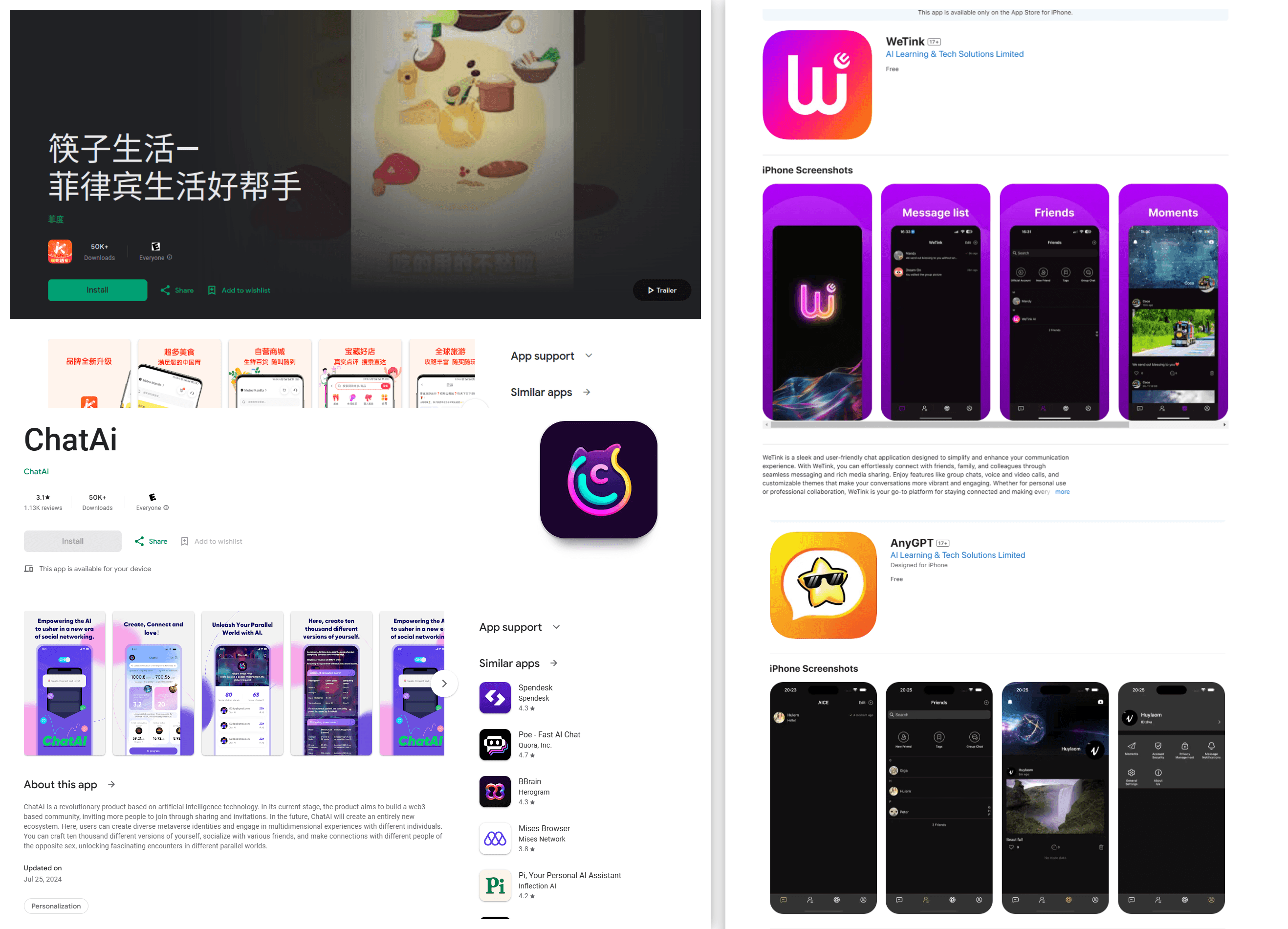
Apps containing SparkCat’s malicious components fall into two categories. Some, such as numerous similar messenger apps claiming AI functionality, all from the same developer, were clearly designed as bait. Some others are legitimate apps: food delivery services, news readers, and crypto wallet utilities. We don’t yet know how the Trojan functionality got into these apps. It may have been the result of a supply chain attack, where a third-party component used in the app was infected. Alternatively, the developers may have deliberately embedded the Trojan into their apps.

SparkCat-infected app ComeCome in Google Play and App Store

The first app where we detected SparkCat was a food delivery service called ComeCome, available in the UAE and Indonesia. The infected app was found on both Google Play and the App Store

The stealer analyzes photos in the smartphone’s gallery, and to that end, all infected apps request permission to access it. In many cases, this request seems completely legitimate — for example, the food delivery app ComeCome requested access for a customer support chat right upon opening this chat, which looked completely natural. Other applications request gallery access when launching their core functionality, which still seems harmless. After all, you do want to be able to share photos in a messenger, right?

However, as soon as the user grants access to specific photos or the entire gallery, the malware starts going through all the photos it can reach, searching for anything valuable.

AI-powered theft

To find crypto wallet data among photos of cats and sunsets, the Trojan has a built-in optical character recognition (OCR) module based on the Google ML Kit, a universal machine learning library.

Depending on the device’s language settings, SparkCat downloads models trained to detect the relevant script in photos, whether Latin, Korean, Chinese, or Japanese. After recognizing the text in an image, the Trojan checks it against a set of rules loaded from its command-and-control server. In addition to keywords from the list (for example, “Mnemonic”), the filter can be triggered by specific patterns, such as meaningless letter combinations in backup codes or certain word sequences in seed phrases.
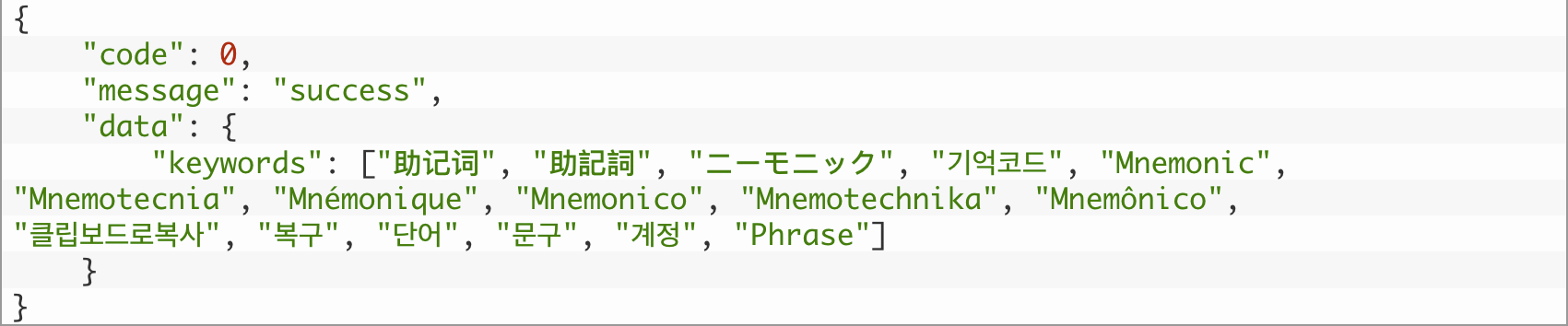
Keywords that SparkCat looks for

During our analysis, we requested a list of keywords used for OCR searching from the Trojan’s C2 servers. The cybercriminals are clearly interested in phrases used to recover access to crypto wallets, known as mnemonics

The Trojan uploads all photos containing potentially valuable text to the attackers’ servers, along with detailed information about the recognized text and the device the image was stolen from.

Scale and victims of the attack

We identified 10 malicious apps in Google Play and 11 in the App Store. At the time of publication, all malicious apps had been removed from the App Store (but not Google Play). The total number of downloads from Google Play alone exceeded 242,000 at the time of analysis, and our telemetry data suggests that the same malware was available from other sites and unofficial app stores, too.
Negative review of the ComeCome app in the App Store

Checking negative reviews of the ComeCome app in the App Store could have put users off downloading it

Judging by SparkCat’s dictionaries, it’s “trained” to steal data from users in many European and Asian countries, and evidence indicates that attacks have been ongoing since at least March 2024. The authors of this malware are likely fluent in Chinese — more details on this, as well as the technical aspects of SparkCat, can be found in the full report on Securelist.

How to protect yourself from OCR Trojans

Unfortunately, the age-old advice of “only download highly-rated apps from official app stores” is a silver bullet no longer — even the App Store has now been infiltrated by a true infostealer, and similar incidents have occurred repeatedly in Google Play. Therefore, we need to strengthen the criteria here: only download highly-rated apps with thousands, or better yet, millions of downloads, published at least several months ago. Also, verify app links in official sources (such as the developers’ website) to ensure they’re not fake, and read the reviews, especially the negative ones. And, of course, be sure to install a comprehensive security system on all your smartphones and computers.
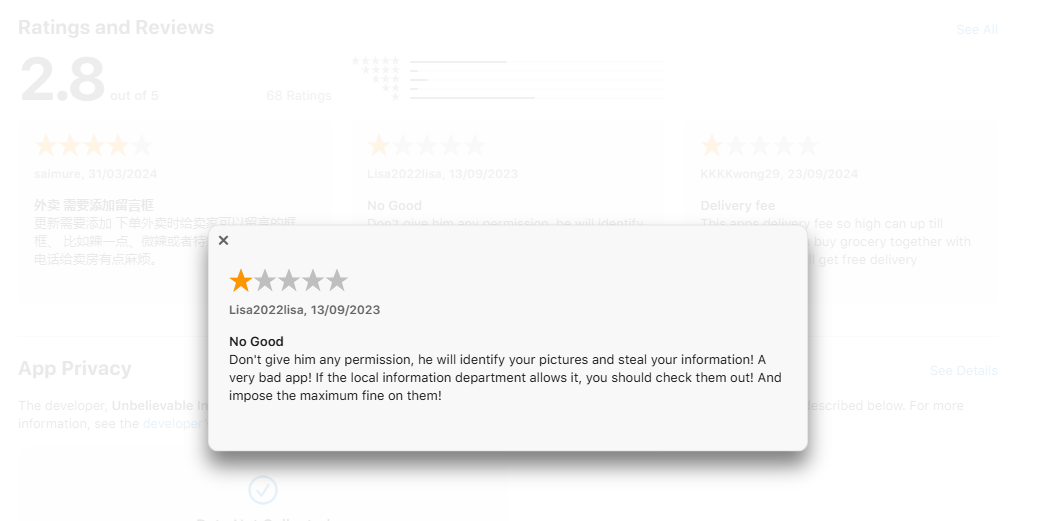
Negative review of the ComeCome app in the App Store

Checking negative reviews of the ComeCome app in the App Store could have put users off downloading it

You should also be extremely cautious about granting permissions to new apps. Previously, this was primarily a concern for “Accessibility” settings, but now we see that even granting gallery access can lead to the theft of personal data. If you’re not completely sure about an app’s legitimacy (for example, it’s not an official messenger, but a modified version), don’t grant it full access to all your photos and videos. Grant access only to specific photos when necessary.

Storing documents, passwords, banking data, or photos of seed phrases in your smartphone’s gallery is highly unsafe — besides the stealers such as SparkCat, there’s also always the risk that someone peeks at the photos, or you accidentally upload them to a messenger or file-sharing service. Such information should be stored in a dedicated application. For example, Kaspersky Password Manager allows you to securely store and sync not only passwords and two-factor authentication tokens but also banking card details and scanned documents across all your devices — all in encrypted form. By the way, this app comes with our Kaspersky Plus and Kaspersky Premium subscriptions.

Finally, if you’ve already installed an infected application (the list of them is available at the end of the Securelist post), delete it and don’t use it until the developer releases a fixed version. Meanwhile, carefully review your photo gallery to assess what data the cybercriminals may have obtained. Change any passwords and block any cards saved in the gallery. Although the version of SparkCat we discovered hunts for seed phrases specifically, it’s possible that the Trojan could be reconfigured to steal other information. As for crypto wallet seed phrases, once created, they can’t be changed. Create a new crypto wallet, transfer all your funds from the compromised one, and then abandon it completely.

Kaspersky official blog – ​Read More

Trimble Cityworks Customers Warned of Zero-Day Exploitation

Trimble Cityworks is affected by a zero-day vulnerability that has been exploited in attacks involving the delivery of malware.

The post Trimble Cityworks Customers Warned of Zero-Day Exploitation appeared first on SecurityWeek.

SecurityWeek – ​Read More

India to launch new domain name for banks to fight digital fraud

India’s central bank is introducing an exclusive “.bank.in” domain for banks from April 2025 as part of efforts to combat rising digital payment frauds and bolster trust in online banking services. The Institute for Development and Research in Banking Technology (IDRBT) will serve as the exclusive registrar for the new domain, the Reserve Bank of […]

© 2024 TechCrunch. All rights reserved. For personal use only.

Security News | TechCrunch – ​Read More

Hackers Exploiting SimpleHelp RMM Flaws for Persistent Access and Ransomware

Threat actors have been observed exploiting recently disclosed security flaws in SimpleHelp’s Remote Monitoring and Management (RMM) software as a precursor for what appears to be a ransomware attack.
The intrusion leveraged the now-patched vulnerabilities to gain initial access and maintain persistent remote access to an unspecified target network, cybersecurity company Field Effect said in a

The Hacker News – ​Read More

S. Korea’s Notorious Sex Crime Hub Ya-moon Hacked, User Data Leaked

Ya-moon, S. Korea’s notorious sex crime hub operating since 1990, hacked; user data leaked, exposing CSAM, exploitation, and illicit activities.

Hackread – Latest Cybersecurity, Tech, Crypto & Hacking News – ​Read More

Experts Flag Security, Privacy Risks in DeepSeek AI App

New mobile apps from the Chinese artificial intelligence (AI) company DeepSeek have remained among the top three “free” downloads for Apple and Google devices since their debut on Jan. 25, 2025. But experts caution that many of DeepSeek’s design choices — such as using hard-coded encryption keys, and sending unencrypted user and device data to Chinese companies — introduce a number of glaring security and privacy risks.

Public interest in the DeepSeek AI chat apps swelled following widespread media reports that the upstart Chinese AI firm had managed to match the abilities of cutting-edge chatbots while using a fraction of the specialized computer chips that leading AI companies rely on. As of this writing, DeepSeek is the third most-downloaded “free” app on the Apple store, and #1 on Google Play.

DeepSeek’s rapid rise caught the attention of the mobile security firm NowSecure, a Chicago-based company that helps clients screen mobile apps for security and privacy threats. In a teardown of the DeepSeek app published today, NowSecure urged organizations to remove the DeepSeek iOS mobile app from their environments, citing security concerns.

NowSecure founder Andrew Hoog said they haven’t yet concluded an in-depth analysis of the DeepSeek app for Android devices, but that there is little reason to believe its basic design would be functionally much different.

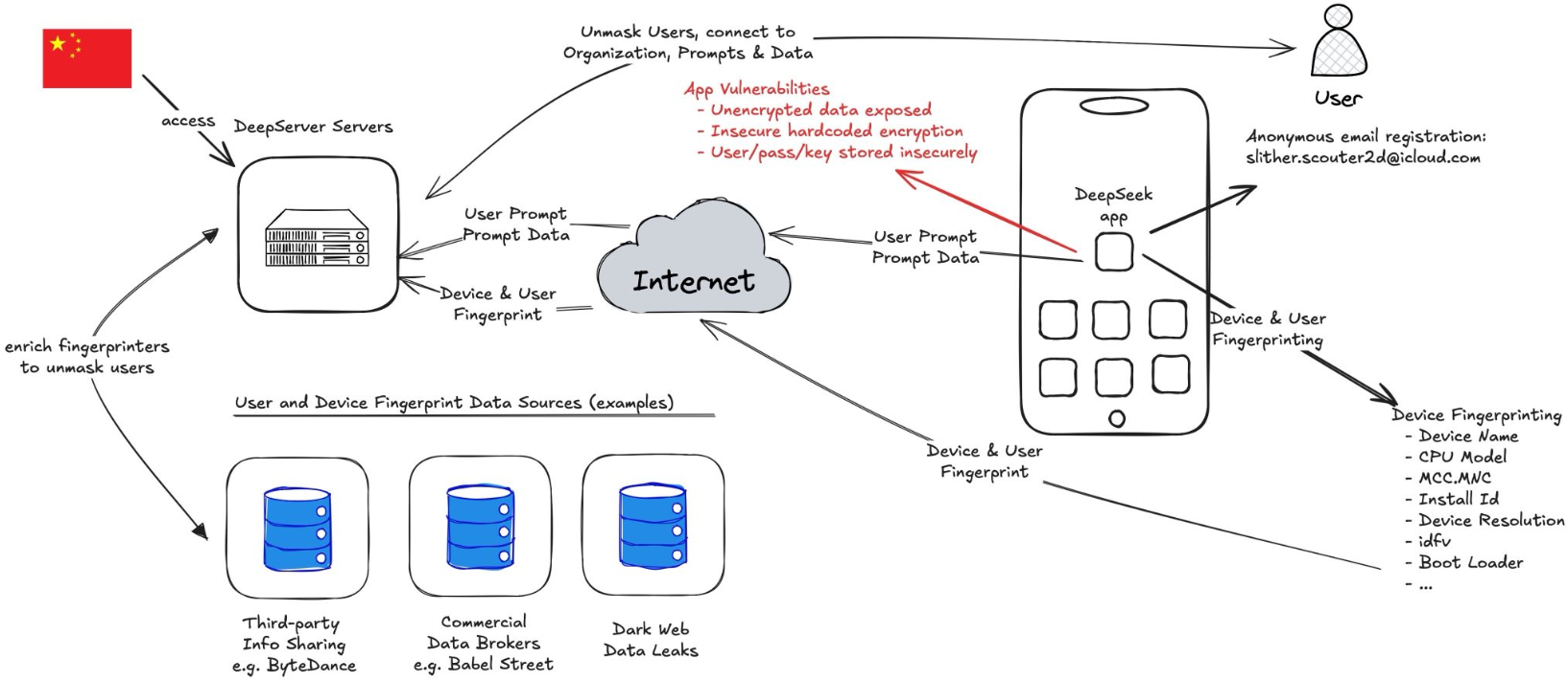
Hoog told KrebsOnSecurity there were a number of qualities about the DeepSeek iOS app that suggest the presence of deep-seated security and privacy risks. For starters, he said, the app collects an awful lot of data about the user’s device.

“They are doing some very interesting things that are on the edge of advanced device fingerprinting,” Hoog said, noting that one property of the app tracks the device’s name — which for many iOS devices defaults to the customer’s name followed by the type of iOS device.

The device information shared, combined with the user’s Internet address and data gathered from mobile advertising companies, could be used to deanonymize users of the DeepSeek iOS app, NowSecure warned. The report notes that DeepSeek communicates with Volcengine, a cloud platform developed by ByteDance (the makers of TikTok), although NowSecure said it wasn’t clear if the data is just leveraging ByteDance’s digital transformation cloud service or if the declared information share extends further between the two companies.

Image: NowSecure.

Perhaps more concerning, NowSecure said the iOS app transmits device information “in the clear,” without any encryption to encapsulate the data. This means the data being handled by the app could be intercepted, read, and even modified by anyone who has access to any of the networks that carry the app’s traffic.

“The DeepSeek iOS app globally disables App Transport Security (ATS) which is an iOS platform level protection that prevents sensitive data from being sent over unencrypted channels,” the report observed. “Since this protection is disabled, the app can (and does) send unencrypted data over the internet.”

Hoog said the app does selectively encrypt portions of the responses coming from DeepSeek servers. But they also found it uses an insecure and now deprecated encryption algorithm called 3DES (aka Triple DES), and that the developers had hard-coded the encryption key. That means the cryptographic key needed to decipher those data fields can be extracted from the app itself.

There were other, less alarming security and privacy issues highlighted in the report, but Hoog said he’s confident there are additional, unseen security concerns lurking within the app’s code.

“When we see people exhibit really simplistic coding errors, as you dig deeper there are usually a lot more issues,” Hoog said. “There is virtually no priority around security or privacy. Whether cultural, or mandated by China, or a witting choice, taken together they point to significant lapse in security and privacy controls, and that puts companies at risk.”

Apparently, plenty of others share this view. Axios reported on January 30 that U.S. congressional offices are being warned not to use the app.

“[T]hreat actors are already exploiting DeepSeek to deliver malicious software and infect devices,” read the notice from the chief administrative officer for the House of Representatives. “To mitigate these risks, the House has taken security measures to restrict DeepSeek’s functionality on all House-issued devices.”

TechCrunch reports that Italy and Taiwan have already moved to ban DeepSeek over security concerns. Bloomberg writes that The Pentagon has blocked access to DeepSeek. CNBC says NASA also banned employees from using the service, as did the U.S. Navy.

Beyond security concerns tied to the DeepSeek iOS app, there are indications the Chinese AI company may be playing fast and loose with the data that it collects from and about users. On January 29, researchers at Wiz said they discovered a publicly accessible database linked to DeepSeek that exposed “a significant volume of chat history, backend data and sensitive information, including log streams, API secrets, and operational details.”

“More critically, the exposure allowed for full database control and potential privilege escalation within the DeepSeek environment, without any authentication or defense mechanism to the outside world,” Wiz wrote. [Full disclosure: Wiz is currently an advertiser on this website.]

KrebsOnSecurity sought comment on the report from DeepSeek and from Apple. This story will be updated with any substantive replies.

Krebs on Security – ​Read More