Salesforce launches AgentExchange, a new AI marketplace that lets businesses deploy automated AI agents to streamline work, enhance productivity, and tap into the $6 trillion digital labor market.Read More
https://www.backbox.org/wp-content/uploads/2018/09/website_backbox_text_black.png00adminhttps://www.backbox.org/wp-content/uploads/2018/09/website_backbox_text_black.pngadmin2025-03-04 13:07:022025-03-04 13:07:02Salesforce’s AgentExchange launches with 200+ partners to automate your boring work tasks
https://www.backbox.org/wp-content/uploads/2018/09/website_backbox_text_black.png00adminhttps://www.backbox.org/wp-content/uploads/2018/09/website_backbox_text_black.pngadmin2025-03-04 12:07:112025-03-04 12:07:11Google Patches Pair of Exploited Vulnerabilities in Android
https://www.backbox.org/wp-content/uploads/2018/09/website_backbox_text_black.png00adminhttps://www.backbox.org/wp-content/uploads/2018/09/website_backbox_text_black.pngadmin2025-03-04 12:07:102025-03-04 12:07:10New Chinese Zhong Stealer Infects Fintech via Customer Support
February brought major enhancements to ANY.RUN, improving threat intelligence, detection capabilities, and overall user experience.
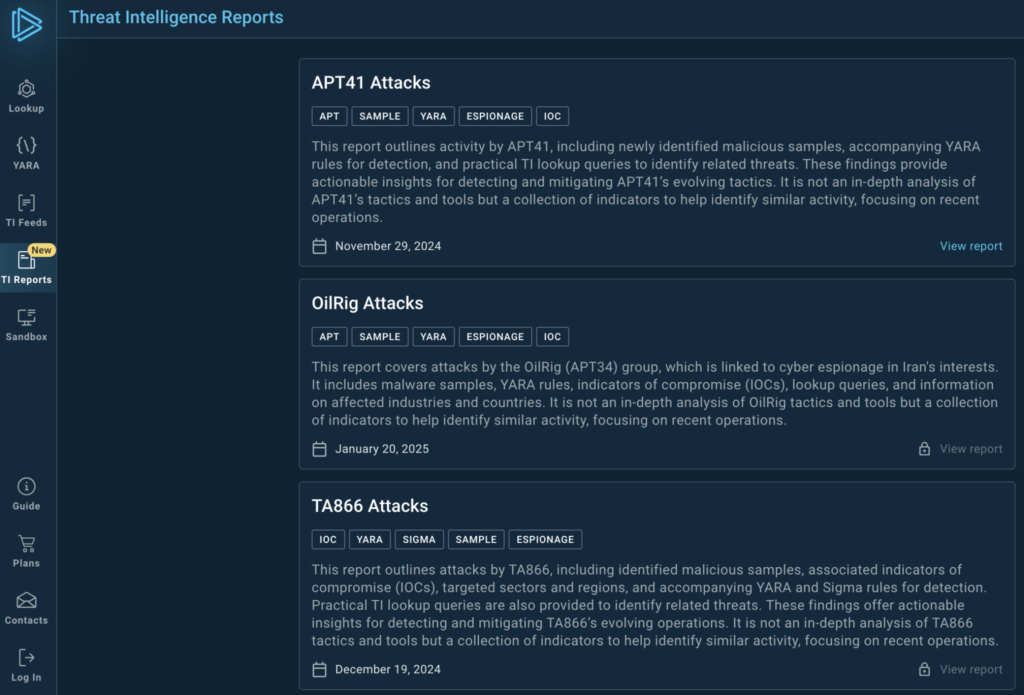
With the launch of Threat Intelligence Reports, security professionals now have access to detailed, expert-driven analyses of cyber threats, malware, and APT activities.
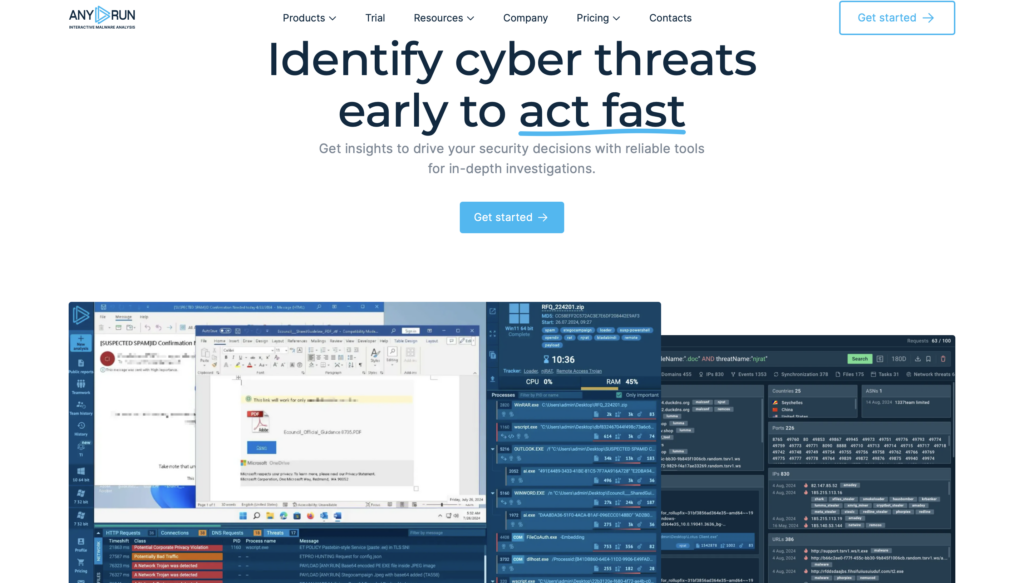
We also introduced a redesigned website, making navigation more intuitive and structured.
On the detection side, we significantly improved our threat-hunting capabilities, adding 314 new Suricata rules, refining behavior signatures, and expanding our YARA rule database. These updates strengthen real-time threat visibility and detection accuracy, helping analysts respond faster to emerging cyber threats.
Let’s take a closer look at February’s updates and how they enhance your malware-hunting workflow.
Product Updates
Threat Intelligence Reports
In February, ANY.RUN introduced Threat Intelligence Reports in TI Lookup: detailed research on cyber threats, providing security professionals and decision-makers with actionable insights.
Curated by our experts, these reports support threat monitoring, incident response, R&D, and strategic planning, covering malware, ransomware, phishing campaigns, and APTs.
Built on real-world threat data, sources include our Interactive Sandbox, TI Lookup, and community-driven malware analyses.
Each report provides a detailed threat overview, covering key aspects such as:
Threat actor or malware profile: Origins, objectives, targeted industries, and regions.
TTPs: Methods used by attackers, helping in detection and mitigation.
IOCs, IOBs, IOAs: Critical data for identifying threats in your environment.
YARA and SIGMA rules: Ready-to-use detection rules for security systems.
Sandbox analysis links: Direct access to real-world threat samples in action.
Additional references: Supporting research and external resources for deeper insights.
New Website Design: A More User-Friendly Experience
In February, we introduced a redesigned ANY.RUN website, making it more intuitive, structured, and easier to navigate. The new design makes sure that all essential cybersecurity resources and solutions are now better organized and easily accessible.
The new redesigned webpage of ANY.RUN
Whether you’re exploring threat intelligence, running sandbox analyses, or researching cybersecurity insights, the updated layout enhances usability for both security experts and new users.
Threat Coverage Updates
Suricata Rules
In February, we added 314 new Suricata rules, strengthening our network-based threat detection. Notable updates include:
A Booking.com phishing rule, designed to detect fraudulent activity targeting users.
A rule for Australia Gov phishing attempts, though it covers only partial cases due to dynamic URL changes and regional access restrictions.
New Behavior Signatures
This month, we expanded behavior-based detection, adding new mutex findings, threat detections, and suspicious activity signatures. These updates improve the ability to track malware persistence mechanisms and evasive techniques in real-time.
Various software-related mutex detections, including COYOTE mutex, Proxifier, Wireshark, Java, Adguardvpn, Cheatengine, Opera, Electron Js, Adobeinstaller, Hotbar, Quickdriverupdater, And Pcappstore
New YARA Rule Updates
In February, we expanded our YARA rule database, enhancing malware detection and classification. The latest rules target a variety of stealers, RATs, ransomware, and loaders, improving detection accuracy for emerging threats.
Discover all features of the Enterprise plan designed for businesses and large security teams.
See details
About ANY.RUN
ANY.RUN helps more than 500,000 cybersecurity professionals worldwide. Our interactive sandbox simplifies malware analysis of threats that target both Windows and Linux systems. Our threat intelligence products, TI Lookup, YARA Search, and Feeds, help you find IOCs or files to learn more about the threats and respond to incidents faster.
Internet service providers (ISPs) in China and the West Coast of the United States have become the target of a mass exploitation campaign that deploys information stealers and cryptocurrency miners on compromised hosts.
The findings come from the Splunk Threat Research Team, which said the activity also led to the delivery of various binaries that facilitate data exfiltration as well as offer
https://www.backbox.org/wp-content/uploads/2018/09/website_backbox_text_black.png00adminhttps://www.backbox.org/wp-content/uploads/2018/09/website_backbox_text_black.pngadmin2025-03-04 11:07:132025-03-04 11:07:13Over 4,000 ISP IPs Targeted in Brute-Force Attacks to Deploy Info Stealers and Cryptominers
Threat hunters are calling attention to a new highly-targeted phishing campaign that singled out “fewer than five” entities in the United Arab Emirates (U.A.E.) to deliver a previously undocumented Golang backdoor dubbed Sosano.
The malicious activity was specifically directed against aviation and satellite communications organizations, according to Proofpoint, which detected it in late October
https://www.backbox.org/wp-content/uploads/2018/09/website_backbox_text_black.png00adminhttps://www.backbox.org/wp-content/uploads/2018/09/website_backbox_text_black.pngadmin2025-03-04 11:07:122025-03-04 11:07:12Suspected Iranian Hackers Used Compromised Indian Firm’s Email to Target U.A.E. Aviation Sector
https://www.backbox.org/wp-content/uploads/2018/09/website_backbox_text_black.png00adminhttps://www.backbox.org/wp-content/uploads/2018/09/website_backbox_text_black.pngadmin2025-03-04 11:07:122025-03-04 11:07:12Exploitation Long Known for Most of CISA’s Latest KEV Additions
The U.S. Cybersecurity and Infrastructure Security Agency (CISA) on Monday added five security flaws impacting software from Cisco, Hitachi Vantara, Microsoft Windows, and Progress WhatsUp Gold to its Known Exploited Vulnerabilities (KEV) catalog, based on evidence of active exploitation.
The list of vulnerabilities is as follows –
CVE-2023-20118 (CVSS score: 6.5) – A command injection
Google has released its monthly Android Security Bulletin for March 2025 to address a total of 44 vulnerabilities, including two that it said have come under active exploitation in the wild.
The two high-severity vulnerabilities are listed below –
CVE-2024-43093 – A privilege escalation flaw in the Framework component that could result in unauthorized access to “Android/data,” “Android/obb,”