Millennials have grown up alongside the rise of social media and digital communication – and in many ways appear to be the most tech-savvy generation. However, our latest research reveals a concerning reality: 70 percent of millennials rarely verify the authenticity of the people they engage with online, leaving them vulnerable to cyberrisks such as identity fraud, misinformation, and emotional deception.
As digital friendships and online communities become increasingly central to daily life, many millennials need rethink their approach to online trust (actually, so do other generations, of course, but today we concentrate on the “millennial paradox”). The desire for connection and validation is driving significant behavioral shifts – from prioritizing social-media interactions over real-world relationships, to oversharing personal information in digital spaces. These trends expose users to heightened cybersecurity threats – making digital literacy and caution more important than ever.
The trust paradox: digital natives, yet still vulnerable to deception
Despite being the first generation to embrace the internet fully, many millennials place misplaced trust in their online interactions. While 64 percent have encountered someone misrepresenting their identity, nearly half still trust information shared within their digital communities. This contradiction highlights a gap between perceived digital expertise and actual cybersecurity awareness.
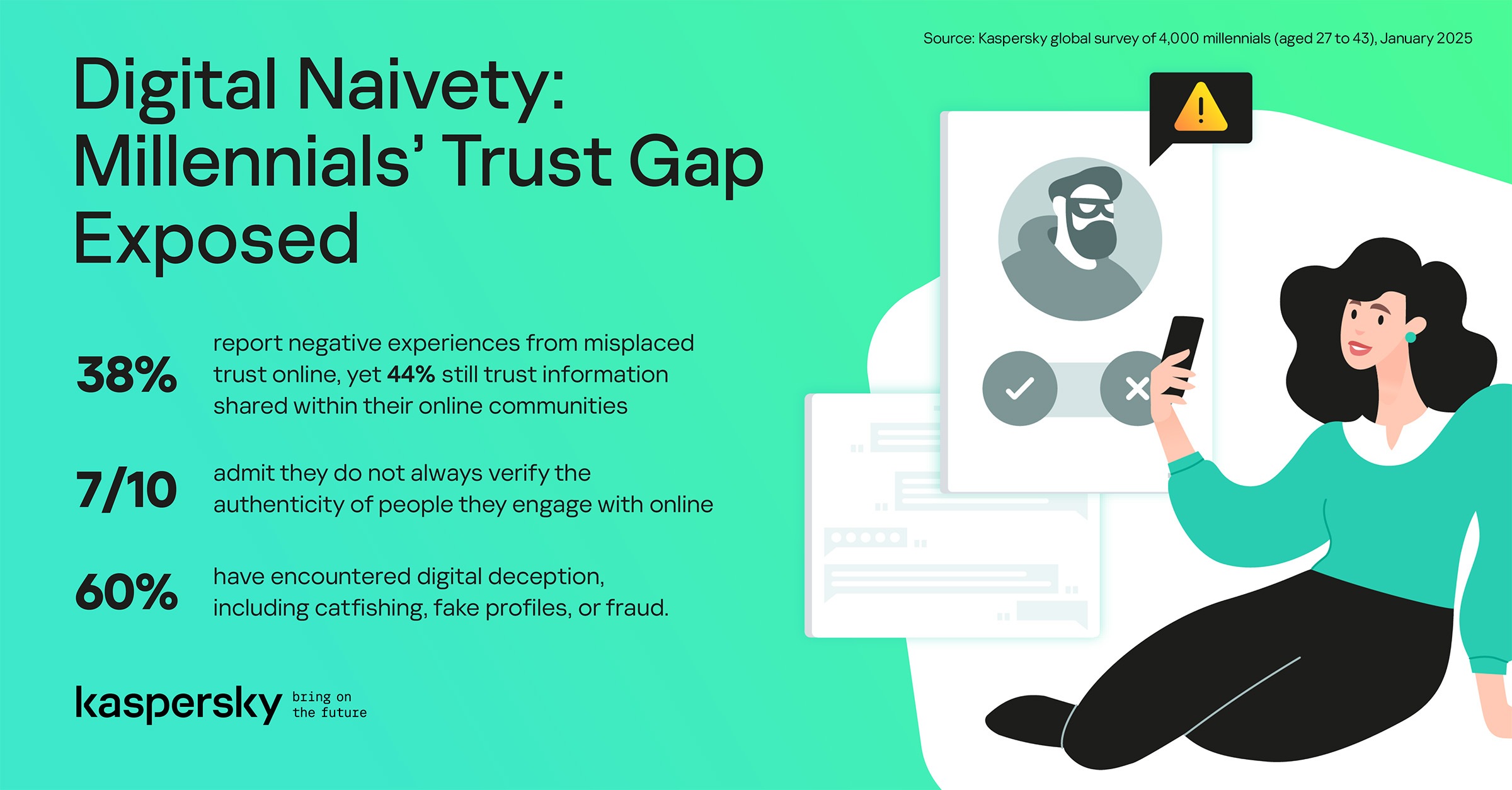
Digital paradox: millennials’ trust gap exposed
Cyber-psychologist Ruth Guest warns that this overconfidence can lead to risky behavior. “When we trust our own digital savvy implicitly, we may overlook the possibility that others are not as genuine as they appear. In some cases, individuals with strong narcissistic, psychopathic or Machiavellian traits exploit this trust through catfishing and other deceptive tactics.”
Rethinking digital trust means applying a level of skepticism that matches real-world caution. A strong cybersecurity mindset requires more than technical skills – it demands critical thinking and vigilance.
From social validation to privacy risks
Social media has become the go-to space for millennials to share major life updates – often before informing close friends or family. Our research shows that nearly half of millennials post significant personal news online before discussing it in person with anyone. The instant feedback from likes, comments, and shares can create a sense of validation – but it also comes with risks.
Forty-five percent of millennials are comfortable sharing personal or sensitive information online – a behavior that can increase their exposure to phishing scams, identity theft, and doxing. Cybercriminals use publicly available information to craft targeted attacks – exploiting personal details such as location check-ins, workplace updates, and relationship status.
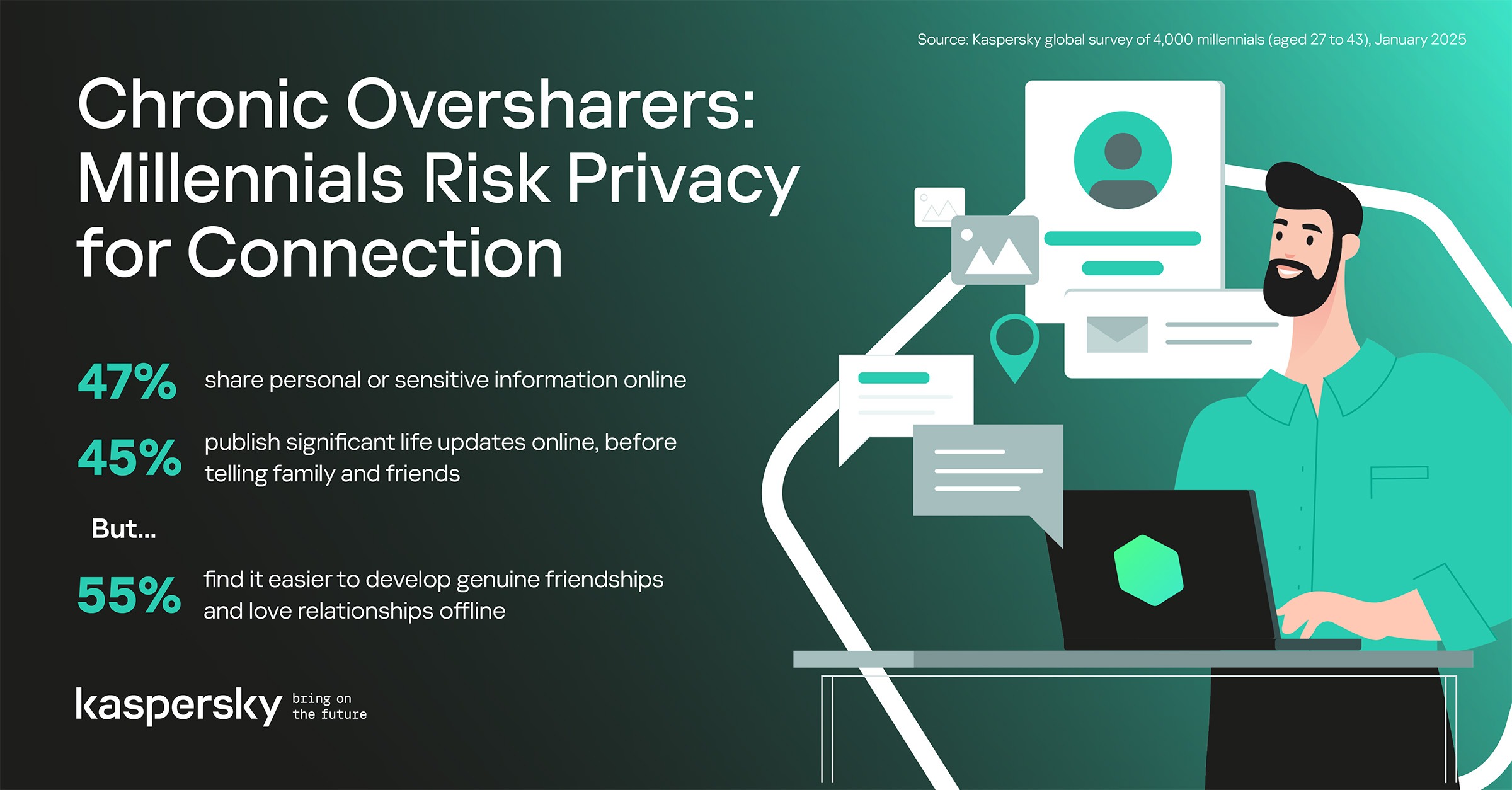
Chronic oversharers: millennials risk privacy for connection
According to Marc Rivero, Lead Security Researcher at Kaspersky, “Oversharing personal information online can make individuals more vulnerable to identity theft, phishing attacks, and social engineering scams. Personal details shared online, such as location check-ins, relationship status, and daily routines, can be exploited for targeted scams or unauthorized surveillance.”
To mitigate these risks, it’s important to reconsider what’s shared, strengthen privacy settings, and remain cautious about how digital footprints are being used.
Digital friendships: a balance between connection and risk
As loneliness rises among young adults (among other generations), online friendships have become an essential part of social life. Our study found that 29 percent of millennials report that digital friendships positively impact their mental health. Online communities provide a sense of belonging, and allow users to connect with like-minded individuals across the world.
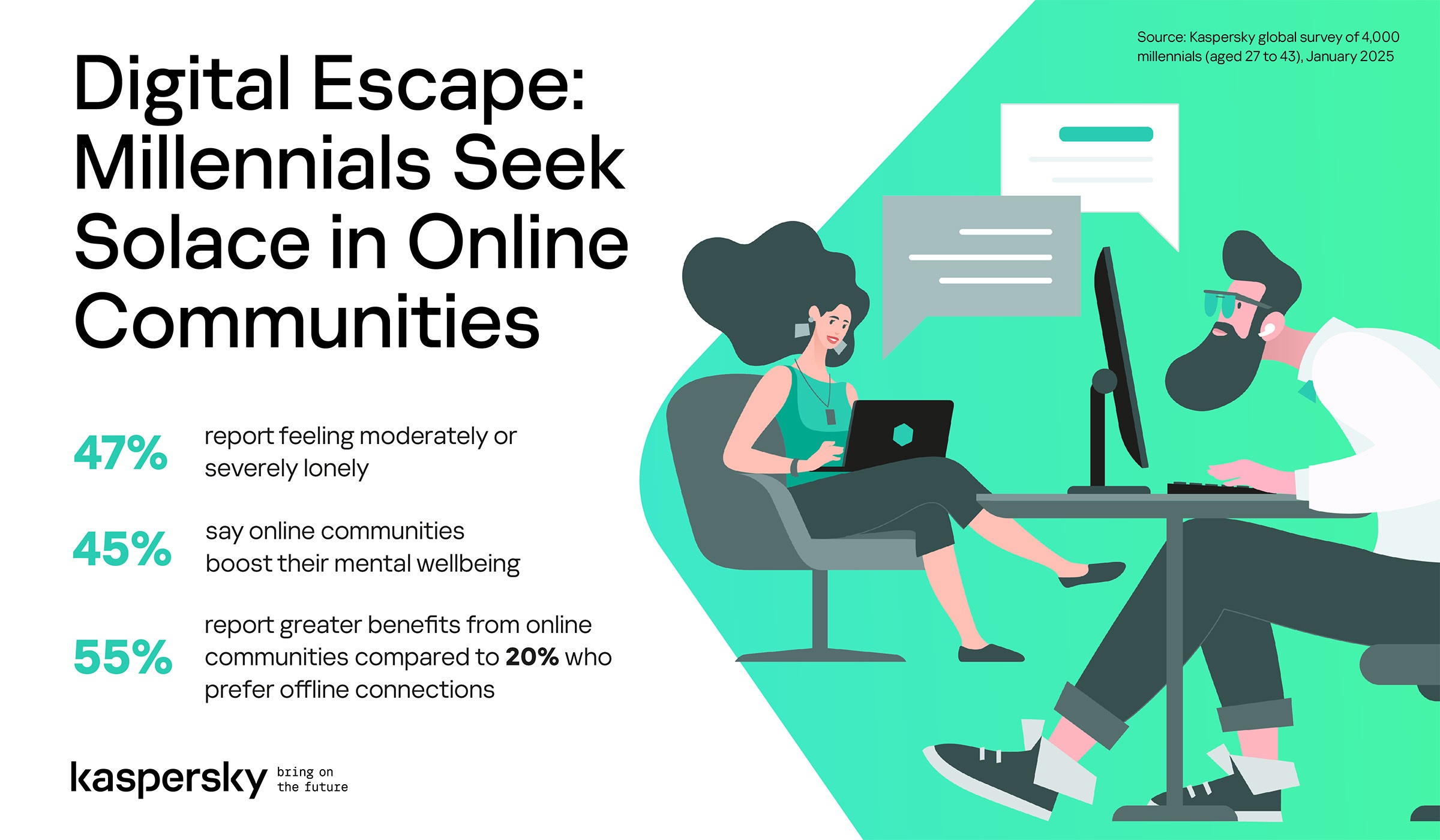
Digital escape: millennials seek solace in online communities
However, not all online interactions are positive. Ten percent of millennials report negative experiences from digital interaction. Even more concerning, 14 percent admit to creating fake profiles or using false identities themselves. These statistics highlight the prevalence of digital deception and the challenges of distinguishing between genuine and fabricated relationships.
Back to cyber-psychologist Ruth Guest, she emphasizes the importance of balance. “Digital spaces have evolved into safe and creative havens where millennials can explore, learn and connect with like-minded individuals. When used wisely and with proper safeguards, social media can be a tremendous asset to one’s mental health. It offers a platform for self-expression, a sense of belonging, and even creative inspiration. However, it is crucial to remember that the benefits of these online communities depend on maintaining a balance.”
How millennials can strengthen their digital defenses
As key players in the digital world, millennials need to take proactive steps to protect their online presence and encourage stronger cybersecurity habits in those around them. Implementing essential security measures can help reduce exposure to online threats and foster safer digital habits.
1. Verify identities
- Use reverse-image searches, and cross-check profiles before engaging with new contacts.
2. Cross-check information
3. Protect personal information
- Adjust social-media privacy settings, and use our online privacy checker to enhance security.
- Be mindful of real-time location sharing to avoid tracking risks.
4. Respect others’ privacy
5. Stay educated regarding online scams
6. Use strong passwords and security tools
7. Keep devices updated and secure
- Regularly update apps, software, and antivirus programs to prevent vulnerabilities being exploited.
- Use Kaspersky Premium for real-time protection against identity theft, malicious links, and cyberthreats.
To access the full research report, visit the link.
Kaspersky official blog –
