Both Android devices and iPhones are 3.5 times more likely to be infected with malware once “broken” and 250 times more likely to be totally compromised, recent research shows.
The governments of Australia, Canada, Cyprus, Denmark, Israel, and Singapore are likely customers of spyware developed by Israeli company Paragon Solutions, according to a new report from The Citizen Lab.
Paragon, founded in 2019 by Ehud Barak and Ehud Schneorson, is the maker of a surveillance tool called Graphite that’s capable of harvesting sensitive data from instant messaging applications
https://www.backbox.org/wp-content/uploads/2018/09/website_backbox_text_black.png00adminhttps://www.backbox.org/wp-content/uploads/2018/09/website_backbox_text_black.pngadmin2025-03-20 12:06:582025-03-20 12:06:58Six Governments Likely Use Israeli Paragon Spyware to Hack IM Apps and Harvest Data
Amazon is ending a little-used privacy feature that let some users of its Echo smart speaker prevent their voice commands from going to the company’s cloud.
https://www.backbox.org/wp-content/uploads/2018/09/website_backbox_text_black.png00adminhttps://www.backbox.org/wp-content/uploads/2018/09/website_backbox_text_black.pngadmin2025-03-20 12:06:572025-03-20 12:06:57Amazon Ends Little-Used Privacy Feature That Let Echo Users Opt Out of Sending Recordings to Company
Regulatory compliance is no longer just a concern for large enterprises. Small and mid-sized businesses (SMBs) are increasingly subject to strict data protection and security regulations, such as HIPAA, PCI-DSS, CMMC, GDPR, and the FTC Safeguards Rule. However, many SMBs struggle to maintain compliance due to limited IT resources, evolving regulatory requirements, and complex security challenges
https://www.backbox.org/wp-content/uploads/2018/09/website_backbox_text_black.png00adminhttps://www.backbox.org/wp-content/uploads/2018/09/website_backbox_text_black.pngadmin2025-03-20 11:07:022025-03-20 11:07:02Why Continuous Compliance Monitoring Is Essential For IT Managed Service Providers
https://www.backbox.org/wp-content/uploads/2018/09/website_backbox_text_black.png00adminhttps://www.backbox.org/wp-content/uploads/2018/09/website_backbox_text_black.pngadmin2025-03-20 11:07:022025-03-20 11:07:02300 Malicious ‘Vapor’ Apps Hosted on Google Play Had 60 Million Downloads
By Jung soo An, Asheer Malhotra, Brandon White, and Vitor Ventura.
Cisco Talos discovered a malicious campaign we track under the UAT-5918 umbrella that has been active since at least 2023.
UAT-5918, a threat actor believed to be motivated by establishing long-term access for information theft, uses a combination of web shells and open-sourced tooling to conduct post-compromise activities to establish persistence in victim environments for information theft and credential harvesting.
We assess that UAT-5918’s post-compromise activity, tactics, techniques, and procedures (TTPs), and victimology overlaps the most with Volt Typhoon, Flax Typhoon, Earth Estries, and Dalbit intrusions we’ve observed in the past.
UAT-5918’s activity cluster
Overview
Talos assesses with high confidence that UAT-5918 is an advanced persistent threat (APT) group that targets entities in Taiwan to establish long-term persistent access in victim environments. UAT-5918 usually obtains initial access by exploiting N-day vulnerabilities in unpatched web and application servers exposed to the internet. The threat actor will subsequently use a plethora of open-source tools for network reconnaissance to move through the compromised enterprise.
The activity that we monitored suggests that the post-compromise activity is done manually with the main goal being information theft. Evidently, it also includes deployment of web shells across any discovered sub-domains and internet-accessible servers to open multiple points of entry to the victim organizations. UAT-5918’s intrusions harvest credentials to obtain local and domain level user credentials and the creation of new administrative user accounts to facilitate additional channels of access, such as RDP to endpoints of significance to the threat actor.
Typical tooling used by UAT-5918 includes networking tools such as FRPC, FScan, In-Swor, Earthworm, and Neo-reGeorg. Credential harvesting is accomplished by dumping registry hives, NTDS, and using tools such as Mimikatz and browser credential extractors. These credentials are then used to perform lateral movement via either RDP, WMIC (PowerShell remoting), or Impacket.
UAT-5918 activity cluster overlapping
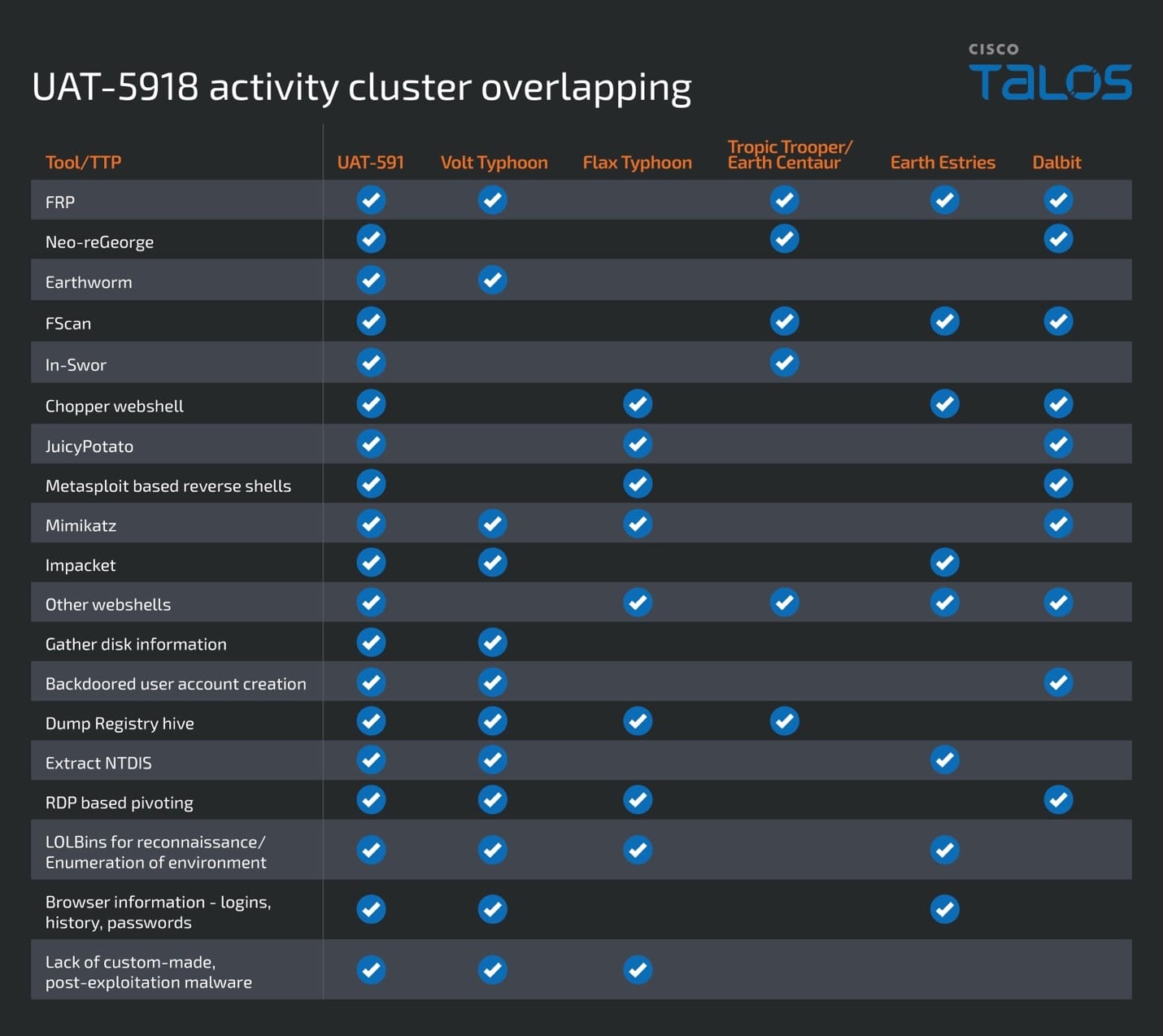
UAT-5918’s tooling and TTPs overlap substantially with several APT groups including Volt Typhoon, Flax Typhoon and Dalbit.
Figure 1. UAT-5918 TTPs and tooling overlaps with similar APT groups.
There is a significant overlap in post-compromise tooling and TTPs with Volt Typhoon, such as using ping and tools like In-Swor for network discovery; gathering system information such as drive and partition; gathering logical drive information such as names, IDs, size, and free spaces; credential dumping from web browser applications; using open-source tools such asfrp, Earthworm, and Impacket for establishing control channels; and the absence of custom-made malware. The U.S. government assesses that Volt Typhoon is a PRC state-sponsored actor conducting cyberattacks against U.S. critical infrastructure.
Multiple tools used in this intrusion also overlap with tooling used by Flax Typhoon in the past, such as the Chopper web shell, Mimikatz, JuicyPotato, Metasploit, WMIC and PowerShell, along with the use of tactics such as relying on RDP and other web shells to persist in the enterprise and WMIC for gathering system information. The U.S. government attributes Flax Typhoon, a Chinese government-sponsored threat actor, to the Integrity Technology Group, a PRC-based company.
Additionally, tooling such as FRP, FScan, In-Swor, and Neo-reGeorg, as well as filepaths and names used by UAT-5918, overlap with those used by Tropic Trooper. Tropic Trooper’s malware suite, specifically Crowdoor Loader and SparrowDoor, overlap with the threat actors known as Famous Sparrow and Earth Estries. We have also observed overlaps in tooling and tactics used in this campaign operated by UAT-5918 and in operations conducted by Earth Estries, including the use of FRP, FScan, Webshells, Impacket, living-off-the-land binaries (LoLBins), etc. Furthermore, we’ve discovered similar tooling between UAT-5918 and Dalbit consisting of port scanners, proxying tools, reverse shells, and reconnaissance TTPs.
It is worth noting that a sub-set of tools UAT-5918 uses such as LaZagne, SNetCracker, PortBrute, NetSpy etc., have not been seen being used by the aforementioned threat actors in public reporting. It is highly likely that this tooling might be exclusively used by UAT-5918 or their usage by other related groups may have been omitted in publicly available disclosures.
Victimology and targeted verticals
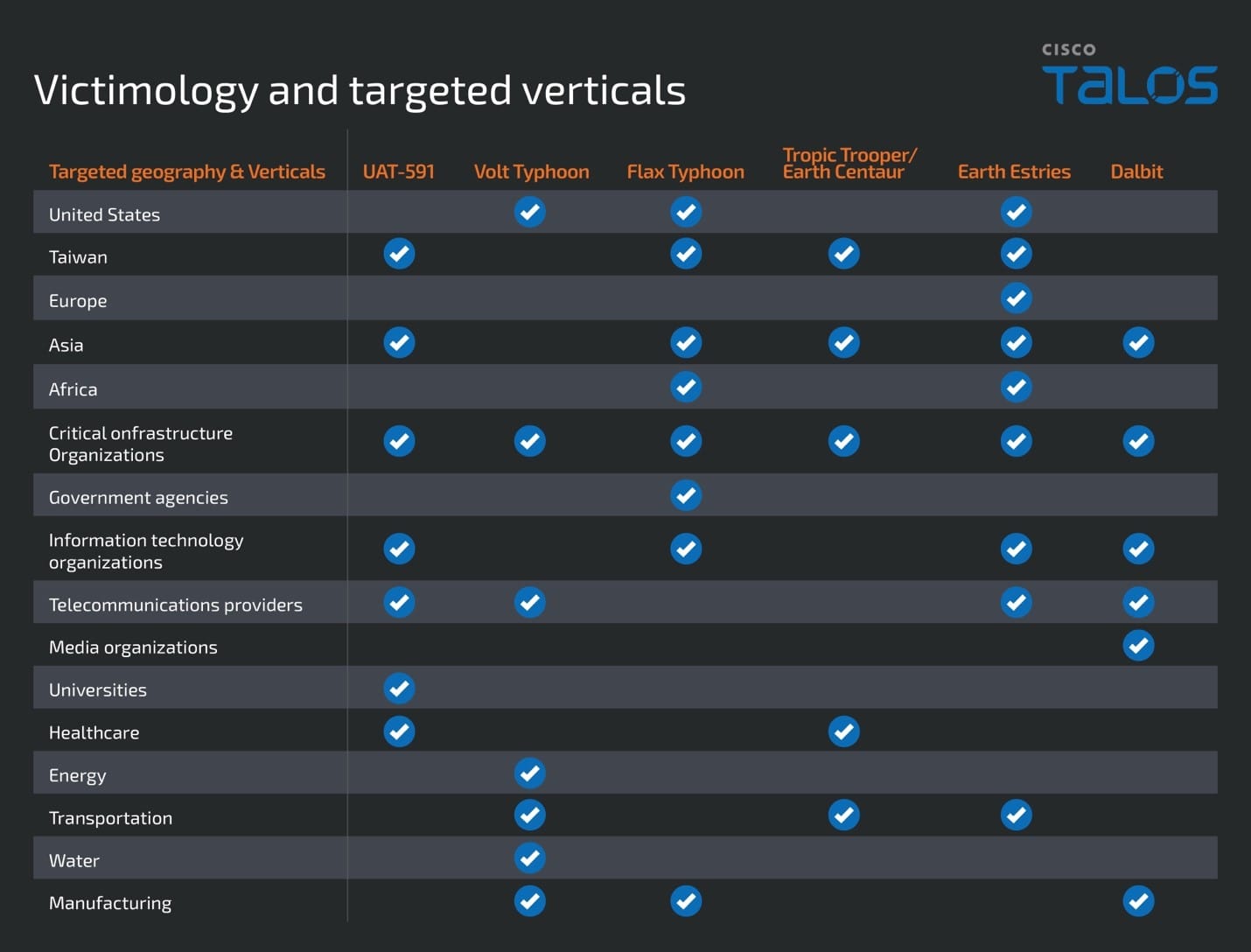
UAT-5918 also overlaps with the previously mentioned APT groups in terms of targeted geographies and industry verticals, indicating that this threat actor’s operations align with the strategic goals of the aforementioned set of threat actors.
We have primarily observed targeting of entities in Taiwan by UAT-5918 in industry verticals such as telecommunications, healthcare, information technology, and other critical infrastructure sectors. Similar verticals and geographies have also been targeted by APT groups such as Volt Typhoon, Flax Typhoon, Earth Estries, Tropic Trooper, and Dalbit.
Initial access and reconnaissance
UAT-5918 typically gains initial access to their victims via exploitation of known vulnerabilities on unpatched servers exposed to the internet. Activity following a successful compromise consists of preliminary reconnaissance to identify users, domains, and gather system information. Typical commands executed on endpoints include:
ping <IP>
net user
systeminfo
arp –a
route print
tasklist
tasklist -v
netstat -ano
whoami
ipconfig
query user
cmd /c dir c:users<username>Desktop
cmd /c dir c:users<username>Documents
cmd /c dir c:users<username>Downloads
Initial credential reconnaissance is carried out using the cmdkey command:
cmdkey /list
The threat actor then proceeds to download and place publicly available red-teaming tools (illustrated in subsequent sections) on endpoints to carry out further actions. In some cases, UAT-5918 also disabled Microsoft Defender’s scanning of their working directories on disk:
UAT-5918’s post-compromise tooling consists of web shells, some of which are publicly available, such as the Chopper web shell, multiple red-teaming and network scanning tools, and credentials harvesters.
Reverse proxies and tunnels
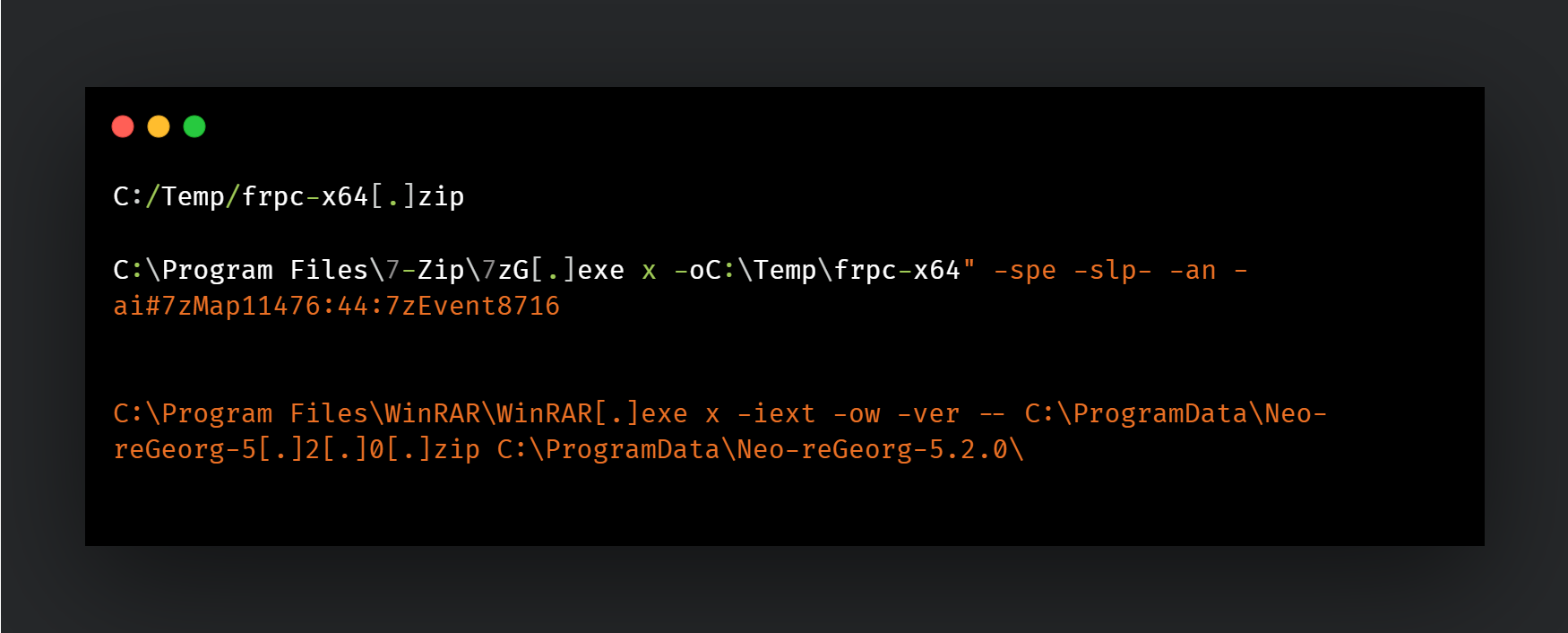
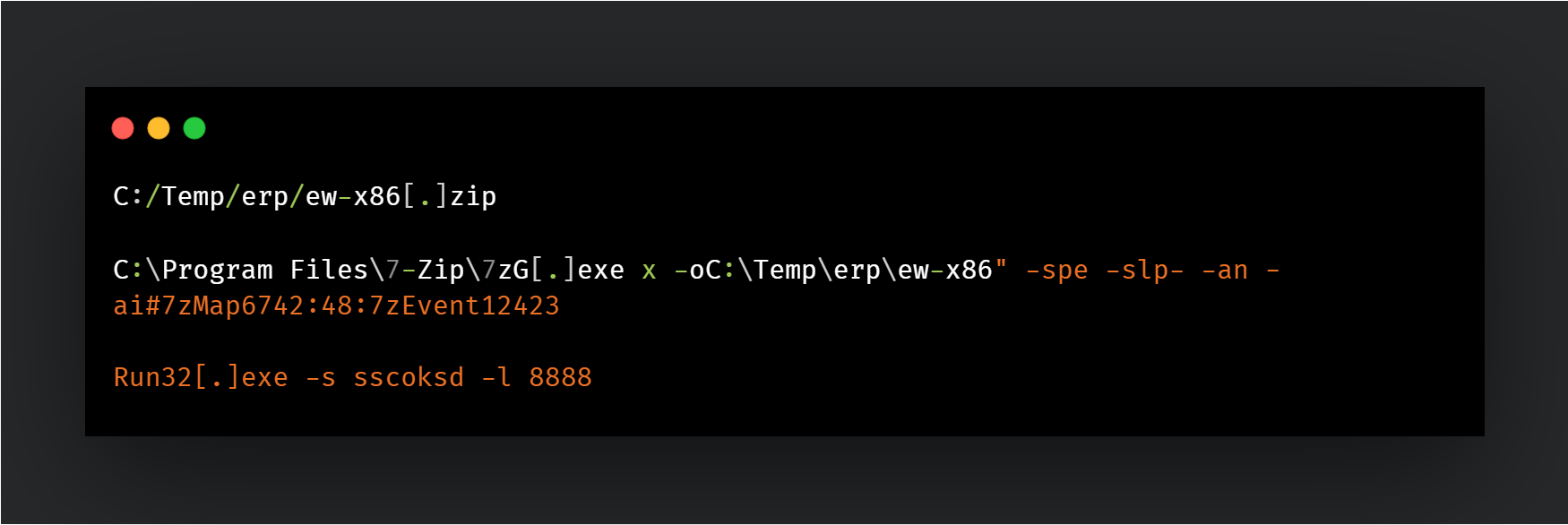
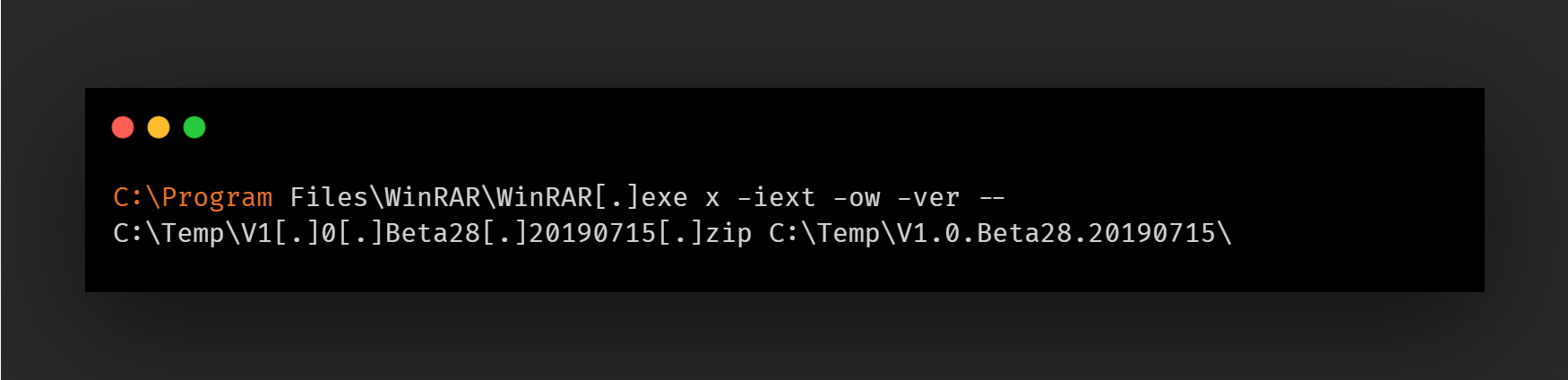
The actor uses FRP and Neo-reGeorge to establish reverse proxy tunnels for accessing compromised endpoints via attacker controlled remote hosts. The tools are usually downloaded as archives and extracted before execution:
The Earthworm (ew) tool for establishing proxies is also run:
Port scanning
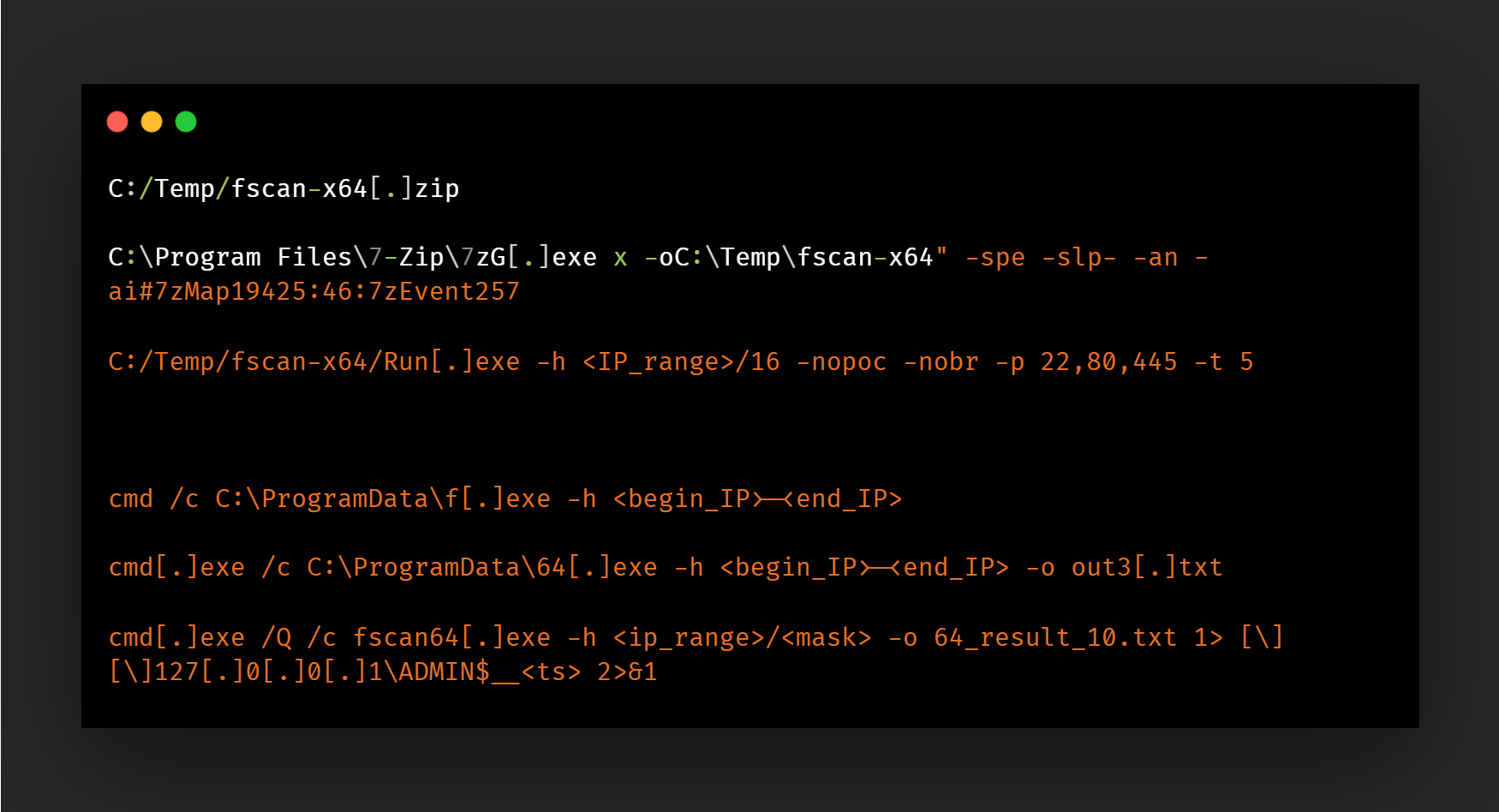
FScan is a port and vulnerability scanning tool that can scan ranges of IP addresses and Ports specified by the attackers:
Talos has observed the actor scanning of these ports in particular:
The threat actor also relies extensively on the use of In-Swor, a publicly available tool authored and documented by Chinese speaking individuals, for conducting port scans across ranges of IP addresses. A sample command of In-Swor’s use is:
svchost[.]exe -type server -proto tcp -listen :443 svchost[.]exe -type server -proto http -listen :443 svchost[.]exe -type server -proto rhttp -listen :443
In addition to FScan, PortBrute, another password brute forcer for multiple protocols such as FTP, SSH, SMB, MYSQL, MONGODB, etc., was also downloaded and used:
PortBruteWin(5).exe -up <username>:<password>
Additional network reconnaissance
The threat actor uses two utilities for monitoring the current connection to the compromised hosts — NirSoft’s CurrPorts utility and TCPView. Both tools are likely used to perform additional network discovery to find accessible hosts to pivot to:
Netspy, another tool authored and documented by Chinese speaking individuals, is a network segmentation discovery tool that UAT-5918 employs occasionally for discovery. The fact that the operator had to check the tool help denotes the lack of automation and the unusual usage of such tool:
netspy[.]exe -h
Gathering local system information
The attackers may also gather commands to profile the endpoint and its drives:
wmic diskdrive get partitions /value
fsutil fsinfo drives
wmic logicaldisk get DeviceID,VolumeName,Size,FreeSpace
wmic logicaldisk get DeviceID,VolumeName,Size,FreeSpace /format:value
Maintaining persistent access to victims
The threat actor attempts to deploy multiple web shells on systems they find are hosting web applications. The web shells are typically ASP or PHP-based files placed deep inside housekeeping directories such as image directories, user files etc.
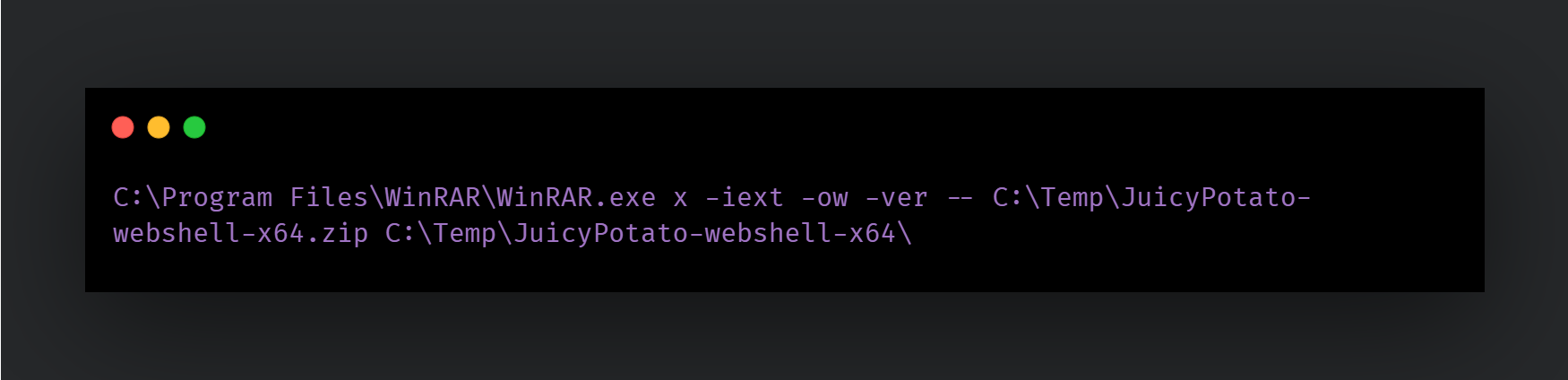
The threat actor uses JuicyPotato’s (a privilege escalation tool) web shell variant that allows JuicyPotato to act as a web shell on the compromised system accepting commands from remote systems to execute:
JuicyPotato is then run to spawn cmd[.]exe to run a reverse shell that allows the threat actor to run arbitrary commands:
Run.exe -t t -p c:windowssystem32cmd.exe -l 1111 -c {9B1F122C-2982-4e91-AA8B-E071D54F2A4D}
UAT-5918 will also use PuTTY’s pscp tool to connect to and deliver additional web shells to accessible endpoints (likely servers) within the network:
UAT-5918 regularly creates and assigns administrative privileges to user accounts they’ve created on compromised endpoints:
net user <victimname_username> <password> /add
net localgroup administrators <username> /add
net group domain admins <username> /add /domain
Credential extraction
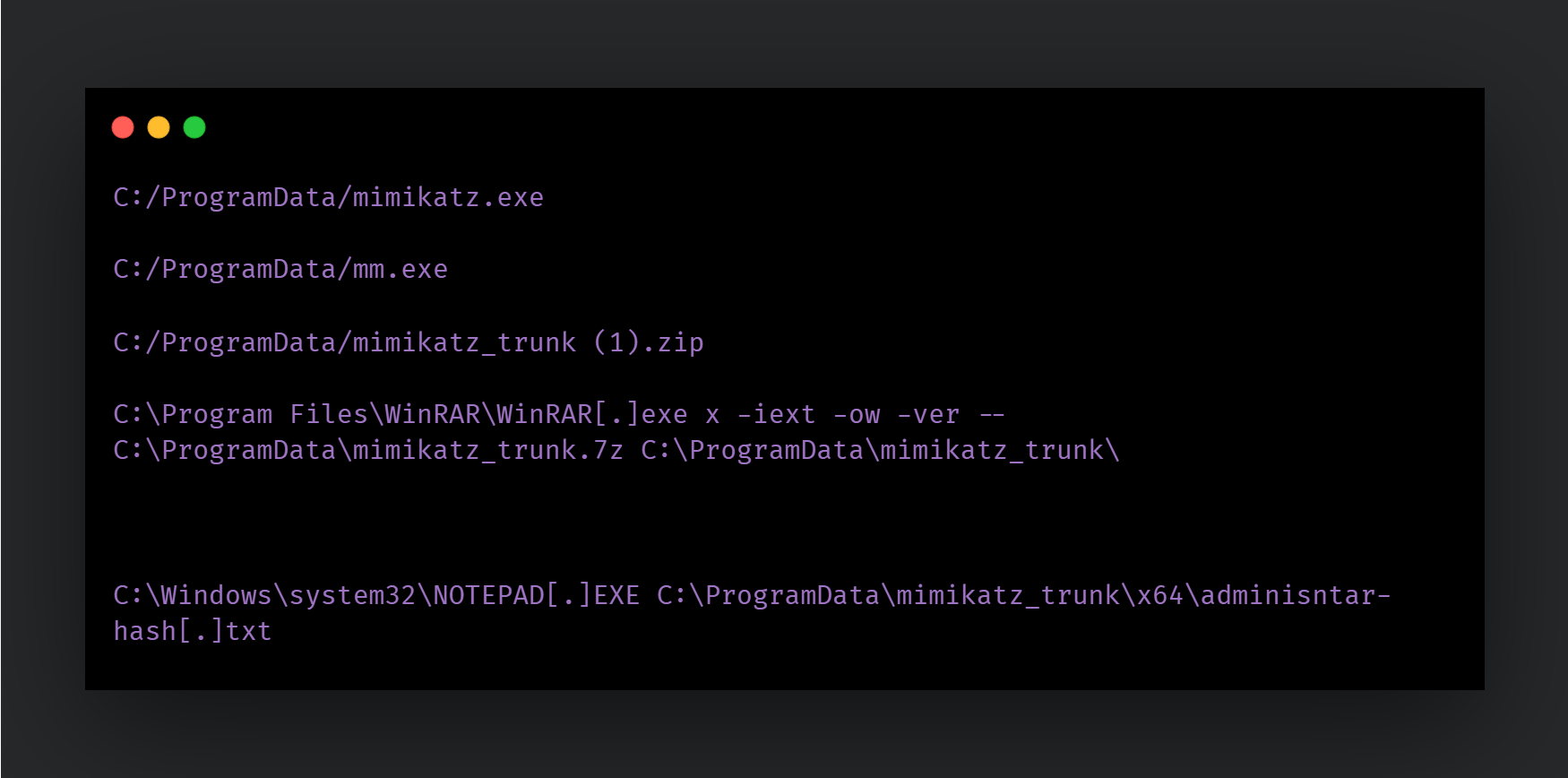
Credential harvesting is a key tactic in UAT-5918 intrusions, instrumented via the use of tools such as Mimikatz, LaZagne, and browser credential stealers:
Mimikatz: A commonly used credential extractor tool is run to obtain credentials from the endpoint:
LaZagne: LaZagne is an open-sourced credential extractor:
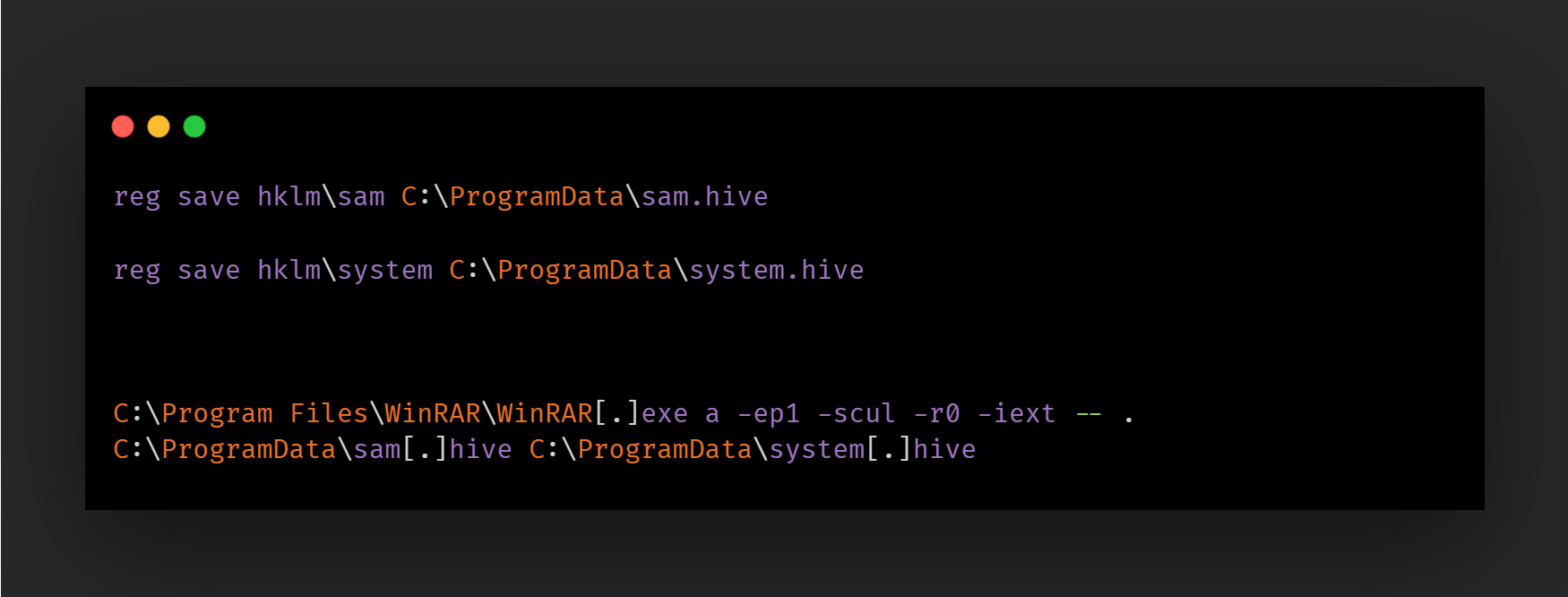
Registry dumps: The “reg” system command is used to take dumps of the SAM, SECURITY and SYSTEM hives:
Google Chrome information: The adversary also uses a tool called BrowserDataLite, a tool to extract Login information, cookies, and browsing history from web browsers. The extracted information is subsequently accessed via notepad[.]exe:
SNETCracker: A .NET-based password cracker (brute forcer) for services such as SSH, RDP, FTP, MySQL, SMPT, Telnet, VNC, etc.:
Finding strings related to credentials such as:
findstr /s /i /n /d:C: password *.conf
Pivoting to additional endpoints
UAT-5918 consistently attempts to gain access to additional endpoints within the enterprise. They will perform network reconnaissance cyclically to discover new endpoints worth pivoting to and make attempts to gain access via RDP or Impacket:
mstsc.exe -v <hostname>
Impacket was also used on multiple occasions to pivot into additional endpoints and copy over tools:
UAT-5918 pivots across endpoints enumerating local and shared drives to find data of interest to the threat actor. This data may include everything that furthers the APT’s strategic and tactical goals and ranges from confidential documents, DB exports and backups to application configuration files. In one instance, the threat actor used the SQLCMD[.]exe utility to create a database backup that could be exfiltrated:
Ways our customers can detect and block this threat are listed below.
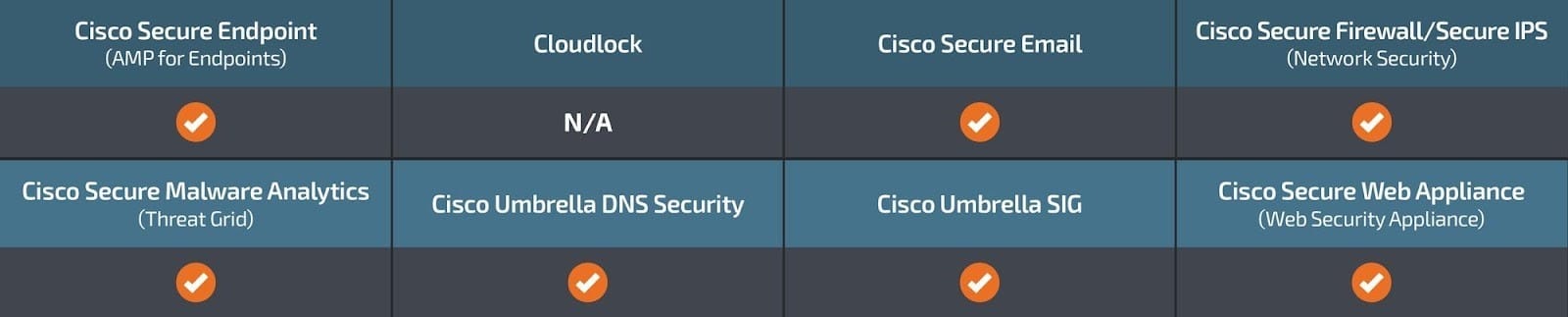
Cisco Secure Endpoint (formerly AMP for Endpoints) is ideally suited to prevent the execution of the malware detailed in this post. Try Secure Endpoint for free here.
Cisco Secure Email (formerly Cisco Email Security) can block malicious emails sent by threat actors as part of their campaign. You can try Secure Email for free here.
Cisco Secure Malware Analytics (Threat Grid) identifies malicious binaries and builds protection into all Cisco Secure products.
Cisco Secure Access is a modern cloud-delivered Security Service Edge (SSE) built on Zero Trust principles. Secure Access provides seamless transparent and secure access to the internet, cloud services or private application no matter where your users work. Please contact your Cisco account representative or authorized partner if you are interested in a free trial of Cisco Secure Access.
Umbrella, Cisco’s secure internet gateway (SIG), blocks users from connecting to malicious domains, IPs and URLs, whether users are on or off the corporate network.
Cisco Secure Web Appliance (formerly Web Security Appliance) automatically blocks potentially dangerous sites and tests suspicious sites before users access them.
Additional protections with context to your specific environment and threat data are available from the Firewall Management Center.
Cisco Duo provides multi-factor authentication for users to ensure only those authorized are accessing your network.
Open-source Snort Subscriber Rule Set customers can stay up to date by downloading the latest rule pack available for purchase on Snort.org.
IOCs
IOCs for this research can also be found at our GitHub repository here.
https://www.backbox.org/wp-content/uploads/2018/09/website_backbox_text_black.png00adminhttps://www.backbox.org/wp-content/uploads/2018/09/website_backbox_text_black.pngadmin2025-03-20 09:07:022025-03-20 09:07:02Low-Cost Drone Add-Ons From China Let Anyone With a Credit Card Turn Toys Into Weapons of War
It is with great pleasure and gratitude that we announce our victory at the Cybersecurity Excellence Awards 2025, an annual competition for individuals and companies that stand out in the field of information security held by a major online community Cybersecurity Insiders.
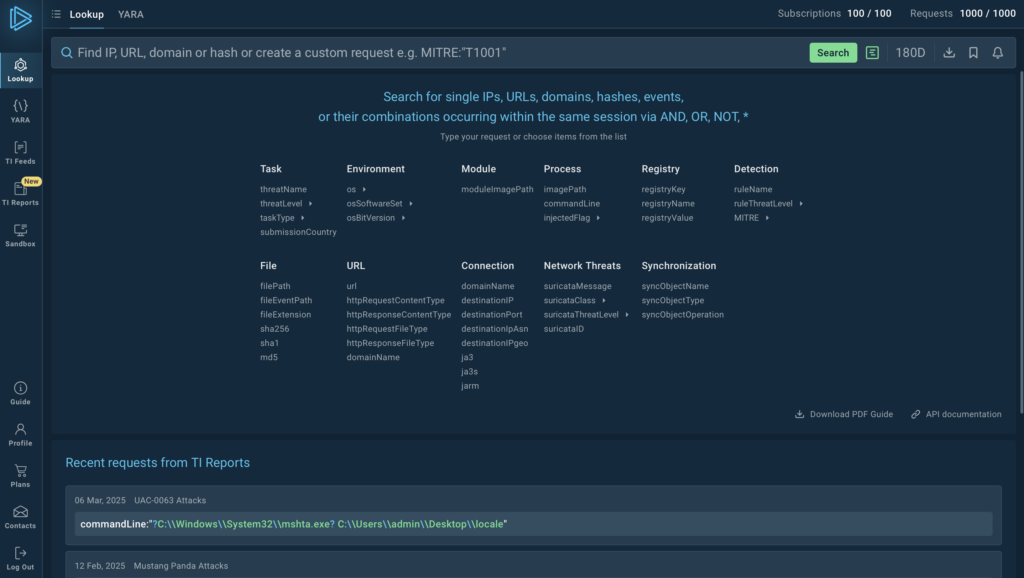
TI Lookup is a contextual search service available online and through API. Its database contains all information on cyberthreats acquired by ANY.RUN. Users can browse it, analyze millions of public interactive analysis sessions, and gain insight on how to ensure a better security strategy for their company.
Homepage of ANY.RUN Threat Intelligence Lookup
Equip your team with the malware analysis tool they need to keep your business secure
Our achievement was made possible thanks to TI Lookup’s unique features. This solution not only helps accelerate and simplify research, as well as gain access to up-to-date information on emerging threats, but also enhances the decision-making process and ensures the security of infrastructures in a resource-saving way.
In the words of organizers
Holger Schulze, founder of Cybersecurity Insiders and organizer of the Cybersecurity Excellence Awards, noted ANY.RUN’s efforts in inspiring the community and providing top-tier solutions:
“We congratulate ANY.RUN on this outstanding achievement in the ‘Threat Intelligence’ category of the 2025 Cybersecurity Excellence Awards. As we celebrate 10 years of recognizing excellence in cybersecurity, your innovation, commitment, and leadership set a powerful example for the entire industry.”
Our win is your win
We’re happy to share the news with our wonderful audience and thank you for your never-ending support! The victory wouldn’t be possible without our partners, users of ANY.RUN products, and the cybersecurity community in general.
We’ll continue to work towards our common goal of establishing a safe and efficient platform to benefit malware analysts from around the globe.
About ANY.RUN
ANY.RUN provides cutting-edge malware analysis services for security teams: ANY.RUN sandbox, TI Lookup and TI Feeds. They help speed up the workflow of SOC specialists, prevent financial and reputational damage of businesses, as well as allow analysts to act proactively in order to ensure the security of their networks.
https://www.backbox.org/wp-content/uploads/2018/09/website_backbox_text_black.png00adminhttps://www.backbox.org/wp-content/uploads/2018/09/website_backbox_text_black.pngadmin2025-03-20 09:06:522025-03-20 09:06:52ANY.RUN Wins in the Best Threat Intelligence Service Category at Cybersecurity Excellence Awards 2025