Protecting Your Business Communications: The Critical Role of Secure Email Gateways

Email is still the backbone of how businesses communicate, with more than 300 billion messages sent every day.…

Hackread – Latest Cybersecurity, Hacking News, Tech, AI & Crypto – ​Read More

The Person in Charge of Testing Tech for US Spies Has Resigned

IARPA director Rick Muller is departing after just over a year at the R&D unit that invests in emerging technologies of potential interest to agencies like the NSA and the CIA, WIRED has learned.

Security Latest – ​Read More

Trump Officials Want to Prosecute Over the ICEBlock App. Lawyers Say That’s Unconstitutional

The platform, which allows users to anonymously share the locations of ICE agents, is currently the third-most-downloaded iPhone app.

Security Latest – ​Read More

Virginia county says April ransomware attack exposed employee SSNs

Carol Steele, the county’s administrator, said they hired cybersecurity experts to help with the recovery and notified the FBI’s Cyber Crimes Division as well as the Cyber Fusion Center of the Virginia State Police.

The Record from Recorded Future News – ​Read More

CBP Wants New Tech to Search for Hidden Data on Seized Phones

Customs and Border Protection is asking companies to pitch tools for performing deep analysis on the contents of devices seized at the US border.

Security Latest – ​Read More

New Fake Marketplace From China Mimics Top Retail Brands for Fraud

Silent Push exposes thousands of fake e-commerce websites spoofing major brands like Apple and Michael Kors. Learn how this Chinese phishing scam targets shoppers and steals financial data, impacting global consumers.

Hackread – Latest Cybersecurity, Hacking News, Tech, AI & Crypto – ​Read More

A message from Bruce the mechanical shark

A message from Bruce the mechanical shark

Welcome to this week’s edition of the Threat Source newsletter. 

Hi, I’m Bruce, the 25-foot mechanical star of “Jaws.”  

This summer marks 50 years since my 4 minutes of screentime kept people out of the water for decades. Maybe this Fourth of July weekend you’re planning to sea-shanty your way to a special screening? If you do, here’s a little behind-the-scenes story on how my endless malfunctions almost made Spielberg hang up his director hat before you could say “phone home.” 

I was built for a studio tank — a predictable and safe environment. But Spielberg, in pursuit of realism, had other plans. He threw me into the Atlantic, where the salt water, rolling waves and unruly weather conditions caused more chaos than anybody had bargained for. 

Each day, my hydraulics jammed, my pneumatics corroded and my paint peeled like a sunburned tourist on Amity Beach.

There were days when the crew could only capture one or two shots before either I broke, the weather broke, or one of the actors’ egos broke. Every night they’d patch me up and whisper an assortment of four-letter words into my rusty gills.

My saving grace became Verna Fields, aka “Mother Cutter.” Spielberg’s editor was the one to suggest they only use fleeting moments of footage starring yours truly. While I bobbed around like a skydancer on a windless day, Verna worked her magic: stitching reactions, cutting away at just the right moment and building tension with empty water. She turned me from a potential failure to a legend. 

And thus, I became a lesson in what happens when you build for a predictable environment but deploy in the wild. Sound familiar? 

I’ve been told that readers of Talos’ Threat Source Newsletter are security folks, and I’ve been asked to write something just for you. Here it goes… 

  • “You’re gonna need a bigger boat.” Overprepare. Expect things to go wrong.  
  • “It’s only an island if you look at it from the water.” Perspective matters. Make sure your alerts are honed to spot the things that really matter. 
  • “Smile, you son of a…” Sometimes, your last line of defense is your defining moment. Should everything else fail, make sure you have something left in the tank. 

In cybersecurity, your green ticked audit checklists mean nothing if you haven’t pressure-tested your environment against real red teamers. Incident response plans need ocean trials, not just bullet points. 

If I have a legacy beyond people sticking their noggin in my teeth for “the gram,” it’s this: Build your defenses for salt water, not studio tanks. And remember, the mayor always wants to keep the network open… 

Editor’s note: I’d like to thank Bruce for his time and perspective, and I hope he found our studio a relaxing place to write. I’m also sorry that I only had two barrels and not the requested three for him to play with. 

Bruce’s story is why Cisco Talos Incident Response exists: to help you prepare for the effects of salt water before they wreak havoc on your system. With Talos IR, you can stress test your defenses using real world scenarios and incident responders who’ve experienced just about everything there is to see. 

Enjoy the Fourth of July weekend, and remember to listen out for the duh dun.

The one big thing 

Cisco Talos has enhanced its email threat detection engine to address brand impersonation tactics using PDF payloads in phishing attacks. These attacks often exploit popular brands to steal sensitive information, employing methods like QR code phishing and telephone-oriented attack delivery (TOAD), where victims are tricked into calling adversary-controlled phone numbers. Adobe’s e-signature service and PDF annotations have also been abused to bypass detection systems. 

Why do I care? 

Phishing attacks are getting sneakier, using PDFs and trusted brands to trick people into giving up personal info or downloading malicious software. If you’re not careful, you could fall for one of these scams, especially since attackers are using clever tactics like fake phone numbers or QR codes to seem legitimate. 

So now what? 

Be extra cautious with emails containing PDFs, even if they look legit. Avoid scanning QR codes or calling phone numbers from unsolicited emails. Cisco’s detection tools are updated often, but staying vigilant and double-checking anything suspicious is your best defense.

Top security headlines of the week 

Europol Dismantles $540 Million Cryptocurrency Fraud Network, Arrests Five Suspects 
The international effort, codenamed Operation Borrelli was carried out by the Spanish Guardia Civil, along with support from law enforcement authorities from Estonia, France, and the United States. (The Hacker News

International Criminal Court hit by new ‘sophisticated’ cyberattack 
In a statement yesterday, the ICC revealed that it had contained a “sophisticated and targeted” cybersecurity incident, which was discovered by systems in place to detect cyberattacks targeting its systems. (Bleeping Computer

Windows’ Infamous ‘Blue Screen of Death’ Will Soon Turn Black 
After more than 40 years of being set against a very recognizable blue, the updated error message will soon be displayed across a black background. (SecurityWeek

Ahold Delhaize Data Breach Impacts 2.2 Million People 
The incident impacted Giant Food pharmacies, Food Lion and Stop & Shop, among others. Stolen information may include names, contact info, date of birth, SSN, passport number, financial account information and more. (SecurityWeek

Germany asks Google, Apple remove DeepSeek AI from app stores 
The Berlin Commissioner for Data Protection has formally requested Google and Apple to remove the DeepSeek AI application from the application stores due to GDPR violations. (Bleeping Computer)

Can’t get enough Talos? 

Decrement by one to rule them all: AsIO3.sys driver exploitation 
Learn how our researcher, Marcin Noga, found two critical vulnerabilities in ASUS’ Armory Crate and AI Suite drivers.

Talos Takes: Teaching LLMs to spot malicious PowerShell scripts 
Hazel chats with Ryan Fetterman from the SURGe team to explore his new research on how LLMs can assist security operations centers in identifying malicious PowerShell scripts.

Beers with Talos: Terms and conceptions may apply
In this episode, the crew reassembles after a totally intentional and not-at-all accidental hiatus. They cover AI-assisted IVF, a possible underground war against dairy, and the real heroes: conference dogs.

Upcoming events where you can find Talos 

Most prevalent malware files from Talos telemetry over the past week 

SHA 256: 9f1f11a708d393e0a4109ae189bc64f1f3e312653dcf317a2bd406f18ffcc507 
MD5: 2915b3f8b703eb744fc54c81f4a9c67f 
VirusTotal: https://www.virustotal.com/gui/file/9f1f11a708d393e0a4109ae189bc64f1f3e312653dcf317a2bd406f18ffcc507 
Typical Filename: VID001.exe 
Claimed Product: N/A 
Detection Name: Win.Worm.Coinminer::1201 

SHA 256: cd697cc93851d0b1939a7557b9ee9b3c0f56aab4336dd00ff6531f94f7e0e836 
MD5: c94c094513f02d63be5ae3415bba8031 
VirusTotal: https://www.virustotal.com/gui/file/cd697cc93851d0b1939a7557b9ee9b3c0f56aab4336dd00ff6531f94f7e0e836/details  
Typical Filename: setup 
Claimed Product: N/A 
Detection Name: W32.Variant:Gen.28iv.1201 

SHA 256: 57a6d1bdbdac7614f588ec9c7e4e99c4544df8638af77781147a3d6daa5af536 
MD5: 79b075dc4fce7321f3be049719f3ce27 
VirusTotal: https://www.virustotal.com/gui/file/57a6d1bdbdac7614f588ec9c7e4e99c4544df8638af77781147a3d6daa5af536/details 
Typical Filename: RemCom.exe 
Claimed Product: N/A 
Detection Name: W32.57A6D1BDBD-100.SBX.VIOC 

SHA 256: a31f222fc283227f5e7988d1ad9c0aecd66d58bb7b4d8518ae23e110308dbf91   
MD5: 7bdbd180c081fa63ca94f9c22c457376   
VirusTotal: https://www.virustotal.com/gui/file/a31f222fc283227f5e7988d1ad9c0aecd66d58bb7b4d8518ae23e110308dbf91/details
Typical Filename: IMG001.exe  
Claimed Product: N/A 
Detection Name: Simple_Custom_Detection   

SHA 256: 061e13a4fc9f1d4da0671082d5e4666f316bb251f13eded93f9cdb4a584d0bc0 
MD5: 8d74e04c022cadad5b05888d1cafedd0 
VirusTotal: https://www.virustotal.com/gui/file/061e13a4fc9f1d4da0671082d5e4666f316bb251f13eded93f9cdb4a584d0bc0/details  
Typical Filename: smhost.exe 
Claimed Product: N/A 
Detection Name: Artemis:Lazy.27fx.in14.Talos

SHA 256: 2eb95ef4c4c24f1e38a5c8b556d78b71c8a8fb2589ed8c5b95e9d18659bde293
MD5: N/A
VirusTotal: N/A, use https://talosintelligence.com/sha_searches
Typical Filename: N/A
Claimed Product: N/A
Detection Name: W32.2EB95EF4C4-100.SBX.TG

Cisco Talos Blog – ​Read More

Massive Android Fraud Operations Uncovered: IconAds, Kaleidoscope, SMS Malware, NFC Scams

A mobile ad fraud operation dubbed IconAds that consisted of 352 Android apps has been disrupted, according to a new report from HUMAN.
The identified apps were designed to load out-of-context ads on a user’s screen and hide their icons from the device home screen launcher, making it harder for victims to remove them, per the company’s Satori Threat Intelligence and Research Team. The apps have

The Hacker News – ​Read More

Big Tech’s Mixed Response to U.S. Treasury Sanctions

In May 2025, the U.S. government sanctioned a Chinese national for operating a cloud provider linked to the majority of virtual currency investment scam websites reported to the FBI. But a new report finds the accused continues to operate a slew of established accounts at American tech companies — including Facebook, Github, PayPal and Twitter/X.

On May 29, the U.S. Department of the Treasury announced economic sanctions against Funnull Technology Inc., a Philippines-based company alleged to provide infrastructure for hundreds of thousands of websites involved in virtual currency investment scams known as “pig butchering.” In January 2025, KrebsOnSecurity detailed how Funnull was designed as a content delivery network that catered to foreign cybercriminals seeking to route their traffic through U.S.-based cloud providers.
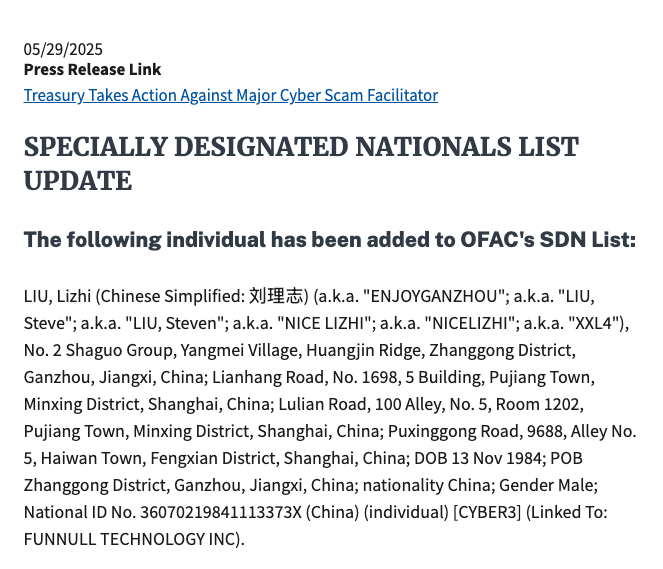
The Treasury also sanctioned Funnull’s alleged operator, a 40-year-old Chinese national named Liu “Steve” Lizhi. The government says Funnull directly facilitated financial schemes resulting in more than $200 million in financial losses by Americans, and that the company’s operations were linked to the majority of pig butchering scams reported to the FBI.

It is generally illegal for U.S. companies or individuals to transact with people sanctioned by the Treasury. However, as Mr. Lizhi’s case makes clear, just because someone is sanctioned doesn’t necessarily mean big tech companies are going to suspend their online accounts.

The government says Lizhi was born November 13, 1984, and used the nicknames “XXL4” and “Nice Lizhi.” Nevertheless, Steve Liu’s 17-year-old account on LinkedIn (in the name “Liulizhi”) had hundreds of followers (Lizhi’s LinkedIn profile helpfully confirms his birthday) until quite recently: The account was deleted this morning, just hours after KrebsOnSecurity sought comment from LinkedIn.

Mr. Lizhi’s LinkedIn account was suspended sometime in the last 24 hours, after KrebsOnSecurity sought comment from LinkedIn.

In an emailed response, a LinkedIn spokesperson said the company’s “Prohibited countries policy” states that LinkedIn “does not sell, license, support or otherwise make available its Premium accounts or other paid products and services to individuals and companies sanctioned by the U.S. government.” LinkedIn declined to say whether the profile in question was a premium or free account.

Mr. Lizhi also maintains a working PayPal account under the name Liu Lizhi and username “@nicelizhi,” another nickname listed in the Treasury sanctions. PayPal did not respond to a request for comment. A 15-year-old Twitter/X account named “Lizhi” that links to Mr. Lizhi’s personal domain remains active, although it has few followers and hasn’t posted in years.

These accounts and many others were flagged by the security firm Silent Push, which has been tracking Funnull’s operations for the past year and calling out U.S. cloud providers like Amazon and Microsoft for failing to more quickly sever ties with the company.

Liu Lizhi’s PayPal account.

In a report released today, Silent Push found Lizhi still operates numerous Facebook accounts and groups, including a private Facebook account under the name Liu Lizhi. Another active Facebook account clearly connected to Lizhi is a tourism page for Ganzhou, China called “EnjoyGanzhou” that was named in the Treasury Department sanctions.

“This guy is the technical administrator for the infrastructure that is hosting a majority of scams targeting people in the United States, and hundreds of millions have been lost based on the websites he’s been hosting,” said Zach Edwards, senior threat researcher at Silent Push. “It’s crazy that the vast majority of big tech companies haven’t done anything to cut ties with this guy.”

The FBI says it received nearly 150,000 complaints last year involving digital assets and $9.3 billion in losses — a 66 percent increase from the previous year. Investment scams were the top crypto-related crimes reported, with $5.8 billion in losses.

In a statement, a Meta spokesperson said the company continuously takes steps to meet its legal obligations, but that sanctions laws are complex and varied.

“Sanctions are often targeted in nature and don’t always prohibit people from having a presence on our platform,” the statement reads. “Whether specific activity is restricted by sanctions or Meta’s Terms and Policies depends on the specific facts.”

Attempts to reach Mr. Lizhi via his primary email addresses at Hotmail and Gmail bounced as undeliverable. Likewise, his 14-year-old YouTube channel appears to have been taken down recently.

However, anyone interested in viewing or using Mr. Lizhi’s 146 computer code repositories will have no problem finding active GitHub accounts for him, including one registered under the NiceLizhi and XXL4 nicknames mentioned in the Treasury sanctions.
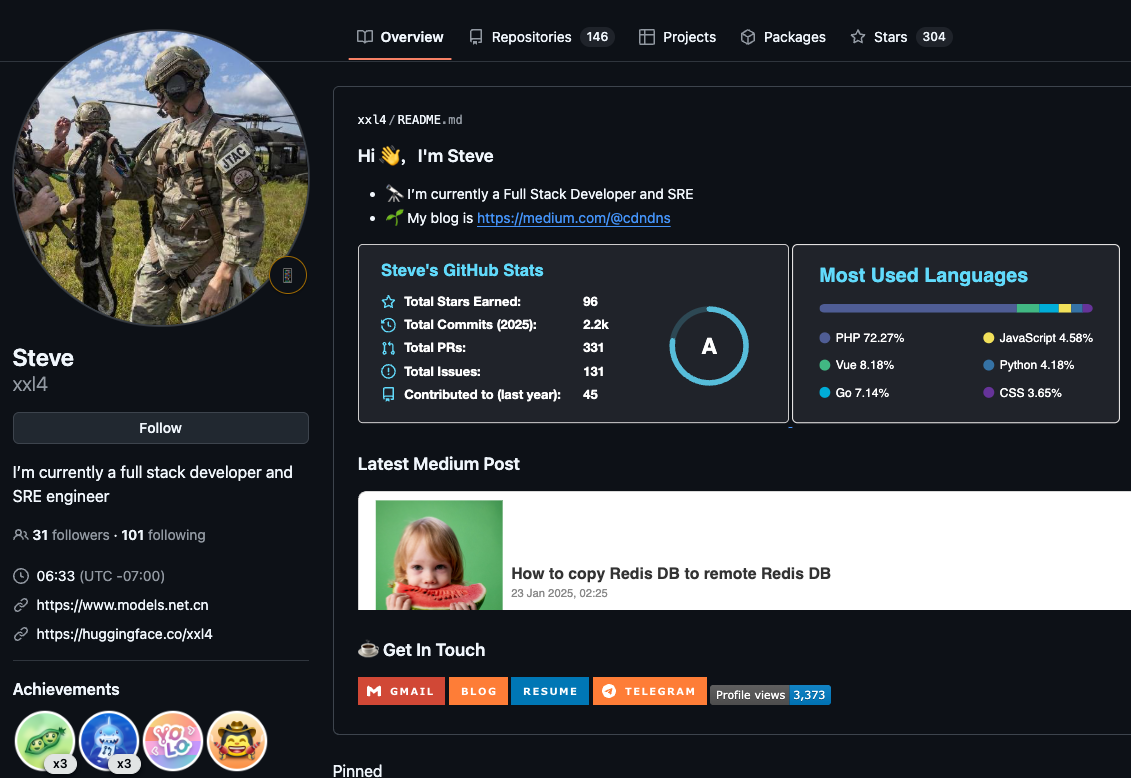
One of multiple active GitHub profiles used by Liu “Steve” Lizhi, who uses the nickname XXL4 (a moniker listed in the Treasury sanctions for Mr. Lizhi).

Mr. Lizhi also operates a GitHub page for an open source e-commerce platform called NexaMerchant, which advertises itself as a payment gateway working with numerous American financial institutions. Interestingly, this profile’s “followers” page shows several other accounts that appear to be Mr. Lizhi’s. All of the account’s followers are tagged as “suspended,” even though that suspended message does not display when one visits those individual profiles.

In response to questions, GitHub said it has a process in place to identify when users and customers are Specially Designated Nationals or other denied or blocked parties, but that it locks those accounts instead of removing them. According to its policy, GitHub takes care that users and customers aren’t impacted beyond what is required by law.
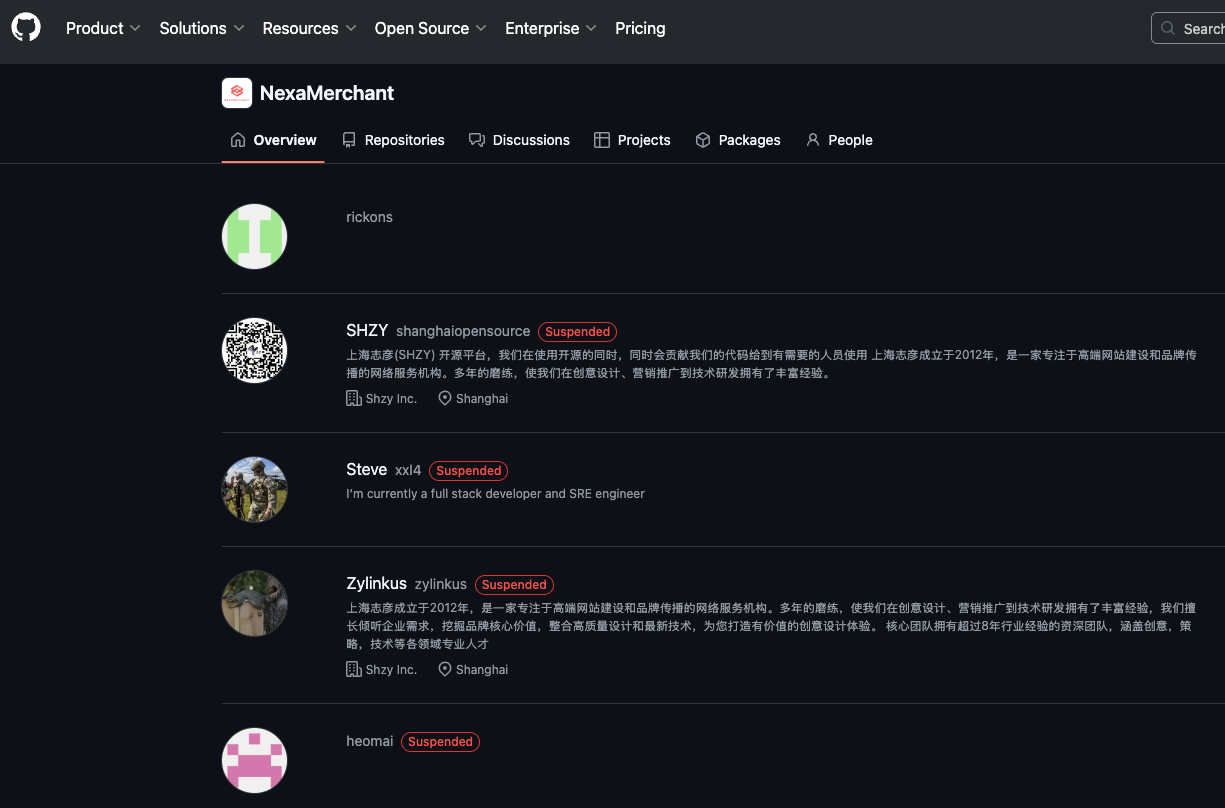
All of the follower accounts for the XXL4 GitHub account appear to be Mr. Lizhi’s, and have been suspended by GitHub, but their code is still accessible.

“This includes keeping public repositories, including those for open source projects, available and accessible to support personal communications involving developers in sanctioned regions,” the policy states. “This also means GitHub will advocate for developers in sanctioned regions to enjoy greater access to the platform and full access to the global open source community.”

Edwards said it’s great that GitHub has a process for handling sanctioned accounts, but that the process doesn’t seem to communicate risk in a transparent way, noting that the only indicator on the locked accounts is the message, “This repository has been archived by the owner. It is not read-only.”

“It’s an odd message that doesn’t communicate, ‘This is a sanctioned entity, don’t fork this code or use it in a production environment’,” Edwards said.

Mark Rasch is a former federal cybercrime prosecutor who now serves as counsel for the New York City based security consulting firm Unit 221B. Rasch said when Treasury’s Office of Foreign Assets Control (OFAC) sanctions a person or entity, it then becomes illegal for businesses or organizations to transact with the sanctioned party.

Rasch said financial institutions have very mature systems for severing accounts tied to people who become subject to OFAC sanctions, but that tech companies may be far less proactive — particularly with free accounts.

“Banks have established ways of checking [U.S. government sanctions lists] for sanctioned entities, but tech companies don’t necessarily do a good job with that, especially for services that you can just click and sign up for,” Rasch said. “It’s potentially a risk and liability for the tech companies involved, but only to the extent OFAC is willing to enforce it.”
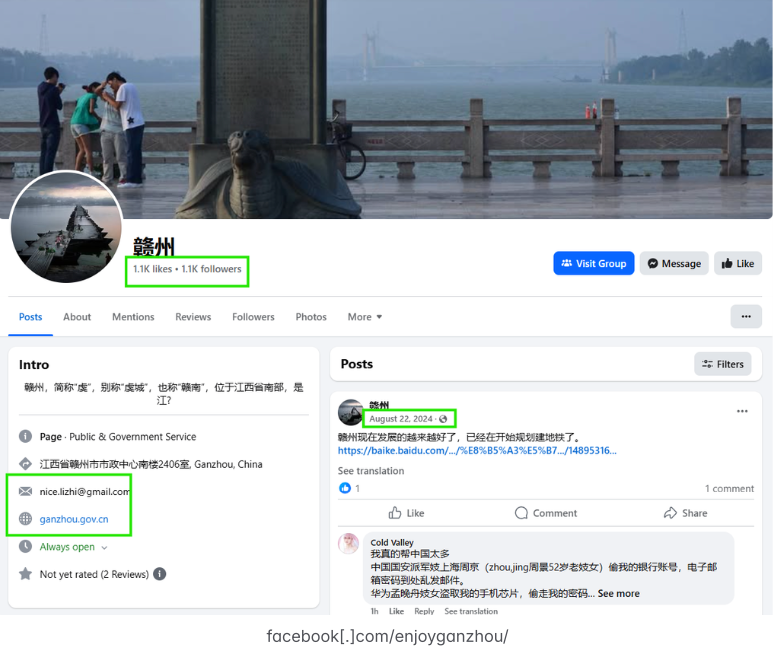
Liu Lizhi operates numerous active Facebook accounts and groups, including this one for an entity specified in the OFAC sanctions: The “Enjoy Ganzhou” tourism page for Ganzhou, China. Image: Silent Push.

In July 2024, Funnull purchased the domain polyfill[.]io, the longtime home of a legitimate open source project that allowed websites to ensure that devices using legacy browsers could still render content in newer formats. After the Polyfill domain changed hands, at least 384,000 websites were caught in a supply-chain attack that redirected visitors to malicious sites. According to the Treasury, Funnull used the code to redirect people to scam websites and online gambling sites, some of which were linked to Chinese criminal money laundering operations.

The U.S. government says Funnull provides domain names for websites on its purchased IP addresses, using domain generation algorithms (DGAs) — programs that generate large numbers of similar but unique names for websites — and that it sells web design templates to cybercriminals.

“These services not only make it easier for cybercriminals to impersonate trusted brands when creating scam websites, but also allow them to quickly change to different domain names and IP addresses when legitimate providers attempt to take the websites down,” reads a Treasury statement.

Meanwhile, Funnull appears to be morphing nearly all aspects of its business in the wake of the sanctions, Edwards said.

“Whereas before they might have used 60 DGA domains to hide and bounce their traffic, we’re seeing far more now,” he said. “They’re trying to make their infrastructure harder to track and more complicated, so for now they’re not going away but more just changing what they’re doing. And a lot more organizations should be holding their feet to the fire.”

Krebs on Security – ​Read More

Dust hits $6M ARR helping enterprises build AI agents that actually do stuff instead of just talking

Credit: VentureBeat made with Midjourney


Dust AI startup hits $6M revenue building enterprise agents that automate workflows and take real actions across business systems using Anthropic’s Claude models and MCP protocol.Read More

Security News | VentureBeat – ​Read More