How the SNI5GECT attack on 5G connectivity works, and how it threatens subscribers | Kaspersky official blog

The flaws and vulnerabilities of cellular networks are regularly exploited to attack subscribers. Malicious actors use devices with catchy names like IMSI Catcher (Stingray) or SMS blaster to track people’s movements and send them spam and malware. These attacks were easiest to carry out on 2G networks, becoming more difficult on 3G and 4G networks through the introduction of security features. But even 4G networks had implementation flaws that made it possible to track subscriber movements and cause other information leaks. Can we breathe a sigh of relief when we upgrade to 5G? Unfortunately not…

An upgrade in reverse

Many practical attacks, such as the aforementioned SMS blaster, rely on a downgrade: forcing the victim’s smartphone to switch to an older communication standard. Legacy standards allow attackers more leeway — from discovering the subscriber’s unique identifier (IMSI), to sending fake text messages under the guise of real companies. A downgrade typically uses a device that jams the signal of the legitimate carrier’s base station, and broadcasts its own. However, this method can be detected by the carrier, and it will become less effective in the future as smartphones increasingly incorporate built-in protection against these attacks, which prevents the switch to 2G and sometimes even 3G networks.

Researchers at Singapore University of Technology and Design have demonstrated a SNI5GECT attack, which works on the latest 5G networks without requiring easy-to-detect actions like jamming legitimate base station signals. An attacker within a 20-meter radius of the victim can make the target device’s modem reboot and then force-switch it to a 4G network, where the subscriber is easier to identify and track. So how does this attack work?

Before a device and a 5G base station connect to each other, they exchange some information — and the initial stages of this process aren’t encrypted. Once they establish a secure, encrypted connection, the base station and the smartphone exchange handshakes, but coordinate the session parameters in a plain, unencrypted format. The attacker’s device monitors this process and selects the precise moment to inject its own information block before the legitimate base station does. As a result, the victim’s modem processes malicious data. Depending on the modem and the contents of the data packet, this either causes the modem to switch to a 4G network and refuse to reconnect to said 5G base station, or to crash and reboot. The latter is only good for temporarily disconnecting the victim, while the former brings all known 4G-based surveillance attacks into play.

The attack was demonstrated on the OnePlus Nord CE 2, Samsung Galaxy S22, Google Pixel 7, and Huawei P40 Pro smartphones. These devices use completely different cellular modems (MediaTek, Qualcomm, Samsung, Huawei, respectively), but the problem lies in the characteristics of the standard itself — not in the particular smartphones. The differences are subtle: some modems can be rebooted while others can’t; on some modems, inserting a malicious packet has a 50% success rate, while on others it’s 90%.

The practicality of SNI5GECT

In its current form, the attack is unlikely to become widespread since it has two major limitations. First, the distance between the attacker and the victim can’t be over 20 meters under ideal conditions — even less in a real urban environment. Second, if the smartphone and the 5G base station have already established a connection, the attack cannot proceed. The attacker has to wait for a moment when the victim’s movement or changes in the radio environment require the smartphone to re-register with the base station. This happens regularly, but not every minute, so the attacker has to literally shadow the victim.

Still, such conditions may exist in certain situations, like when targeting people attending a specific meeting, or in an airport business lounge, or similar scenarios. The attacker would also need to combine SNI5GECT with legacy 4G/3G/2G attacks to achieve any practical results, which means making some radio noise.

SNI5GECT plays a significant role as a stepping stone toward more complex and dangerous future attacks. As 5G becomes more popular and older generations of connectivity are phased out, researchers will increasingly work with the new radio protocol, and apply their findings to the next stages of the mobile arms race.

Currently, there is no defense against 5G attacks. Disabling 5G for protection is pointless, as the smartphone just switches to a 4G network, which is exactly what hypothetical attackers want. Therefore, we have three pieces of advice:

  • Regularly patch and update your smartphone’s OS — this usually also updates the modem firmware to fix bugs and vulnerabilities.
  • Turn on airplane mode before confidential meetings; to be super-safe — leave your device at home.
  • Consider disabling legacy communication standards (2G/3G) on your smartphone — we discussed the pros and cons of this solution in our post on SMS blasters.

Kaspersky official blog – ​Read More

US, Allies Push for SBOMs to Bolster Cybersecurity

SBOM adoption will drive software supply chain security, decreasing risks and costs, and improving transparency.

The post US, Allies Push for SBOMs to Bolster Cybersecurity appeared first on SecurityWeek.

SecurityWeek – ​Read More

Visa’s AI-enhanced payment options will be coming to more apps soon, thanks to new MCP support

Consumers, developers, and businesses alike can benefit from this update.

Latest news – ​Read More

Build Practical Cyber Defense Skills with This 5-Course Bundle

Train in AI threat detection, OSINT tools, and Zero Trust security models with lifetime access for just $19.99.

Security | TechRepublic – ​Read More

CISA Adds TP-Link Wi-Fi and WhatsApp Spyware Flaws to KEV List

CISA updates its KEV List with TP-Link Wi-Fi extender and WhatsApp spyware flaws, urging users and agencies to…

Hackread – Latest Cybersecurity, Hacking News, Tech, AI & Crypto – ​Read More

Release Notes: Fresh Connectors, SDK Update, and 2,200+ New Detection Rules 

August was a busy month at ANY.RUN. We expanded our list of connectors with Microsoft Sentinel and OpenCTI, added Linux Debian (ARM) support to the SDK, and strengthened detection across hundreds of new malware families and techniques. With fresh signatures, rules, and product updates, your SOC can now investigate faster, detect more threats in real time, and keep defenses sharp against the latest campaigns. 

Let’s dive into the details now. 

Product Updates 

New Connectors: Bringing Threat Intelligence into Your Existing Stack 

We continue to expand ANY.RUN connectors so teams can work with familiar tools while boosting threat visibility. Our goal is simple: reduce setup friction and deliver fresh, high-fidelity IOCs directly into your workflows; no extra tools, no complex scripts, no wasted analyst time. 

Microsoft Sentinel 

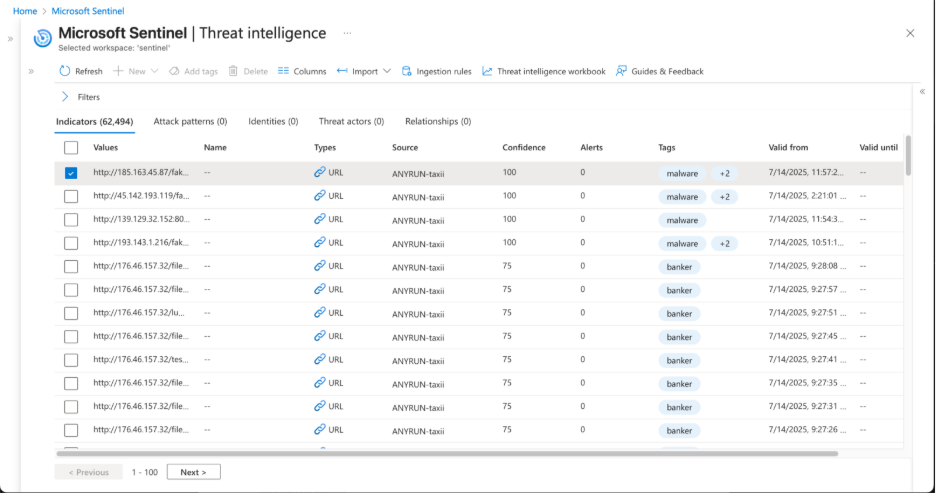
ANY.RUN now delivers Threat Intelligence (TI) Feeds directly to Microsoft Sentinel via the built-in STIX/TAXII connector. That means: 

  • Effortless setup: Connect TI Feeds with your custom API key 
  • Enhanced automation: Sentinel’s playbooks automatically correlate IOCs with your logs, trigger alerts, and even block IPs. 
  • Cost efficiency: Maximize your existing Sentinel setup, cut false positives, and reduce breach risks with high-fidelity indicators. 
  • Rich context: Every IOC links back to a sandbox session with full TTPs for faster investigations and informed responses. 
  • Faster detection: Fresh IOCs stream into Sentinel in real time, accelerating threat identification before impact. 
  • Seamless interoperability: TI Feeds work natively within your Sentinel environment, so no workflows need to change. 
Indicators with key parameters accessible for browsing inside MS Sentinel 

Investigations become faster and responses more precise with IOCs enriched by full sandbox context. Unlike static or delayed threat feeds, ANY.RUN’s TI Feeds are powered by real-time detonations of fresh malware samples observed across attacks on 15,000+ organizations worldwide. The data is updated continuously and pre-processed by analysts to ensure high fidelity and near-zero false positives, so your SOC can act on threats that truly matter. 

Want to integrate TI Feeds from ANY.RUN?
Reach out to us and we’ll help you set it up


Contact us


OpenCTI 

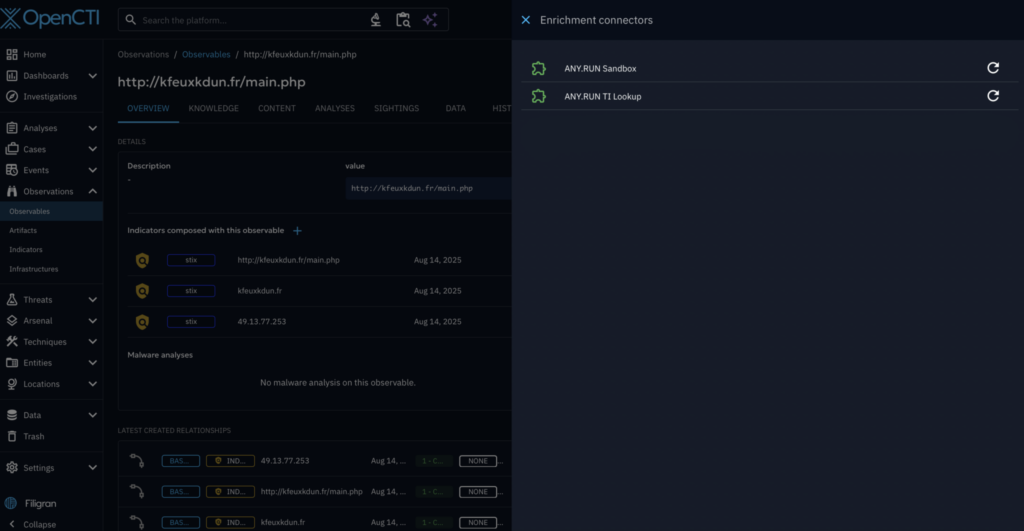
For SOC teams using Filigran’s OpenCTI, ANY.RUN now provides dedicated connectors that bring interactive analysis and fresh threat intelligence directly into your workflows. Instead of juggling multiple tools, analysts can analyze files, enrich observables, and track emerging threats inside the OpenCTI interface they already use. 

ANY.RUN connectors inside OpenCTI 
  • Threat Intelligence Feeds: Stay updated on the active threats with filtered, actionable network IOCs from the latest malware samples. 

You can connect any combination of these connectors based on their specific needs and licenses.  

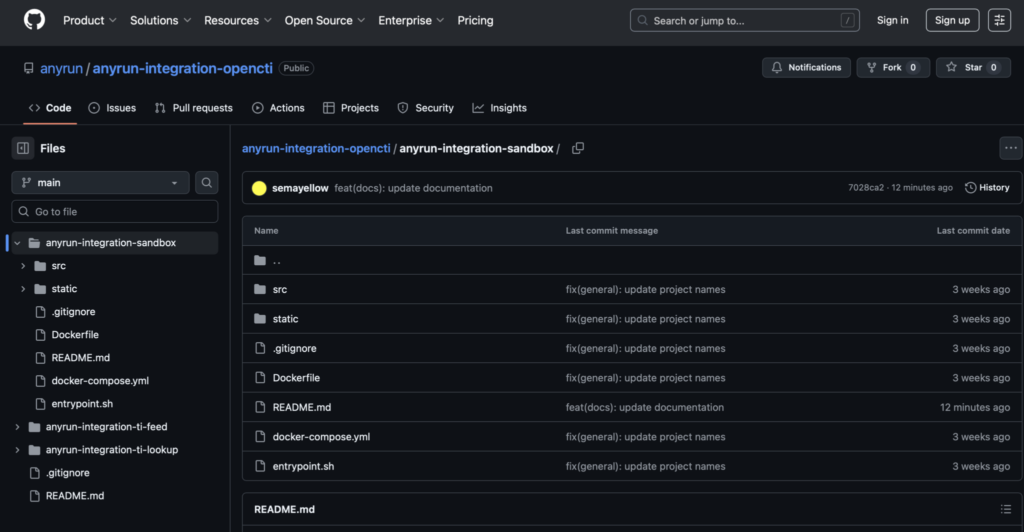
View documentation on GitHub → 

Detailed documentation on how to set up the OpenCTI connector 

SDK Update: Linux Debian (ARM) Support 

We’ve expanded our software development kit (SDK) to include Linux Debian 12.2 (ARM, 64-bit) in the Linux connector. This addition ensures that analysts can now automate malware analysis for ARM-based threats alongside Windows, Linux x86, and Android, all from the same SDK. 

With this update, your team can: 

  • Submit ARM samples for automated analysis and retrieve detailed reports. 
  • Collect IOCs, IOBs, and IOAs from Debian (ARM) environments in real time. 
  • Integrate ARM analysis seamlessly into SIEM, SOAR, or XDR workflows without extra tools. 

Add ANY.RUN’s Interactive Sandbox to your SOC workflow
Automate threat analysis, speed up detection, and shorten MTTDs


Get started now


ARM-based malware is rapidly expanding across IoT, embedded systems, and cloud servers. By adding Debian ARM support, the SDK gives SOCs earlier visibility into these threats and helps reduce costs by keeping all environments under one automated process. 

Explore ANY.RUN’s SDK on GitHub 

Threat Coverage Update 

In August, our team continued to expand detection capabilities to help SOCs stay ahead of evolving threats: 

  • 104 new signatures were added to strengthen detection across malware families and techniques. 
  • 14 new YARA rules went live in production, boosting accuracy and enabling deeper hunting capabilities. 
  • 2,124 new Suricata rules were deployed, ensuring better coverage for network-based attacks. 

These updates mean analysts get faster, more confident verdicts in the sandbox and can enrich SIEM, SOAR, and IDS workflows with fresh, actionable IOCs. 

New Behavior Signatures 

In August, we introduced a new set of behavior signatures to help SOC teams detect obfuscation, persistence, and stealthy delivery techniques earlier in the attack chain. These detections are triggered by real actions, not static indicators, giving analysts deeper visibility and faster context during investigations. 

This month’s coverage includes new families and techniques across stealers, lockers, loaders, and RATs: 

YARA Rule Updates 

In August, we released 14 new YARA rules into production to help analysts detect threats faster, improve hunting accuracy, and cover a wider range of malware families and evasion tactics. Key additions include: 

  • YANO – Stealer detection 
  • BABEL – Obfuscation coverage 
  • DNGuard – Packer/obfuscator detection 

New Suricata Rules 

We also added 2,124 targeted Suricata rules to help SOC teams catch data exfiltration and phishing campaigns more reliably. Highlights include: 

  • Salty2FA TLD domain chain (sid:85002796): Tracks Salty2FA infrastructure by usage of domain names in .*.com & .ru TLD-zones in specific order 

Other Updates 

  • Updated extractor – improved parsing for modern samples 
  • Updated Lumma rule – enhanced detection for new campaign variants (sample

About ANY.RUN  

ANY.RUN supports over 15,000 organizations across banking, manufacturing, telecom, healthcare, retail, and tech, helping them build faster, smarter, and more resilient cybersecurity operations.  

Our cloud-based Interactive Sandbox enables teams to safely analyze threats targeting Windows, Linux, and Android systems in under 40 seconds; no complex infrastructure required. Paired with TI Lookup, YARA Search, and Threat Feeds, ANY.RUN empowers security teams to accelerate investigations, reduce risk, and boost SOC efficiency. 

The post Release Notes: Fresh Connectors, SDK Update, and 2,200+ New Detection Rules  appeared first on ANY.RUN’s Cybersecurity Blog.

ANY.RUN’s Cybersecurity Blog – ​Read More

Finally, the official Instagram app for iPad has arrived – here’s what’s new

The new version for iPadOS is optimized for the tablet, and Meta says an Android version will be coming soon.

Latest news – ​Read More

Linux Mint 22.2 delivers fresh features and polish for everyday Linux users – and longtime fans

The new Linux Mint desktop release doesn’t come with many flashy new features, but it remains attractive, easy to use, and far more secure than Windows.

Latest news – ​Read More

Two Exploited Vulnerabilities Patched in Android

Elevation of privilege flaws in Android Runtime (CVE-2025-48543) and Linux kernel (CVE-2025-38352) have been exploited in targeted attacks.

The post Two Exploited Vulnerabilities Patched in Android appeared first on SecurityWeek.

SecurityWeek – ​Read More

Report: 70% of iPhone users considering an upgrade to iPhone 17 – and it’s not AI related

The iPhone 17 is almost here. Are you upgrading?

Latest news – ​Read More