
Fighting Telecom Cyberattacks: Investigating a Campaign Against UK Companies

Telecommunications companies are the digital arteries of modern civilization. Compromise a major telecom operator, and you don’t just steal data — you gain the power to intercept communications, manipulate network traffic, and bring entire regions offline. 
 
Every day, ANY.RUN’s solutions process thousands of threat samples, and hidden within them are patterns of activity targeting telecom operators. Some are opportunistic, others are advanced and carefully orchestrated.   

In this report, we’ll walk through real-world attacks where threat actors weaponized telecom brand trust to launch attacks. We’ll also show how analysts can detect these threats, extract indicators of compromise (IOCs), and strengthen defenses. 

Key Takeaways 

  • Telecommunications under siege: The telecom sector faced sustained growth in malicious activity from May-July 2025, with 56% of observed APT campaigns targeting telecom and media companies.  
  • Brand impersonation is weaponized trust: Attackers systematically abuse telecom brand recognition, using familiar logos, official-looking domains, and corporate communication styles to bypass human skepticism and technical filters. 
  • Pattern recognition defeats mass campaigns: Simple YARA rules can expose large-scale operations.  
  • Tycoon2FA phishing kit remains active: The phishing framework designed to steal Microsoft credentials and bypass two-factor authentication is a critical concern for enterprise telecom environments. 
  • Interactive Sandbox reveals multi-stage attack progression: ANY.RUN’s Interactive Sandbox captured the complete attack flow from the initial PDF attachment to the final phishing page. This real-time analysis exposed the redirection chain from legitimate-looking emails to DGA-generated domains (xjrsel.ywnhwmard[.]es), enabling early detection before credentials could be harvested. 
  • Proactive hunting scales defense: Combining YARA Search with Threat Intelligence Lookup transforms reactive incident response into proactive threat hunting, enabling security teams to build comprehensive defense before attacks succeed. 

Recent Telecom Attack Dynamics 

Attacks on communication operators can disrupt critical services, lead to leaks of confidential information, and be used as a springboard for large-scale cyber espionage operations. 

According to Cyfirma, telecommunications and media industry were targeted in 9 out of 16 observed APT campaigns in May–July 2025, accounting for 56% of all cases. The peak activity occurred in May, followed by a slight decline in June and a renewed increase in July. 

We at ANY.RUN have observed a steady increase in telecom-targeting attacks in May–July 2025. The Sandbox data shows a smoother continuous growth, reaching a maximum in July. This reflects the constant pressure of mass attacks. 
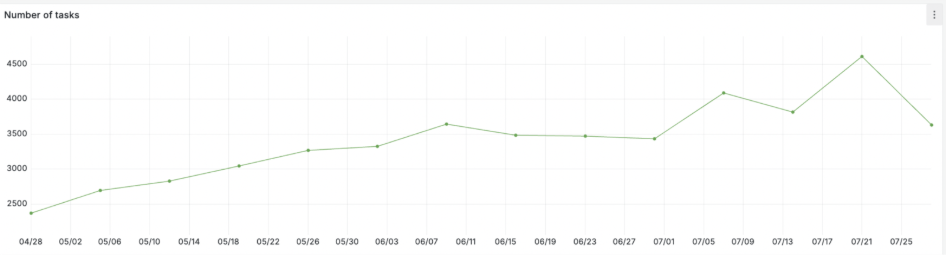
ANY.RUN’s data shows steady growth of telecom attacks 

In our Threat Intelligence Reports highlighting the activity of top APT groups, we also see an increased targeting of media and telecom campaigns in the recent attacks.  

Analysis of Threats Targeting a Major Telecom Holding 

Let’s take the perspective of an information security specialist at a huge British telecommunications holding company operating in approximately 180 countries and providing fixed-line, broadband internet, mobile communications, and pay-TV services. 

Our goal is to determine how attackers spread malware, which families they use, which indicators can be collected, and the frequency, dynamics, and technical details of the attacks.   

The results of a YARA rule scan 

We will start with Threat Intelligence Lookup, which allows SOC teams to navigate a database of live attack data from 15,0000 organizations. Using TI Lookup’s YARA Search, we can create a simple rule to find all emails uploaded into the sandbox where the recipient field contains the holding’s domain. This allows us to identify malicious attachments and links aimed at its employees. 

As a result of executing the YARA rule, dozens of files were discovered containing addresses with the corporation’s domain in the recipient field. Each of these files was linked to one or more analyses in ANY.RUN’s Sandbox, which also featured this domain, confirming the presence of potentially significant malicious activity directed at company employees.

Catch attacks early with instant IOC enrichment in TI Lookup
Power your proactive defense with data from 15K SOCs 


Request trial for your team


ANY.RUN’s Interactive Sandbox allows security analysts to safely execute suspicious files and observe their behavior in real-time, capturing network communications, file modifications, and malicious redirections before they can impact production systems. This controlled environment reveals attack chains from initial email delivery through credential harvesting attempts.

Let us analyze one of the found emails.  

View sandbox analysis of the malicious email 

A phishing email sample detonated in ANY.RUN’s Sandbox

A Phishing Message Through a SOC Analyst Lens 

On July 9, 2025, an email addressed to giova[xx.xx]stantini@[thedomain dot]com was uploaded to ANY.RUN. The sender was listed as Bt_Bt_xu86@ksi.com.pk with the display name “DocSgn.” The domain ksi[.]com[.]pk belongs to Khatib Sons International, a Pakistani metal company, and has no relation to the email content. Coupled with the “DocSgn” branding, this impersonated a well-known electronic document signature service to trick the recipient. 

View sandbox analysis of the email 

A phishing email with characteristic sender and subject

The subject line — “Re: Re: Completed: For Sales contract (h4nc)” — mimicked an ongoing conversation, a common social engineering tactic to reduce suspicion. 

The email contained a PDF attachment and a form with a “Review and Sign” button in the body, luring the recipient to view and sign a supposed document. 

Additionally, at least five similar emails were detected targeting other employees, with generic content not tailored to specific recipients — indicating a mass campaign. 

The redirect to a generated domain 

Clicking the “Review and Sign” button redirected the user to a fake Microsoft login page hosted on xjrsel.ywnhwmard[.]es, a domain resembling a DGA-generated address, a common indicator of phishing or malicious resources. 

This threat was identified as the Tycoon2FA phishing kit, known for spoofing Microsoft login pages and harvesting credentials. 

Reduce MTTR and minimize risks with ANY.RUN’s solutions
Request a quote or trial for your SOC  


Contact us


Network-Level Detection 

Suricata rules triggered on network activity associated with the Tycoon2FA kit. The alerts provided details such as MITRE ATT&CK technique T1566 (Phishing), the suspicious DGA-like domain, and connection metadata. 

Suricata rule with domain and telemetry data detected in the sandbox

That’s exactly how ANY.RUN’s solutions help detect threats early, exposing phishing attempts before they do damage.  

Searching for Similar Threats Targeting UK Companies 

Using ANY.RUN’s Threat Intelligence Lookup, we’ve searched for samples uploaded from the UK containing the same PDF attachment. The query returned about 40 sandbox analyses, mostly from July 2025, including emails targeting a number of UK companies. 

sha256:”689cdb319d8cae155516d9f8ddfbd0c99de048252e84f529e0ccc538523a5eba” and submissionCountry:”GB” 

File hash TI Lookup search results 

We’ve also identified repeating sender address patterns across multiple phishing emails, indicating automated mass distribution. 

Sorting Out Emails with Specific Sender Pattern 

Many malicious emails sent to telecom companies have fixed patterns for forming sender addresses in the From field. The structure looks as follows: 

“._*” <*_*_*@*.com> 

The display name usually began with “._” followed by a word in capital letters. The email address repeated a word twice, separated by underscores, followed by random characters before the @, and ending in .com. 

Email with sender name generated with a specific pattern 

This structure strongly suggests automated mass phishing. 

Email with characteristic sender name from another campaign 

Such a pattern is highly likely created automatically for mass mailings, so it can be used as a basis for a filtering rule that blocks similar emails. 

A YARA rule was created to detect such emails in ANY.RUN’s database of malware samples. The rule revealed 16 files with the sender pattern, linked to multiple sandbox analyses. From these, we can extract senders’ addresses, email and attachment hashes, URLs, phishing domains, IPs, subjects, and other indicators. 

YARA rule for searching emails with the sender pattern

This data allows analysts to assess the relevance of the threat, determine its timeframe and target organizations and countries. Based on this, you can prioritize this threat for your company and add indicators to the detection and response systems. 

Tracking Telecom Impersonation Attacks 

Let’s build a threat landscape where attackers use domains containing the element “telecom” in their names. We are interested in cases where such activity is classified as phishing to assess the scale, frequency, and targets of these attacks.

The search returned 86 analysis sessions, 70 related domains, and enriched context data such as headers, attachments, network artifacts, timelines, and submission geographies. 

domainName:”telecom” AND threatName:”phishing” and threatLevel:”malicious” 

Search for malware samples featuring domains with “telecom” in name 

These insights allow security teams to enrich TI sources, prioritize threats, identify campaign clusters, track temporal dynamics, update detection rules, and map related infrastructure. 

How ANY.RUN Helps Telecom Companies Withstand the Growing Pressure of Phishing Attacks 

Telecom companies are under constant fire from phishing campaigns that combine brand impersonation, malicious attachments, and fake domains. While attackers automate and scale their operations, security teams often struggle to keep up. ANY.RUN’s ecosystem of services provides telecom defenders with the tools to detect, investigate, and respond to these threats more effectively: 

Interactive Sandbox 

Set up your virtual environment and run safe malware analysis in the Sandbox 

Quickly detonate suspicious emails, attachments, or links in a safe, interactive environment. Observe behavior in real time, identify phishing kits like Tycoon2FA, and capture artifacts such as malicious redirects, domains, or dropped files. 

Threat Intelligence Feeds 

TI Feeds: get real-time indicators from 15K SOC incident investigations 

Get continuously updated, actionable indicators of compromise (IOCs) drawn from global malware submissions. Telecom SOCs can integrate Threat Intelligence Feeds directly into SIEM or EDR systems to block known phishing infrastructure before it reaches employees or customers. 

Threat Intelligence Lookup 

Click the search bar and use tips on parameters and operators to look up IOCs and TTPs 

Go beyond single-sample analysis by exploring related campaigns. With Threat Intelligence Lookup, analysts can pivot on domains, file hashes, or sender patterns to uncover broader phishing clusters targeting telecom brands. This makes it easier to map attacker infrastructure, understand campaign scope, and strengthen detection rules. 

By combining these services, telecom companies gain both the depth to analyze individual phishing attempts and the breadth to track large-scale campaigns. This layered approach enables faster detection, better prioritization, and ultimately stronger resilience against persistent phishing pressure. 

Conclusion 

The analysis confirms that phishing attacks against telecom companies’ employees remain highly relevant, often used to steal credentials and bypass 2FA. 

ANY.RUN’s TI Lookup and YARA Search allow analysts to research the attacks and the employed malware, find samples linked to a targeted company’s email addresses, and expose domains utilized for phishing. Security teams are able to gather valuable indicators (hashes, domains, IPs, headers) to enrich internal threat intelligence sources. 

Pattern-based detection methods tailored to telecom-sector targeting can help identify new campaigns faster and reduce organizational risk. 

About ANY.RUN

Over 500,000 cybersecurity professionals and 15,000+ companies in finance, manufacturing, healthcare, and other sectors rely on ANY.RUN. Our services streamline malware and phishing investigations for organizations worldwide.   

  • Speed up triage and response: Detonate suspicious files using ANY.RUN’s Interactive Sandbox to observe malicious behavior in real time and collect insights for faster and more confident security decisions.   
  • Improve threat detection: ANY.RUN’s Threat Intelligence Lookup and TI Feeds provide actionable insights into cyber attacks, improving detection and deepening understanding of evolving threats.  

Start 14-day trial of ANY.RUN’s solutions in your SOC today 

The post Fighting Telecom Cyberattacks: Investigating a Campaign Against UK Companies appeared first on ANY.RUN’s Cybersecurity Blog.

ANY.RUN’s Cybersecurity Blog – ​Read More

GitHub Boosting Security in Response to NPM Supply Chain Attacks 

GitHub will implement local publishing with mandatory 2FA, granular tokens that expire after seven days, and trusted publishing.

The post GitHub Boosting Security in Response to NPM Supply Chain Attacks  appeared first on SecurityWeek.

SecurityWeek – ​Read More

The best payment gateways of 2025: Expert tested

ZDNET tested the most trusted payment gateways to help you accept payments faster, cut checkout friction, and grow your revenue in 2025.

Latest news – ​Read More

What happens when you engage Cisco Talos Incident Response?

What happens when you engage Cisco Talos Incident Response?

In today’s world, cybersecurity incidents are not a matter of if, but when and how. From ransomware attacks to data breaches exposing sensitive information, organizations face a changing threat landscape. As a result of cybersecurity attacks, organizations can experience downtime, financial losses, reputational damage and regulatory penalties. That’s when it really helps to have a team like Cisco Talos Incident Response (Talos IR) by your side. But what exactly happens when you bring in a team of cybersecurity responders? How do we turn chaos into control, and what is the long-term value that Talos IR provides to the organizations we work with?

This blog post takes you behind the scenes of engaging an incident response (IR) firm like Talos IR. We will walk through what really happens during an IR engagement, from the moment you pick up a phone and call for help in the middle of a crisis to the long-term changes that make your organization stronger and more secure.

Why engage an IR team? 

Before diving into the process, let’s address the fundamental question: Why engage an IR firm? Cybersecurity incidents are complex, often requiring specialized skills, tools and experience that internal teams may lack. The Talos Year In Review Report highlights the rising frequency and sophistication of attacks; as a result, many security teams are struggling to address emergencies due to resource constraints or the complexity of response at scale. 

Engaging an IR firm like Talos IR brings several key advantages: 

  • Speed and availability: We provide 24/7 global support, with response times often under a few hours for remote engagements and on-site support wherever needed. Engaging an IR firm is like calling in a S.W.A.T. team for a cybersecurity crisis. We bring the tools, tactics and experience to contain the threat and minimize damage while guiding the organization toward recovery and increasing future resilience. 
  • Expertise: With numerous incident responders and threat intelligence analysts, all of whom have access to industry-leading Talos threat intelligence, the team has deep experience handling diverse threats, from ransomware to business email compromise (BEC). We handle it all, from “small” attacks on a single organization to a country-level threats. We don’t focus just on typical IT environments — we work with ICS/OT, cloud or mobile forensic, as well.  
  • Vendor-agnostic approach: Talos IR works with customers’ existing infrastructure and tooling, whether you use Cisco products or not. We simply don’t like to wait for deployment of tools before getting our hands dirty in all the logs, consoles and forensic artifacts. At a time when you are already resource-constrained, the last thing we want to do is make you replace an existing security solution, such as endpoint detection and response (EDR), on the endpoints. 
  • Comprehensive services: Beyond emergency response, Talos IR provides proactive services like Threat Hunting and IR Planning to strengthen your security posture before an incident happens or after to build up resilience.

Overview of the IR lifecycle 

The IR process typically follows a structured lifecycle, based on frameworks such as NIST SP 800-61 or the SANS Institute’s model. Talos IR aligns with these best practices, tailoring its approach to organization’s unique needs at the time of crisis and beyond. Handling incidents day in and day out has given Talos IR a deep well of experience, and we’ve built that knowledge into processes to support every organization we work with. The lifecycle of our IR typically includes: 

  1. Preparation 
  2. Identification 
  3. Containment 
  4. Eradication 
  5. Recovery 
  6. Lessons learned 

When you engage Talos IR, we apply this lifecycle with a blend of technical prowess, threat intelligence and collaborative teamwork. Let’s walk through each phase in detail.

Phase 1: Preparation (before the incident) 

Preparation is the foundation of effective IR. While many organizations only engage IR firms during a crisis, proactive engagement with Talos IR can significantly reduce the impact of future incidents. With a Talos IR retainer, you secure an agreement that ensures rapid response during an emergency and access to proactive services tailored to your organization’s risk profile and needs, offering: 

  • Emergency response: Guaranteed access to a global team within a short time of experiencing of an incident. During major global cybersecurity events like Wannacry, Heartbleed or Log4J or others, an existing retainer can be the difference between receiving immediate help and waiting days to weeks.
  • Proactive services: Access to proactive services for Threat Hunting, Tabletop Exercises or Purple Teaming
  • Relationship building: Familiarity with your environment, reducing response time during a crisis

These services build trust and familiarity, ensuring Talos IR can hit the ground running during an emergency.

Phase 2: Identification (beginning of incident) 

When a cybersecurity incident occurs, the first step is identifying and confirming the threat, whether it’s a ransomware attack, phishing campaign, or data breach. This is often when organizations reach out to Talos IR. Talos IR’s emergency response team is available 24/7 and can be reached via phone or email, but phone is the fastest and most direct way to reach our dedicated IR team.  

Initial call

During the first call, Talos IR gathers critical information to help us move onto analysis as soon as possible: 

  • Nature of the incident: What symptoms were observed (e.g., encrypted files, suspicious emails, new files on the webserver that were committed outside of the development lifecycle)? 
  • Affected systems: Which servers, endpoints, or networks are impacted? 
  • Business impact: Is the incident disrupting operations or exposing sensitive data? 
  • Existing actions: What steps have been taken so far? 
  • Visibility: What existing systems and tools can we access to handle the incident? Would complimentary Cisco tools help close a current gap, such as no EDR solution on a specific network? 

Triage, scoping and analysis 

Talos IR deploys a team led by an Incident Commander, who coordinates efforts and communicates with the stakeholders. The Incident Commander is supported by a skilled team of responders, threat analysts and project managers who keep everything moving and progress analysis 24/7. We typically start our work with in-depth triage of your environment which often involves: 

  • Log analysis: Reviewing logs from security information and event management (SIEM) systems, EDR tools, or network devices to identify indicators of compromise (IOCs)
  • Threat intelligence: Leveraging Talos global telemetry to match IOCs against known adversary tactics, techniques and procedures (TTPs)
  • Digital forensics: Collecting and analyzing evidence, such as memory dumps or disk images, to understand the attack’s scope

What makes IR truly effective is having access to as much relevant data as possible from the very beginning. The earlier our team can review endpoint telemetry, network traffic, identity logs and other critical data points, the faster we can determine what happened, how far the threat spread and what needs to be done to contain the threat. We often use the triage process to understand and search for: 

  • Initial access vector: Common vectors include phishing, exploited vulnerabilities (e.g., Microsoft Exchange Server flaws), or misconfigured VPN servers. You can read all about the trends we see each quarter here
  • Adversary goals: Is the attacker after data theft, ransomware deployment, or persistent access? 
  • Scope: How many systems, users, or networks are affected? 
  • Persistence mechanisms: Are there backdoors, scheduled tasks, or web shells that allow re-entry? 
  • Data exfiltration: Was sensitive data stolen? 

Talos IR provides an initial assessment, outlining the incident’s severity and recommended next steps, and keeps you updated daily. This phase sets the stage for containment, where speed is critical to limit damage. This analysis goes on for a number of days and typically uncovers additional information that adds to the picture during each 24-hour cycle.

Phase 3: Containment (stopping the attack) 

Containment focuses on preventing the threat from spreading further while preserving evidence for analysis. Talos IR employs a technology-agnostic approach, working with existing tools to implement short-term and long-term containment strategies while simultaneously looking to minimize business impact. 

Short-term containment 

Immediate actions to isolate the threat typically include: 

  • Network segmentation: Isolating affected systems or subnets to prevent lateral movement
  • Account lockdown and/or password changes: Disabling compromised accounts, changing compromised passwords, or enforcing multi-factor authentication (MFA). Talos IR frequently observes incidents where the lack of MFA enables ransomware or business email compromise (BEC) attacks. 
  • Process termination: Isolating malicious processes, such as ransomware encryptors or command-and-control (C2) beacons, when identified. Reimaging devices is often a recommended step, but it depends on the extent of the breach.
  • Firewall rules: Blocking malicious IPs or domains identified through Talos’ threat intelligence

Long-term security hardening 

While short-term countermeasures stop immediate damage, long-term security hardening ensures the attacker can’t regain access. By working together with an organization on emergency response, Talos IR gains a great understanding of what needs to be applied to build long term resistance. Some of these recommendations would be: 

  • Patching vulnerabilities: Addressing exploited flaws, such as unpatched servers or vulnerable web applications
  • Endpoint protection: Extending EDR deployments to monitor for residual threats on systems that were previously unprotected
  • Strengthening resilience: Taking a long-term, strategic approach to uncover and address weaknesses in your organization’s security posture to better prepared for future threats
  • Improving efficiency and consistency: Developing clear policies and procedures, while automating routine tasks such system hardening to reduce risk

Phase 4: Eradication (removing the threat) 

Once the threat is contained, Talos IR focuses on recommendations for completely removing all remnants of the adversary from the environment. Eradication is a delicate process that needs to balance business needs with recovery operations. Eradication typically involves: 

  • Account remediation: Resetting passwords and revoking compromised credentials. This may sound familiar from the containment phase, but often it is necessary to do two or more credential purges during a major incident. 
  • System rebuilds: In severe cases, rebuilding affected systems from clean backups to eliminate hidden threats.
  • Reverting adversary changes: Some sophisticated adversaries will do things like change firewall rules, embed fileless malware in the registry, or create future scheduled tasks as “sleeper agents.” Detecting, documenting and reverting these changes can be the most difficult and important part of eradication. 

Before wrapping up this phase, Talos IR verifies eradication through: 

  • Threat hunting: Scanning for residual IOCs or anomalous behavior
  • Log reviews: Confirming no further malicious activity

This process minimizes the risk of the adversary returning, as seen in cases where adversaries used tools like Cobalt Strike to maintain persistence. A single overlooked persistence mechanism is enough to let the adversary back in at a later date, which is why a thorough forensic review by an experienced IR team is critical. 

Phase 5: Recovery (restoring operations) 

Recovery aims to restore systems and operations to normal while enhancing security to prevent recurrence. Talos IR collaborates with IT and business teams to ensure a smooth transition. If it is necessary to accept some risk in order to get business operations back online, the Talos IR Incident Commander will work with your organizational leadership to ensure that the risk is minimized and understood, and that compensating controls are applied.  

Key recovery recommendations often include: 

  • Restoring from backups: Deploying clean backups to affected systems, ensuring they’re free of malware
  • Application testing: Verifying critical applications (e.g., ERP systems) function correctly post-recovery
  • User access: Gradually restoring user access with strengthened controls, such as MFA
  • Alternative processes: Implementing manual or temporary workflows if systems remain offline
  • Stakeholder communication: Coordinating with PR and legal teams to manage external messaging and regulatory notifications
  • Employee training: Educating staff on phishing awareness or secure practices to prevent future incidents
  • Logging improvements: Enhancing visibility to overcome the logging deficiencies
  • Patch management: Establishing processes to prevent exploitation of known vulnerabilities

Phase 6: Lessons learned (building resilience) 

The final phase of IR involves analyzing the incident to extract lessons and improve future preparedness. Talos IR’s approach ensures that insights translate into actionable strategies. Talos IR delivers a comprehensive incident report, including: 

  • Incident summary: A timeline of events, from initial detection to resolution 
  • Findings: Details on the attacker’s TTPs, entry points and impact
  • Recommendations: Specific actions to ensure long-term and short-term improvements

Ongoing partnership 

At Talos IR, we believe IR isn’t only a service we provide; it’s a relationship and the ultimate team sport. We’re not here just for the crisis; we’re here to support before, during and long after the incident is resolved. As many of our long-term retainer customers like Veradigm have observed, those multi-year relationships pay great dividends during incidents:  

“With the [Talos IR] retainer service we really appreciate established and met Service Level Agreements (SLAs). Plus, the knowledge of Cisco’s IR team on our unique environment, prior incidents, and their intelligence on the latest threats ensure we smoothly navigate, and balance preparation exercises and incidents based on our unique needs. Time to response in our SLA along with the unique knowledge, there isn’t a delay as one would expect. They are ready and we have ‘muscle memory’ from both tabletop scenarios and real-life situations. As a result of being in the highly regulated world of healthcare and with the constant need to consider patient safety, our circumstances can be tense from the start. They know how we need to react based on both exercises and incidents and can navigate smoothly in delicate situations/balances with our unique needs in mind,” Jeremy Maxwell, Veradigm CISO. 

This is one of many stories we observe during our engagements with different organizations. For Talos IR, once the immediate threat is handled, the real work begins. We help to strengthen your defenses through ongoing support, so your organization is better prepared for the future. We keep the defenders in the loop with up-to-date threat intelligence, and we run regular training and drills to make sure that various teams know exactly what to do if something happens again. 

It’s a partnership built on trust, experience and a shared goal: keeping your organization resilient in a constantly evolving threat landscape.

Cisco Talos Blog – ​Read More

Apple Music on Android gets 3 new iOS 26 features – but not the best one

One new feature will save you a lot of swiping time, while another will help you understand lyrics and sing along across languages.

Latest news – ​Read More

The best WordPress hosting services of 2025: Expert tested

WordPress hosting services can help you easily manage your website without needing to learn coding. These are the top WordPress-ready hosting providers for webmasters in 2025.

Latest news – ​Read More

Libraesva Email Security Gateway Vulnerability Exploited by Nation-State Hackers

Tracked as CVE-2025-59689, the command injection bug could be triggered via malicious emails containing crafted compressed attachments.

The post Libraesva Email Security Gateway Vulnerability Exploited by Nation-State Hackers appeared first on SecurityWeek.

SecurityWeek – ​Read More

Why you need a cloud service in 2025 (and the 7 best I’ve used)

Using a reliable cloud storage platform is the best way to keep your files safe and shareable across devices. Here are the ones I recommend.

Latest news – ​Read More

I threw out my AA batteries after using Logitech’s new solar-powered keyboard

The Slim Solar+ keyboard is powered by exposure to normal indoor lighting and can be wirelessly connected to three different devices at once.

Latest news – ​Read More

Apple iPhone 17 Pro Max review: I’ve got one big reason to recommend a year-over-year upgrade

While I don’t usually advise upgrading to the flagship iPhone if you have last year’s model, there’s one particularly hot factor to consider in 2025.

Latest news – ​Read More